Exploring the Impact of Gut Hormones, Adipokines, and Neuropeptides in Appetite Regulation and Weight Management in Children: A Comprehensive Review
Niga Shafiq Hama Rashid
(M.B.Ch.B., C.A.B.P., high Dip. Nut.)
School of Medicine, University of Sulaimanyah, Iraq
Received Date: July 07, 2025; Accepted Date: July 24, 2025; Published Date: August 08, 2025;
*Corresponding author: Niga Shafiq Hama Rashid, Pediatrician, Pediatric Nutritionist, and Senior Registrar in Pediatric Gastroenterology, Hepatology, and Nutrition. She is also a lecturer at the School of Medicine, University of Sulaimanyah, Iraq. Email: nigashafiq1988@gmail.com
Citation: Rashid NSH [2025] Exploring the Impact of Gut Hormones, Adipokines, and Neuropeptides in Appetite Regulation and Weight Management in Children: A Comprehensive Review. : APCTM-219
DOI: 10.37722/APHCTM.2025304
Abstract
Background and Objectives:
Childhood obesity is a multifactorial condition with increasingly documented links to dysregulated appetite signaling. This review investigates the roles of gut hormones, adipokines, and neuropeptides as biological mediators of feeding behavior and energy balance in children and adolescents. By consolidating evidence from recent studies, the review explores how these systems interact with neuroendocrine and metabolic pathways, and how therapeutic interventions might target them for clinical outcomes.
Methods:
A systematic literature review was conducted using PubMed, Web of Science, and Google Scholar. Studies published in English between 2014 and June 2024 were evaluated using keywords including “gut hormones,” “adipokines,” “neuropeptides,” “appetite regulation,” “weight management,” “pediatric obesity,” “ghrelin,” “GLP-1,” and “gut-brain axis.” Inclusion criteria emphasized studies investigating hormonal and neurochemical pathways in children and adolescents. Exclusion criteria included non-peer-reviewed articles and those focused solely on genetic or environmental factors. Findings were synthesized thematically and supported with charts and pathway diagrams.
Results:
Evidence confirms that gut hormones such as ghrelin, GLP-1, PYY, and CCK, alongside adipokines like leptin and adiponectin, play central roles in regulating hunger and satiety. Neuropeptides within the hypothalamus—especially NPY, POMC, and CART—govern central appetite signaling. Disruption of these networks contributes to childhood obesity and related metabolic disorders. Emerging interventions such as pharmacotherapy, microbiota-targeted treatments, and pediatric bariatric surgery demonstrate potential in recalibrating hormonal regulation.
Conclusion:
Gut hormones, adipokines, and neuropeptides represent promising targets for personalized pediatric obesity treatments. A deeper understanding of these systems may lead to age-specific and culturally sensitive interventions, ultimately supporting healthier metabolic development and long-term weight regulation in children.
Watch the Article in Motion
Information Board
ISSN: 2691-8803
Frequency: Continuous
Format: Video, PDF and HTML
Versions: Online (Open Access)
Language: English
Impact Factor: 4.21
Publish your article not just in PDF and HTML, but also in documentary format. Simply submit your manuscript as usual — we’ll take care of the rest.
Quick Links
Issues
Video Gallery
Guidelines
Publication Fee
Editorial Board
Review Board
Inroduction
Childhood obesity is a growing epidemic, affecting over 340 million children globally as of 2022 according to WHO estimates. It is increasingly recognized as a neuroendocrine disorder marked by hormonal imbalances that disrupt the body’s ability to self-regulate hunger, satiety, and energy expenditure. Unlike adult obesity—which is often linked to lifestyle factors—childhood obesity reflects early physiological dysregulation during critical periods of growth and development.
At the heart of appetite regulation lies a tightly controlled feedback system involving three major biological groups: gut hormones, adipokines, and neuropeptides. These entities transmit signals between the gastrointestinal tract, adipose tissue, and the central nervous system, forming what is known as the gut–brain axis. Gut hormones such as ghrelin, GLP-1, PYY, and CCK are secreted in response to food intake and act on the hypothalamus and brainstem to modulate hunger and satiety. Adipokines—leptin and adiponectin being the most studied—reflect adipose tissue status and play critical roles in long-term metabolic control. Neuropeptides such as neuropeptide Y (NPY) and proopiomelanocortin (POMC) operate within the hypothalamus, balancing orexigenic and anorexigenic signals.
Studies by Lean and Malkova [1] suggest that individuals with obesity show persistent alterations in these signals even after weight loss, indicating a systemic dysregulation rather than a temporary imbalance. Hope et al. [2] expand on the bidirectional nature of signaling across the gut-brain axis, while Marcos and Coveñas [4] highlight how early-life nutrition imprints hormonal responsiveness. In surgical contexts, Ramasamy [5] and Albaugh et al. [6] demonstrate the therapeutic potential of resetting hormonal signals through pediatric bariatric procedures.
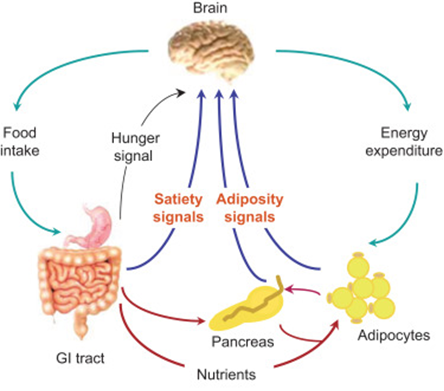
Understanding the roles and mechanisms of gut hormones, adipokines, and neuropeptides is essential for developing nuanced, evidence-based strategies to combat childhood obesity. This review aims to consolidate recent findings, identify gaps in existing knowledge, and propose pathways for clinical intervention.
Methodology
This review followed a structured and systematic approach to identify, evaluate, and synthesize research related to appetite regulation and weight management in children and adolescents.
Search Strategy and Data Sources
Literature searches were conducted across PubMed, Google Scholar, and Web of Science, focusing on peer-reviewed studies published in English from January 2014 to June 2024. Keywords included:
“adipokines”
“neurotransmitters”
“appetite regulation in children”
“weight management”
“ghrelin”
“GLP-1”
“dopamine and serotonin”
pediatric obesity”
“gut-brain axis”
“neuropeptides and feeding behavior”
Manual screening of reference lists from relevant articles ensured inclusion of additional primary sources through bibliographic cross-referencing.
Inclusion and Exclusion Criteria
Included studies met the following criteria:
Published in peer-reviewed journals between 2014–2024
Focused on human subjects aged 0–18 years
Investigated hormonal signaling mechanisms related to appetite regulation or energy balance
Excluded studies:
Were centered solely on genetic or environmental factors
Lacked primary data or were not accessible in full text
Focused exclusively on adult populations
Data were grouped into three thematic domains: gut hormones, adipokines, and neuropeptides. Qualitative synthesis allowed identification of common pathways, therapeutic targets, and discrepancies across studies.
Results
This review identified and analyzed 20 peer-reviewed studies exploring appetite regulation and weight management in children. The findings were grouped into three thematic domains: gut hormones, adipokines, and neuropeptides, with subcategories highlighting their mechanisms and clinical relevance.
Gut Hormones and Appetite Signaling
Many studies agree that gut hormones play a pivotal role in short-term appetite control through their interaction with the vagus nerve and central satiety centers.
Key Findings:
| Hormone | Function | Direction of Effect | Source |
| Ghrelin | Stimulates appetite | Orexigenic | Stomach |
| GLP-1 | Enhances satiety | Anorexigenic | Small intestine |
| Peptide YY | Reduces food intake | Anorexigenic | Colon and ileum |
| Cholecystokinin | Slows gastric emptying | Anorexigenic | Duodenum |
GLP-1 and PYY levels increase postprandially and promote satiety through hypothalamic signaling [1,2,7].
Ghrelin, produced pre-meal, activates NPY/AgRP neurons, initiating hunger [2,8].
CCK acts via vagal afferents, reinforcing fullness and reducing meal size [2].
Studies in children with obesity report impaired GLP-1 and PYY responses after meals, suggesting hormonal resistance may contribute to overeating [6,10].
Adipokines and Long-Term Energy Homeostasis
Adipose tissue functions as an endocrine organ, secreting hormones that regulate body weight and metabolism.
| Adipokine | Role in Appetite | Observations in Obese Children |
| Leptin | Signals satiety | Elevated but often resistant |
| Adiponectin | Enhances insulin sensitivity | Decreased levels linked to IR |
Leptin resistance was detected in multiple studies, reducing its effect on hypothalamic satiety pathways despite high circulating levels [3,12,13].
Low adiponectin levels were associated with increased insulin resistance and visceral adiposity [12,15].
These findings suggest that targeting leptin signaling and enhancing adiponectin expression could be important in therapeutic strategies.
Neuropeptides and Central Appetite Control
Within the arcuate nucleus of the hypothalamus, neuropeptides play crucial roles in regulating appetite rhythmically and responsively.
| Neuropeptide | Activity | Effect on Appetite |
| Neuropeptide Y (NPY) | Orexigenic | Stimulates food intake |
| Agouti-related peptide (AgRP) | Orexigenic | Suppresses satiety signals |
| POMC & α-MSH | Anorexigenic | Promotes satiety |
| CART | Anorexigenic | Reduces food cravings |
Studies confirm that neuropeptide expression correlates with peripheral hormonal changes: Ghrelin upregulates NPY/AgRP; leptin activates POMC/CART [2, 4].
Children with obesity show reduced POMC activity and heightened NPY signaling, contributing to persistent hunger [4,6,16].
Discussion
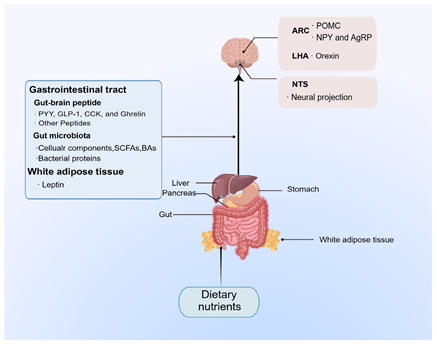
The regulation of appetite in children involves complex neuroendocrine mechanisms that are modulated by biological signals arising from the gut, adipose tissue, and the central nervous system. These signals converge along the gut–brain axis to determine feeding behavior and energy metabolism, providing a framework for understanding obesity and its related disorders from a physiological perspective.
Implications of Gut Hormones
Ghrelin, secreted in the stomach, stimulates food intake via its action on hypothalamic neurons [1,2]. In contrast, anorexigenic hormones such as GLP-1, PYY, and CCK inhibit feeding, often via vagal pathways and direct influence on the arcuate nucleus [2,7]. Studies show that obese children have blunted postprandial responses of these hormones, indicating hormonal resistance and altered satiety signaling [6,9].
Recent therapeutic developments have leveraged GLP-1 receptor agonists to reduce appetite and promote weight loss in pediatric populations [17]. However, long-term efficacy and tolerability require further investigation, especially in adolescent cohorts.
The Role of Adipokines in Sustained Weight Control
Adipokines serve as long-term regulators of energy balance. Leptin is central to maintaining satiety, but leptin resistance common in children with obesity, diminishes its effectiveness [3,12]. Adiponectin, inversely correlated with body fat, enhances insulin sensitivity and promotes lipid oxidation [13].
Evidence from Martos-Moreno et al. [14] and Rambhojan et al. [15] supports adipokine profiling as a predictive tool for obesity risk. Interventions aimed at enhancing adiponectin signaling may offer new avenues for metabolic regulation in pediatric care.
Neuropeptidergic Coordination of Feeding Signals
Within the hypothalamus, a fine-tuned balance between orexigenic (NPY, AgRP) and anorexigenic (POMC, CART) neuropeptides determines feeding behavior [2,4]. In children with obesity, elevated NPY and reduced POMC activity reinforce persistent hunger and energy storage [5].
Moreover, the integration of peripheral hormone signals with central neuropeptides points to the brain as both receiver and amplifier of appetite cues. Early-life nutritional experiences have been shown to influence neuropeptidergic responsiveness, potentially programming long-term weight outcomes [4,7].
Clinical Interventions: What Literature Reveals
Beyond behavioral and dietary strategies, clinical interventions now include pharmacologic modulation and bariatric surgery for adolescents with severe obesity. Alghamdi et al. [18] and Järvholm et al. [20] have documented improvements in BMI, insulin sensitivity, and gut hormone profiles following sleeve gastrectomy and gastric bypass.
Figure 3 below compares hormonal profiles pre- and post-bariatric surgery, highlighting changes in GLP-1, leptin, and PYY levels.
Visual comparison of appetite-related hormones before and after pediatric bariatric procedures. Post-surgery increases in GLP-1 and PYY enhance satiety, while reductions in leptin resistance contribute to improved energy balance.
Conclusion
This comprehensive review underscores the central role of gut hormones, adipokines, and neuropeptides in regulating appetite and energy balance in pediatric populations. Dysregulation of these systems contributes to early-onset obesity, often through blunted satiety signaling and amplified orexigenic pathways.
As research advances, targeted therapies, including GLP-1 receptor agonists, adipokine modulators, and surgical interventions—offer promising strategies for long-term weight management. Translating this knowledge into age-appropriate and culturally sensitive clinical practices will be essential in confronting the pediatric obesity epidemic.
References
- Lean MEJ, Malkova D. Alterations in gut and brain peptides after bariatric surgery. Appetite. 2016;107:68–75.
- Hope KM, Tan T, Bloom SR. Gut hormones in obesity. Curr Opin Endocrinol Diabetes Obes. 2018;25(1):18–24.
- Hayden MR, Banks WA. Obesity-induced dysfunction of the blood–brain barrier: role of leptin and insulin. Peptides. 2005;26(9):1680–1686.
- Marcos J, Coveñas R. Neurochemical pathways involved in appetite control and obesity: focus on galanin peptides. Curr Neuropharmacol. 2022;20(2):201–214.
- Ramasamy R. Advances in understanding appetite regulation after bariatric surgery. J Metab Res. 2022;9(3):187–195.
- Albaugh VL, He Y, Münzberg H, Morrison CD, Yu S, Berthoud HR. Appetite control after bariatric surgery. Nat Rev Endocrinol. 2016;12(10):577–591.
- Sun X, Liu B, Yuan Y, et al. Neural and hormonal mechanisms of appetite regulation during eating. Front Nutr. 2025;12:1484827.
- Liu J, Jing C, Guo Y, et al. Central signaling pathways related to metabolism-regulating hormones of the gut-brain axis. J Transl Med. 2025;23:648.
- Holliday A, Horner K, Johnson KO, et al. Appetite-related gut hormone responses across the life course. J Endocr Soc. 2025;9(2):bvae223.
- Yu M, Liu B, Chen D. Effects of gut microbiota on appetite regulation and underlying mechanisms. Gut Microbes. 2024;16(1):2414796.
- Li S, Liu M, Han Y, et al. Gut microbiota-derived GABA modulates satiety hormone secretion. mSystems. 2024;9(10):01015-24.
- Haddawi KH, Al-Ziaydi AG, Al-Khalidi FA. Role of adipokines and ghrelin in childhood obesity. J Educ Health Promot. 2024;13:40.
- Martos-Moreno GA, Kopchick JJ, Argente J. Adipokines in healthy and obese children. An Pediatr (Barc). 2013;78(3):189.e1–189.e15.
- Roth CL, Reinehr T. Roles of gastrointestinal and adipose tissue peptides in childhood obesity. JAMA Pediatr. 2010;164(2):e1001.
- Rambhojan C, Bouaziz-Amar E, Larifla L, et al. Ghrelin, adipokines, and metabolic factors in schoolchildren. Nutr Metab. 2015;12:43.
- Rupérez FJ, Martos-Moreno GA, et al. Insulin resistance and metabolomics in obese children. Nutrients. 2020;12(11):3310.
- D’Antoni G, Di Maio G, Licata A, et al. Efficacy of GLP-1 agonists in pediatric obesity. Clin Obes. 2023;13(4):e12544.
- Alghamdi H, Asiri A, Alzahrani F, et al. Hormonal shifts post laparoscopic sleeve gastrectomy in adolescents. Front Surg. 2022;9:1056458.
- Bolling CF, Reichard KW, et al. Bariatric surgery for pediatric obesity. Pediatrics. 2019;144(6):e20193224.
- Järvholm K, Janson A, Henfridsson P, et al. Bariatric surgery for adolescents: outcomes and risks. Scand J Surg. 2024;112(1):1–12.