Performance evaluation of basil (Ocimum basilicum L.) in relation to fish stocking density in Nutrient Film Technique aquaponics system
Bikash C. Mohapatra*, Abinash Mishra, Sambid Mohanty, Sagarika Dash, Priyanka P. Srichandan and Dukhia Majhi
Received Date: December 26, 2025; Accepted Date: January 08, 2026; Published Date: January 17, 2026
*Corresponding author: Dr. B. C. Mohapatra, Principal Scientist, ICAR-CIFA, Kausalyaganga, Bhubaneswar – 751002, Odisha, India, bcmohapatra65@gmail.com
Citation: Mohapatra BC, Mishra A, Mohanty S, Dash S, Srichandan PP, Majhi D (2026) Performance evaluation of basil (Ocimum basilicum L.) in relation to fish stocking density in Nutrient Film Technique aquaponics system. Jr Aqua Mar Bio Eco: JAMBE-176
DOI: 10.37722/JAMBE.2026102
Watch the Article in Motion
Abstract
The present study evaluated the performance of basil (Ocimum basilicum L.) cultivated under a Nutrient Film Technique (NFT) based aquaponics system integrated with rohu (Labeo rohita) at different fish stocking densities. The experiment was conducted at ICAR-Central Institute of Freshwater Aquaculture, Bhubaneswar, India using a Completely Randomized Design with three treatments comprising uniform basil plant density and varying fish stocking densities (150, 300 and 450 fingerlings) accommodated in 3m3 water tank, each replicated thrice. Growth performance of basil were assessed through plant height, leaf biomass yield, chlorophyll content and anthocyanin accumulation, while fish growth, survival and water quality parameters were simultaneously monitored. Results revealed that increasing fish stocking density significantly enhanced basil growth and productivity. The highest plant height recorded after 90 days was 55.2 cm, which noted from T3 treatment comprising of 450 number of fingerlings and further it decreased with subsequent treatments with decreasing fish stocking densities. Cumulative leaf yield (227.5 g plant⁻¹), chlorophyll content and anthocyanin concentration recorded under the highest fish stocking density treatment. Improved nutrient availability, particularly nitrogen derived from fish effluents, along with efficient nutrient recycling and oxygenation inherent to the NFT system. Water quality parameters remained within acceptable limits across all treatments, ensuring high fish survivability (>90%) and satisfactory growth, indicating effective integration of fish and plant components. Economic analysis demonstrated that the NFT aquaponics system generated positive net returns, with the highest profit of ₹5037 generated from T3 treatment under the highest fish stocking density due to increased basil leaf yield and advanced fingerling production, while lowest net return of ₹2421 recorded in T1 treatment with 150 fish stocking density. Overall, the study confirms that NFT based aquaponics is a sustainable, resource-efficient and economically viable system for intensive basil cultivation. Optimizing fish stocking density is critical to maximize productivity, profitability and system performance, particularly under conditions of limited land and water availability.
Keywords: Anthocyanin; Aquaponics; Basil (Ocimum basilicum L.); Chlorophyll; Fish fingerling; Leaf yield; Nutrient Film Technique (NFT); Rohu (Labeo rohita)
Abbreviations
ANOVA: Analysis of Variance
APHA: American Public Health Association
CRD: Completely Randomized Design
DAP: Days After Planting
DO: Dissolved Oxygen
DWC: Deep Water Culture
FRP: Fiber Reinforced Plastic
HDPE: High Density Poly Ethylene
MBGB: Media-Based Growing Beds
NFT: Nutrient Film Technique
TAN: Total Ammonia Nitrogen
Introduction
With a steadfast increase in global population currently exceeding 7 billion mark and rapid urbanization of land area, demand for soil and land area for production of agricultural crops to meet the food demands is also likely increasing at an alarming rate. Agriculture practices are also facing constraints due to rapid urbanization, expansion of modern structures and resulting climate change. Traditional agricultural practices are not sufficient for adequate food supply for the increasing population hence to cope with this the need of sustainable food production has been set a primary objective globally supported by a numerous of sustainable development goals (67).
In current global scenario soil-less farming is increasing gaining attention of every country. Globally, the development of more efficient food production methods utilizing soil-less farming has demonstrated promising results (58). The efficient nature of soil-less cultivation systems and their resource use make them particularly ideal for urban environments (46). Soil-less cultivation practices offers growing crops year-round in indoor areas & rooftops overcoming geographical limitations resulting in effective and sustainable yield in limited land resources (68). Soil-less agricultural systems such as hydroponics and aquaponics are highly productive and less area requirement in comparison to traditional agricultural practices making it suitable for urban areas addressing land shortage with growing food production demand (36). However, hydroponics being a resource intensive system for high chemical input is less sustainable than aquaponics as it integrates plant cultivation with a culture of aquatic organisms within recirculating aquaculture systems (RAS) making it a sustainable alternative system (18).
Aquaponics, which combines hydroponics with aquaculture, is currently gaining traction in agriculture worldwide as a resource-efficient and integrated farming method. This approach represents a collaboration between re-circulating aquaculture systems (RAS) and appropriate hydroponic systems, such as vertical farming, within a closed-loop system. The symbiotic relationship between aquatic plants and animals allows for water conservation and effective nutrient recycling (24). An aquaponic system operates on the concept that it uses the wastewater generated by fish, which serves as a rich source of nutrients for plants (52,39).
Aquaponics represents a versatile system that can be established using budget-friendly materials, thus minimizing initial costs and appealing to small-scale farms (39). Existing studies in aquaponics predominantly focus on the design and operation of system components, wastewater treatment efficiency, nutrient regulation, and system-level production outcomes (21). Among these options, NFT provides benefits for customized system designs and shows excellent water efficiency; however, it tends to yield lower crop harvests and incurs greater operating expenses (17).
The plant species selection is a critical aspect to ensure successful performance and productivity of the aquaponics system (25). The selection of the plant should be based on the number of fish stocked and resulting nutrient concentration of aquacultural effluent produced. Generally, leafy vegetables growing in aquaponics system are having high demand as they thrive well with adequate nitrogen provided by the fish waste and have a short production period (16). Aquaponics technology can host a broad range of leafy vegetables, such as leafy lettuce (32), water spinach (9), Indian spinach; flowering plants such as marigold, petunia and zinnia (39,41) and other crops such as okra (57,7), radish, tomatoes (57), capsicum, cucumber, cabbage, carotene, mint and other similar specie s (37). Most leafy vegetables such as lettuce and herbs particularly spinach, chives, basil and watercress, requires low to moderate nutrient input therefore, are ideal candidates to promote growth within an aquaponic system (8).
Mostly herbs are notably growing well in aquaponics due to their lower nutritional requirement than other fruiting crops that requires additional nutrient supplementation added to the water (62) and also in short time period they provide high yield per unit area (52). Basil (Ocimum basilicum L) is a commercially important annual herb whose fresh and dried leaves are widely used in cuisine (12). Aside from its culinary importance it is also well recognized for its medicinal properties especially for its antimicrobial properties (60). Basil is one of the most widely cultivated herbs in commercial aquaponic production and is grown as a hobby or for educational purposes by different types of people (31). The aroma and flavor of basil come from its essential oils, plant with phenolics, flavonoids and phenylpropanoid compounds (26). Basil grows very well in a soilless production system (like aquaponics or hydroponics) and it has a greater harvest production yield when produced in a soilless system than when produced using traditional soil-based methods (53, 56, 34).
Selecting high-value crops is a key strategy for maximizing income in aquaponic systems (13). Evaluation of plant growth under NFT aquaponics provides insights into the efficiency of this system under varying nutrient regimes generated by different fish stocking densities. NFT systems maintain a thin flowing film of nutrient solution, enhancing oxygenation of the root zone. Understanding how these systems influence the growth and development of basil under different fish densities will help optimize aquaponic practices for ornamental horticulture, contributing to both sustainable agriculture and commercial flower production.
In aquaponic systems, plant growth and performance are closely linked to fish stocking density through nutrient generation and water quality dynamics. Fish metabolism supplies essential nutrients such as nitrogen, phosphorus and potassium, which directly influence plant growth, while plants help maintain water quality by assimilating these nutrients. Several studies have demonstrated that moderate fish stocking densities enhance plant biomass and yield due to increased nutrient availability, whereas excessively high densities may negatively affect plant performance due to deteriorated water quality and fish stress (3,10). Optimized fish stocking densities in NFT-based aquaponics significantly improved basil growth and yield, confirming a strong plant–fish interaction mediated by nutrient flow specifically for basil (47). These findings collectively highlight the importance of balancing fish biomass to achieve sustainable plant productivity in aquaponic systems (29).
Although NFT for leafy herbs is widely accepted, management practices for basil vary based on cultivar, greenhouse environment, and nutrient formulation (49). Few studies have looked closely at the growth dynamics, biomass distribution and secondary metabolite production of basil under different NFT management strategies (50). This research aims to assess the performance of basil grown in an NFT hydroponic system by evaluating growth rates, plant height, total biomass yield and quality indicators for the leaves, such as chlorophyll and anthocyanin levels (28). The findings will help improve practical NFT management for basil and provide baseline data for future improvements specific to different cultivars (23).
Materials & Methods
Experimental location & duration
The experiment was conducted at the farm of the ICAR–Central Institute of Freshwater Aquaculture (ICAR-CIFA), Bhubaneswar, Odisha, India. The study was carried out from 2nd June 2025 to 5th September 2025 over a period of three months and the sampling was done with an interval of one month.
Experimental design
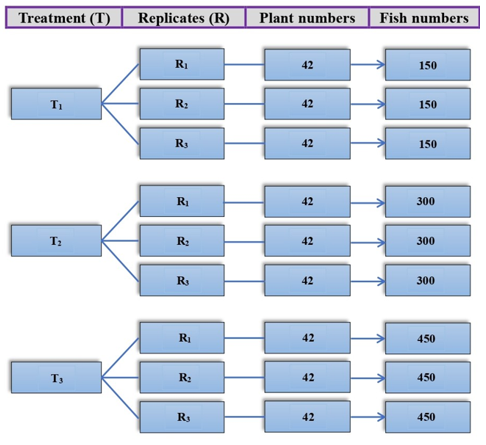
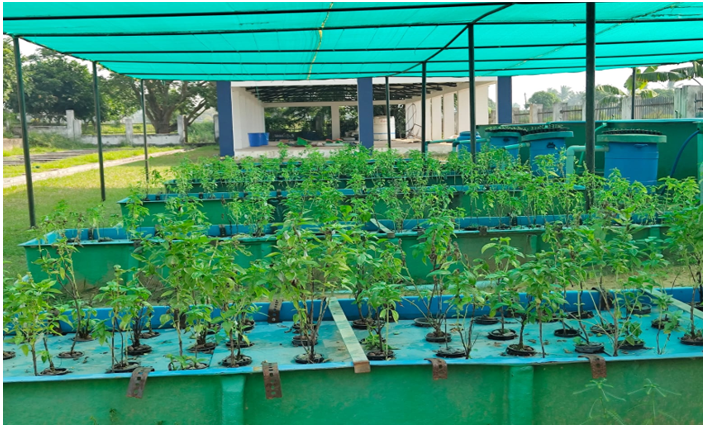
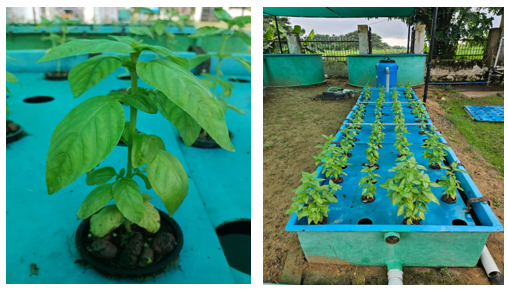
The present investigation was conducted following a Completely Randomized Design (CRD) to assess the performance of basil (Ocimum basilicum L.) under an aquaponics system as shown in Fig. 2, 3 & 4. Three treatments were employed during the experiment; each replicated three times. The treatments consisted of uniform plant densities of 42 plants in each NFT setup, but differed in fish stocking densities, i.e., 150, 300 and 450 numbers respectively kept at 3m3 water tank as mentioned in Fig. 1, The fishstocking densities taken for the experiment was considered as per earlier studies (40,43). The Indian major carp Labeo rohita (rohu) fingerling of average initial weight & initial length of 3.51 ± 0.23g & 32.68 ± 1.21 mm respectively was used as the test fish species due to its suitability for freshwater aquaculture and adaptability to controlled culture systems. The allocation of treatments to experimental units was done randomly to minimize experimental bias.
Nutrient Film Technique
FRP materials and other plastic components were used to create the NFT-based aquaponics units at ICAR-CIFA, Bhubaneswar. Each unit comprises a hydroponics grow tank, a sump set up in a recirculating arrangement, a biofilter, and a fish rearing tank (39,42). With an effective water volume of 2,800 L and a total capacity of 3,450 L, the FRP fish tank was measured 2.15 m in diameter and 0.9 m in height. The biofilter, that had an effective surface area of 1.22 m², was made up of a 100 L polypropylene bucket filled with bottom layered gravel for mechanical filtration and seashells (13.3 kg) to promote microbial growth. The 1,260-liter hydroponics tank (FRP: 4.0 × 0.9 × 0.35 m) was kept with a water depth of 0.25 m. To support the plant saplings, four planting trays with polypropylene cups filled with gravel were installed. The 200 L HDPE sump tank, which measured 70.8 cm in diameter by 58.2 cm in height, was run at 180 L and had a 60 W submersible pump and water-level sensors to help with water recirculation. Effective water reuse and nutrient transport throughout the system were made possible by this integrated NFT aquaponics system (40).
Crop and Fish Management
For transplantation, uniform and healthy basil seedlings were chosen and in accordance with the treatment guidelines, fish fingerlings were stocked. During the experiment, fish were fed with a commercial pellet feed at the recommended feeding rate and standard management procedures were adhered to. Since fish waste provided the plants with nutrients, no external fertilizers were used for plant growth.
Nutrient Management
The biofilter present in NFT system was the engine of nutrient management in aquaponics, converting fish waste into plant available nutrients, while safeguarding fish health. The biofilter provides a suitable substrate for the colonization of nitrifying bacteria, primarily Nitrosomonas and Nitrobacter, which biologically oxidize toxic total ammoniacal nitrogen (TAN) excreted by fish into nitrite (NO₂⁻-N) and subsequently into nitrate (NO₃⁻-N) (39). However, mechanical filtration upstream of the biofilter is necessary to remove suspended solids and avoid clogging and controlled mineralization of captured solids can further enhance nutrient recovery (42). Overall, the biofilter plays a central role in stabilizing water quality, optimizing nutrient cycling and synchronizing fish metabolism with plant nutrient uptake, thereby improving productivity and sustainability of aquaponics systems (39,42).
Sampling and Data Collection
Ahead of the fish were put into the culture tanks, their initial body weight and length were measured. Fish were subsequently chosen at random at 30-day intervals from each treatment, and final measurements were made when the fish were harvested. In the case of basil, ten selected at random plants from each experimental NFT unit had their height measured at both the seedling and harvest stages. Additionally, the study estimated the anthocyanin and chlorophyll contents of basil leaves. Chlorophyll content of the leaf was estimated using the spectrophotometric method (6). Anthocyanin content of the leaf was estimated using a spectrophotometric method following acidified methanol extraction, which is commonly adopted in plant physiological studies (33). The results were expressed as mg anthocyanin per 100 g fresh weight of leaf tissue. The total plant biomass yield was also recorded over the entire experimental period. Water quality parameters, namely dissolved oxygen (DO, mg l⁻¹), pH, total alkalinity (mg l⁻¹), total hardness (mg l⁻¹), total ammonia nitrogen (TAN, mg l⁻¹), nitrite-N (mg l⁻¹), nitrate-N (mg l⁻¹), orthophosphate (mg l⁻¹) and temperature (°C) were monitored at 15-day intervals following standard laboratory analytical procedures (4).
Statistical Analysis
The experimental data were analysed statistically using analysis of variance (ANOVA) appropriate for a Completely Randomized Design (CRD). The statistical model used for the analysis was:
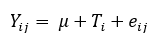
where, Yij = observation recorded from the jth replication of the ith treatment,
μ = overall mean,
Ti = effect of the ith treatment (fish stocking density),
& eij = experimental error assumed to be independently and normally distributed with zero mean and constant variance.
Treatment means were compared using appropriate post-hoc tests at a 5% level of significance to determine significant differences among treatments.
Results & Discussion
Fish growth
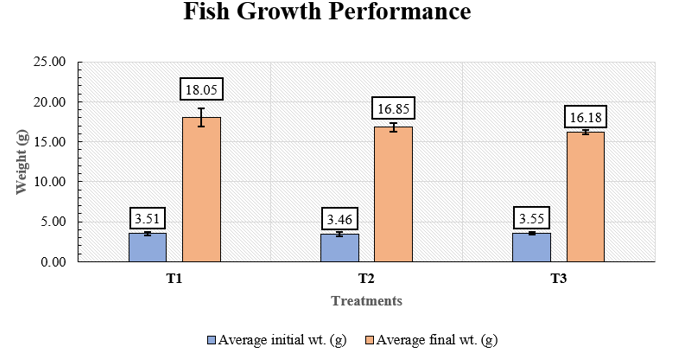
In respect to the treatments the average final weight was seen to decrease with increasing densities, from 18.05 g in T₁ with 150 fish to 16.85 g in T₂ with 300 fish and finally to 16.18 g in T₃ with 450 fish (Table 1). While the overall weight gain was maximal at the lowest density treatment T₁, at intermediate density in T₂ and lowest in T3. Highest growth in lowest stocking density is contributed by signifying better use of system capacity as seen in other NFT as well as intensive system studies on density optimization (5,22). In the highest density T₃, final weight and length were appreciably lower indicating intensified competition for feed and space as well as potential deleterious effects on water quality even with recirculation as seen with high-density rearing of rohu in biofloc and tank systems (59).
Table 1: Rohu fingerlings growth and survivability in NFT aquaponics system
| Growth parameters | Treatments | ||
| T1 | T2 | T3 | |
| Number of fish stocked | 150 | 300 | 450 |
| Average initial wt. (g) | 3.51 ± 0.24 | 3.46 ± 0.28 | 3.55 ± 0.19 |
| Average final wt. (g) | 18.05 ± 1.15 | 16.85 ± 0.54 | 16.18 ± 0.26 |
| Average initial length (mm) | 32.83 ± 1.23 | 32.23 ± 1.80 | 32.97 ± 0.61 |
| Average final length (mm) | 121.97 ± 1.99 | 119.47 ± 2.21 | 113.53 ± 1.12 |
| Survivability (%) | 92.89 ± 1.68 | 91.67 ± 1.20 | 87.11 ± 3.15 |
Fish species survival remained high across all treatments, ranging from 92.89% in T₁ (150 fish) to 91.67% in T₂ (300 fish) and 87.11% in T₃ (450 fish). The survivability of species was comparable to other study done in NFT aquaponics system (40). According to reports that aquaponic systems can maintain acceptable water quality and support good performance of Indian major carps, the combination of high survivability and satisfactory growth suggests that the NFT aquaponics design provided favorable culture conditions for rohu (37,39,40,41,64,67).
Water quality performance
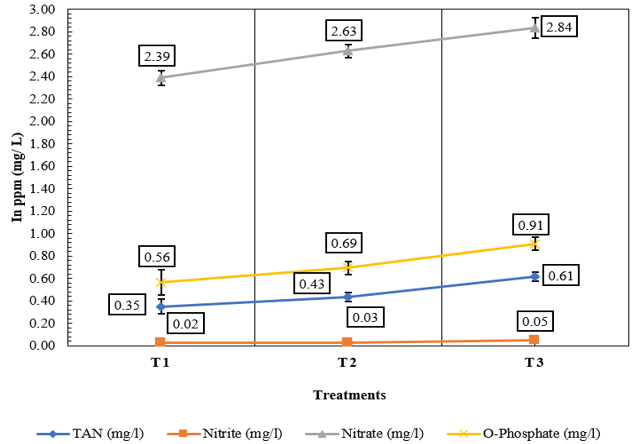
Water quality is the key environmental factor in an aquaponic production system, as it influences fish and plant growth, feed utilization, fish health and the availability of nutrients for plants (25). The physico-chemical properties and nutrient composition of the culture water were analysed for all treatments and control groups throughout the experiment, and the results are shown in Table 2. The recorded pH values (7.27–7.48) fall well within the generally recommended range of 6.5–9.0 for carp culture, indicating absence of acidic or highly alkaline stress (35). Temperature varied between about 32.6 °C (T₁) and 28.1 °C (T₃), which is close to the optimal range of 28–32 °C reported for rohu, suggesting that thermal conditions were favorable for metabolism and feed utilization (44). Dissolved oxygen remained above 6.1 mg l⁻¹ in all treatments (40), the values are higher than the minimum requirement of about 5 mg l⁻¹ for carp culture, reflecting efficient aeration and oxygenation in the NFT system (38).
Table 2: Water quality in NFT aquaponics system with basil and rohu fingerlings
| Parameters | T1 | T2 | T3 |
| pH | 7.27 ± 0.10 | 7.35 ± 0.09 | 7.48 ± 0.06 |
| Temperature (°C) | 32.60 ± 0.46 | 31.7 ± 0.65 | 28.10 ± 0.62 |
| DO (mg/l) | 6.47 ± 0.15 | 6.33 ± 0.15 | 6.13 ± 0.21 |
| Total Alkalinity (mg/l) | 113.27 ± 5.28 | 120.13 ± 6.07 | 127.57 ± 3.74 |
| Total Hardness (mg/l) | 105.93 ± 3.07 | 110.20 ± 4.94 | 118.93 ± 2.46 |
| TAN (mg/l) | 0.35 ± 0.07 | 0.43 ± 0.04 | 0.61 ± 0.04 |
| Nitrite (mg/l) | 0.02 ± 0.01 | 0.03 ± 0.02 | 0.05 ± 0.02 |
| Nitrate (mg/l) | 2.39 ± 0.07 | 2.63 ± 0.06 | 2.84 ± 0.09 |
| O-Phosphate (mg/l) | 0.56 ± 0.11 | 0.69 ± 0.06 | 0.91 ± 0.06 |
Total alkalinity ranged from 113.27 to 127.57 mg l⁻¹ and total hardness from 105.93 to 118.93 mg l⁻¹, which are considered suitable and stable for freshwater carp culture and are comparable to values reported in successful rohu grow‑out and hatchery systems. Such values of alkalinity and hardness improve pH buffering capacity and provide essential ions like calcium and magnesium, thereby reducing the risk of sudden pH shocks and supporting osmoregulation in rohu (48).
Total ammonia nitrogen (TAN) increased slightly with stocking density (0.35–0.61 mg l⁻¹), but remained far below concentrations reported to cause acute or sub‑acute toxicity and hematological disturbances in rohu fingerlings (1). Similarly, nitrite levels (0.02–0.05 mg l⁻¹) were well below experimentally derived sub‑lethal thresholds for L. rohita, indicating efficient nitrification and limited risk of methemoglobinemia (45). Nitrate concentrations (2.39–2.84 mg l⁻¹) were within typical ranges observed in aquaponic systems where plants remove dissolved inorganic nitrogen, confirming the effective coupling between fish and plant components (2). The effective conversion of TAN to nitrate demonstrates the TAN removal efficiency of the settler cum biofilter (42).
Orthophosphate concentrations (0.56–0.91 mg l⁻¹) were moderate and increased with higher fish biomass, providing an additional nutrient source for plants without reaching levels associated with eutrophication or water quality impairment in closed systems (51). Collectively the balanced levels of different physico-chemical parameters and low accumulation of toxic metabolites demonstrate that the NFT aquaponics configuration maintained a congenial environment for rohu culture, in agreement with previous reports on aquaponic and recirculating systems where stable water quality underpins good fish performance (40,61).
Plant height
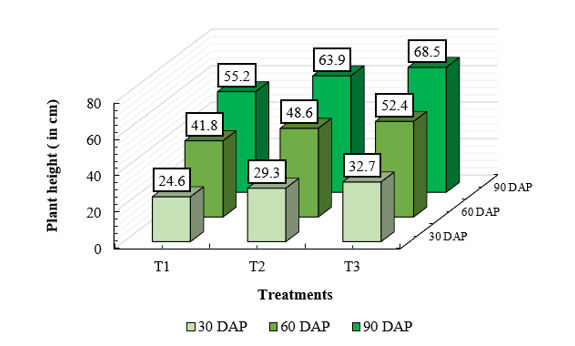
Plant height (Table 3) was significantly influenced by the different treatments at all stages of observation (30, 60 and 90 DAP). At 30 DAP, plants under Treatment T3 recorded the maximum height (32.7 cm), followed by T2 (29.3 cm), while the lowest height was observed in T1 (24.6 cm). A similar trend was maintained at 60 DAP, where T3 attained a height of 52.4 cm, which was significantly higher than T2 (48.6 cm) and T1 (41.8 cm). By 90 DAP, plants under T3 reached the highest height of 68.5 cm, followed by T2 (63.9 cm) and T1 (55.2 cm). The increased plant height under T3 may be attributed to improved nutrient availability, particularly nitrogen, released from fish excreta in the aquaponic system. Nitrogen plays a crucial role in cell division, elongation and vegetative growth, which directly influences plant height (63). Higher nutrient availability under increased fish stocking density enhances nutrient uptake efficiency, resulting in vigorous plant growth (54,17).
Table 3: Height of basil plants in NFT aquaponics system
| Treatments | 30 DAP | 60 DAP | 90 DAP |
| T1: 42 plants + 150 fingerlings | 24.6 | 41.8 | 55.2 |
| T2: 42 plants + 300 fingerlings | 29.3 | 48.6 | 63.9 |
| T3: 42 plants + 450 fingerlings | 32.7 | 52.4 | 68.5 |
| S.E(m) | 0.8 | 1.2 | 1.5 |
| C.D | 2.5 | 3.6 | 4.4 |
At every stage of growth, stocking density had a significant impact on basil plant height; Treatment T3 consistently recorded the highest values. Greater availability of nutrients, especially nitrogen from fish excrement in the aquaponic system, is responsible for increased plant height under higher stocking densities. Plant height is directly impacted by nitrogen, which is essential for cell division, elongation, and vegetative growth. Nutrient uptake is further improved in NFT systems by effective nitrification and constant nutrient flow. Similar increases in plant height were seen under nutrient-rich aquaponic conditions (54,15). A balanced fish-plant microbe interaction is indicated by T3‘s persistent superiority, which guarantees an ideal nutrient supply free from stress or toxicity.
Leaf yield
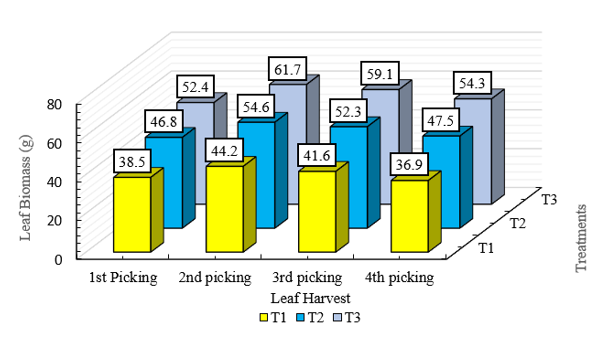
Leaf yield per plant showed a significant increase with successive pickings and across treatments (Table 4). In all four pickings, Treatment T3 consistently produced the highest leaf yield, followed by T2 and T1. During the first picking, T3 recorded 52.4 g per plant compared to 46.8 g in T2 and 38.5 g in T1. This increasing trend continued through the second, third and fourth pickings. The total leaf yield per plant was highest in T3 (227.5 g), followed by T2 (201.2 g) and T1 (161.2 g). Consequently, total yield per treatment was also maximum in T3 (9.55 kg), which was significantly higher than T2 (8.45 kg) and T1 (6.78 kg). The superior leaf yield observed in T3 can be attributed to enhanced vegetative growth supported by higher nutrient availability, particularly nitrogen and other macro and micronutrients supplied through fish effluents. Continuous nutrient recycling in aquaponic systems ensures sustained nutrient supply, which promotes repeated leaf regeneration after each harvesting (64,15).
Table 4: Leaf biomass of basil plants in NFT aquaponics system
| Treatments | 1st Picking | 2nd picking | 3rd picking | 4th picking | Total Yield (g/plant) | Total yield per treatment (kg) |
| T1 | 38.5 | 44.2 | 41.6 | 36.9 | 161.2 | 6.78 |
| T2 | 46.8 | 54.6 | 52.3 | 47.5 | 201.2 | 8.45 |
| T3 | 52.4 | 61.7 | 59.1 | 54.3 | 227.5 | 9.55 |
| S.E(m) | 1.4 | 1.8 | 1.6 | 1.5 | 4.2 | |
| C.D | 4.1 | 5.2 | 4.8 | 4.5 | 12.3 |
Stocking density led to a significant increase in leaf yield per plant and total yield per treatment, with T3 yielding the highest yield of all pickings. Improved vegetative growth, increased leaf initiation and quicker leaf regeneration following harvesting are all responsible for the increased yield under higher stocking density. In aquaponic systems, ongoing nutrient recycling offers a consistent supply of vital nutrients, especially nitrogen, which is necessary for leaf growth and biomass accumulation. Similar results were reported for basil and other leafy vegetables grown in aquaponic systems (19,11). Repeated harvesting increased cumulative yield was seen by stimulating lateral branching and leaf production.
The growth parameters obtained for basil in the present NFT aquaponics system are comparable with, and in some cases superior to, those reported in similar plant–fish integrated systems. Previous studies have shown that basil grown under optimized fish stocking densities exhibits increased plant height, leaf number, and fresh biomass due to enhanced nutrient availability from fish effluents (47). Basil cultivated in aquaponics demonstrated higher biomass accumulation compared to conventional hydroponics, attributed to balanced nitrogen and micronutrient supply (29). Moreover, moderate fish stocking densities improved herb yield, including basil, whereas excessive densities led to marginal declines due to compromised water quality (10). The present findings align with these observations, reinforcing that optimal fish biomass plays a decisive role in regulating basil growth performance in NFT-based aquaponic systems.
Chlorophyll content
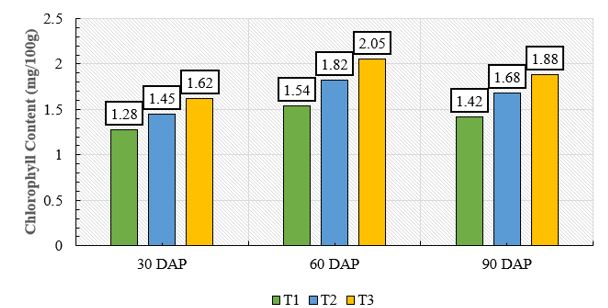
Chlorophyll content increased up to 60 DAP and declined slightly at 90 DAP across treatments (Table 5), with T3 consistently recording the highest values. Higher chlorophyll content under increased stocking density indicates improved nitrogen availability, as nitrogen is a major component of chlorophyll molecules. Enhanced chlorophyll concentration reflects improved photosynthetic capacity, which contributes to higher biomass production. The decline at later stages may be associated with leaf maturity and senescence. Similar trends in chlorophyll accumulation under nitrogen-rich conditions have been reported (55,63).
Table 5: Chlorophyll content of basil plants in NFT aquaponics system
| Treatments | 30 DAP | 60 DAP | 90 DAP |
| T1: 42 plants + 150 fingerlings | 1.28 | 1.54 | 1.42 |
| T2: 42 plants + 300 fingerlings | 1.45 | 1.82 | 1.68 |
| T3: 42 plants + 450 fingerlings | 1.62 | 2.05 | 1.88 |
| S.E(m) | 0.05 | 0.06 | 0.05 |
| C.D | 0.14 | 0.17 | 0.15 |
Anthocyanin content
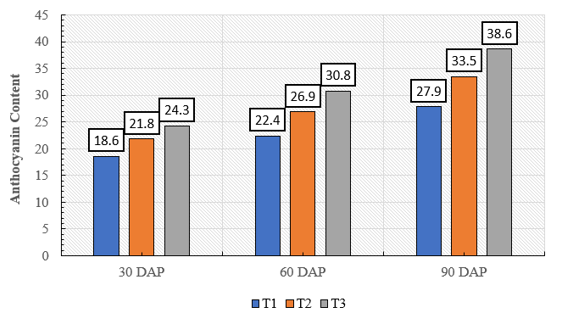
Anthocyanin content increased steadily with plant age (Table 6) and was highest at 90 DAP, with T3 showing significantly greater accumulation than other treatments. Enhanced anthocyanin content under higher stocking density may be attributed to improved metabolic activity and favorable carbon–nitrogen balance. Additionally, mild physiological stress or nutrient fluctuations common in aquaponic systems can stimulate secondary metabolite synthesis. Increased anthocyanin accumulation with plant age and improved nutrient availability have been reported (27,30). Higher anthocyanin levels indicate improved nutritional and antioxidant quality of basil grown under optimized aquaponic conditions.
Table 6: Anthocyanin content of basil plants in NFT aquaponics system
| Treatments | 30 DAP | 60 DAP | 90 DAP |
| T1: 42 plants + 150 fingerlings | 18.6 | 22.4 | 27.9 |
| T2: 42 plants + 300 fingerlings | 21.8 | 26.9 | 33.5 |
| T3: 42 plants + 450 fingerlings | 24.3 | 30.8 | 38.6 |
| S.E(m) | 1.00 | 1.20 | 1.50 |
| C.D | 2.90 | 3.40 | 4.20 |
Economics of NFT aquaponics with basil
The economic analysis (Table 7) revealed marked differences in cost–return relationships among the various treatments of the NFT aquaponics system. Fixed capital investment was considerably higher for NFT (₹35,000) across all three treatments, primarily due to the requirement of specialized hydroponic channels, sump tanks, biofiltration units and electrification. Despite the higher initial setup cost, the NFT system generated superior economic returns through enhanced basil leaf yield and the production of advanced fingerlings, particularly under higher fish stocking densities.
Table 7: Economics of aquaponics operation with rohu fingerlings and basil
| Sl. No. | Items | Approx. price in INR (Rs.) | ||
| T1 | T2 | T3 | ||
| A. | Fixed Capital | |||
| 1. | Land (Own) | 0 | 0 | 0 |
| 2. | Culture tank (1 no), Hydroponics tank (1 No.) | 23,000 | 23,000 | 23,000 |
| 3. | Biofilter and filtrate materials | 3,000 | 3,000 | 3,000 |
| 4. | Sump and water level sensor | 2,000 | 2,000 | 2,000 |
| 5. | Pipes and fittings | 2,000 | 2,000 | 2,000 |
| 6. | Water pump (1 no) | 2,000 | 2,000 | 2,000 |
| 7. | Electrification | 1,000 | 1,000 | 1,000 |
| 8. | Aerator (1 no) | 2,000 | 2,000 | 2,000 |
| Sub-total | 35,000 | 35,000 | 35,000 | |
| B. | Variable Cost | |||
| 1 | Fish seed @ Rs 1.00 per pc. | 150 | 300 | 450 |
| 2 | Saplings @ Rs 2.00 per pc. | 84 | 84 | 84 |
| 3 | Electricity and Fuel | 100 | 100 | 100 |
| 4 | Wages (@ Rs. 400/- per day | 1200 | 1200 | 1200 |
| 5 | Feed (5.5 kg per 150 fish for 90 days) @ Rs 70/- per kg | 385 | 770 | 1155 |
| Sub-total | 1919 | 2454 | 2989 | |
| C. | Other Cost | |||
| 1 | Total Variable cost | 1919 | 2454 | 2989 |
| 2 | Depreciation cost on fixed capital @ 6.66% yearly for NFT | 480 | 480 | 480 |
| 3 | Interest on fixed capital @5% per annum for NFT | 360 | 360 | 360 |
| Total Cost | 2759 | 3294 | 3829 | |
| D. | Gross Income | |||
| 1 | Basil leaves @ Rs 600/- per kg | 4068 | 5070 | 5730 |
| 2 | Advanced fingerling @ Rs 8.00/- per fingerling | 1112 | 2200 | 3136 |
| E | Gross Return | 5180 | 7270 | 8866 |
| F | Net Income (Gross income – Total costs) | 2421 | 3976 | 5037 |
Net income was positive for all the three treatments, where the lowest net income was recorded for T1 (₹ 2421) in NFT with 150 fish, reflecting the lower stocking densities to cover high fixed costs. Comparatively higher net return was noted for T2 & T3 in turns giving a return of ₹ 5037 with T3 combinations of fish and plants, which was highest among the treatments. This suggests that in NFT aquaponics system with the increase of fish stocking density with plants directly influences the net return of the system, as this system requires a higher capital investment as compared to other aquaponics systems (40).
These results emphasize the balance between enhanced productivity and higher capital requirements: although NFT systems offer superior yield potential and involve substantial initial investment. NFT-based aquaponics can deliver considerable economic benefits when suitable fish–plant combinations are adopted; however, overall profitability is strongly influenced by the level of capital input and the scale of operation (40). Comparable findings have been reported in ornamental aquaponics, where the selection of system design plays a crucial role in determining economic viability (20).
The gross returns increased consistently with stocking density, driven by higher leaf output and fish biomass. NFT with 450 fish yielded the highest gross return (₹8866), though the corresponding net income was moderated by depreciation and capital costs. Furthermore, the gross return was lowest for T1 combinations with 150 numbers of fish i.e., ₹5180 followed by moderate return of ₹7270 with T2 combinations. This aligns with the conclusion of the study in which it was emphasized that, NFT may enhance plant growth and marketable yield, the relative profitability depends on balancing operational scale with capital recovery (40,43).
Conclusion
The current research clearly shows that basil (Ocimum basilicum L.) can be effectively and profitably grown in a Nutrient Film Technique (NFT) aquaponics system in combination with rohu (Labeo rohita). Among the treatments assessed, higher fish stocking density led to better basil growth, evidenced by marked improvements in plant height, total leaf yield, chlorophyll levels and anthocyanin content. These improvements are likely due to increased nutrient availability, especially nitrogen derived from fish waste, along with efficient nutrient distribution and root-zone aeration that are characteristic of the NFT system. Water quality parameters across all treatments remained within acceptable ranges for carp farming, which contributed to high fish survival rates and satisfactory growth. While individual fish growth slightly decreased at elevated stocking densities, overall biomass production and system efficiency showed enhancement, demonstrating effective integration and nutrient balance among fish, plants and microbial elements. This underscores the potential of NFT aquaponics to support intensive production while maintaining favorable environmental conditions.
The economic assessment further validated the feasibility of the NFT aquaponics system. Although initial investments were higher, the increased leaf yield of basil and improved fingerling production yielded positive net profits, with the greatest profitability seen at the highest fish stocking density. These results highlight that properly optimizing fish stocking density is essential for maximizing productivity and financial returns in NFT-based aquaponics. In conclusion, the research establishes NFT aquaponics as a sustainable, resource-efficient and economically sound method for the cultivation of high-value basil. This system presents significant potential for year-round production, especially in areas with limitations on land and water, and aligns with the broader objectives of sustainable agriculture and integrated farming practices.
The findings of this study have important implications for the commercial adoption of NFT-based aquaponics systems. Optimizing fish stocking density can significantly enhance basil growth while maintaining fish health and water quality, thereby improving overall system efficiency. From a commercial perspective, balanced stocking densities reduce the need for external nutrient supplementation, lowering production costs and increasing sustainability. Additionally, stable plant growth under optimal fish loads ensures consistent harvest cycles, which is critical for market-oriented basil production. The results also suggest that overstocking fish may compromise both plant performance and system stability, emphasizing the need for density-based management strategies. Therefore, adopting scientifically optimized fish–plant ratios can help commercial aquaponics operators achieve higher productivity, economic viability, and environmental sustainability.
Future scope of study
The current research demonstrates that NFT aquaponics can effectively facilitate the growth of Italian basil (Ocimum basilicum L.) with consistent growth rates and yields. Nonetheless, additional studies are necessary to investigate optimization methods such as increased planting densities, nutrient additions and the incorporation of various fish species for enhanced nutrient cycling. Long-term observation of water quality and microbial interactions could offer greater understanding of how to sustain the system effectively. Moreover, conducting economic feasibility assessments and life cycle studies is crucial to determine the profitability and environmental implications of basil cultivation in aquaponics within commercial frameworks. Expanding these findings could create possibilities for urban farming, vertical farming, and export-driven aromatic crop production, thereby contributing to food security and sustainable agricultural practices. Researchers might also test different pairings of fish and plants, like premium crops or local fish varieties, to make the system more viable for business use. They could evaluate adding tech like automatic water sensors, solar power or better filters to cut costs and sharpen performance. On top of that, full economic reviews and life-cycle analyses covering labour, energy use and carbon impact would clarify the setup’s profitability and green credentials. Studies on scaling it up, plus real-world tests on farms run by growers, would help get the tech into commercial hands.
Completing interest: National Fisheries Development Board (NFDB) funded project on “Development of State of the art industrial aquaponic system for production of fish and plant biomass”.
Author’s contribution:
| Author’s name | Contributions |
| Bikash Chandra Mohapatra* | Conceptualization & Methodology |
| Abinash Mishra | Plant investigation, Data collection & interpretation, Paper writing |
| Sambid Mohanty | Fish data sampling & interpretation, Paper writing |
| Sagarika Dash | Operation and automation of NFT Aquaponics system |
| Priyanka P. Srichandan | Water quality analysis |
| Dukhia Majhi | Technical and field support during experimentation |
Acknowledgement: The authors gratefully acknowledge the National Fisheries Development Board (NFDB), Hyderabad for providing financial support to carry out this research & ICAR-AICRP on PEASEM for providing the NFT aquaponic system facility. The authors also express their sincere gratitude to the Director, ICAR–Central Institute of Freshwater Aquaculture (ICAR-CIFA), Bhubaneswar, for institutional support to the research programme.
Consent & Ethics: The authors declare no conflicts of interest for the research paper. They bear sole responsibility for the content and composition of the paper.
References
- Acharya A, Datta T, Das, M. K. et al. (2005). Effect of sublethal levels of nitrite on some blood parameters of juvenile Labeo rohita (Hamilton-Buchanan). Indian journal of experimental biology, 43(5): 450-454. https://pubmed.ncbi.nlm.nih.gov/15900911.
- Anantharaja K, Mohapatra BC, Pillai BR, Kumar R, Devaraj C, Majhi D, et al. (2017) Growth and survival of climbing perch, Anabas testudineus in Nutrient Film Technique (NFT) Aquaponics System. International journal of fisheries and aquatic studies 5(4): 24-29. https://www.fisheriesjournal.com/archives/2017/vol5issue4/PartA/5-3-70-947.pdf.
- Ani, J. S., Manyala, J. O., & Fitzsimmons, K. (2021). Effect of stocking density on growth performance and water quality in a Nile tilapia (Oreochromis niloticus)–lettuce (Lactuca sativa) aquaponic system. Aquaculture and Fisheries, S2468550X21000381. https://doi.org/10.1016/j.aaf.2021.03.002
- APHA. (2017). Standard Methods for Examination of Water and Wastewater, 23st ed. American Public Health Association (APHA), Washington D. C. https://yabesh.ir/wp-content/uploads/2018/02/Standard-Methods-23rd-Perv.pdf.
- Arifuzzaman M, Rahman MH, Haque MM, Islam MN, et al. (2022). Studies on the growth and production performance of Rohu (Labeo rohita) at different stocking densities in intensive aquaculture systems using floating feed. International Journal of Biological Innovations 4(2): 237-246. https://ijbi.org/index.php/ijbi/article/view/237.
- Arnon DI. (1949) Copper enzymes in isolated chloroplasts. Polyphenoloxidase in Beta vulgaris. Plant physiology 24(1): 1. https://doi.org/10.1104/pp.24.1.1.
- Azad KN. (2015) Comparative study of okra production using different bedding media in aquaponic system (Doctoral dissertation, MS Thesis, Department of Aquaculture, Bangladesh Agricultural University, Mymensingh).https://repository.bau.edu.bd/handle/123456789/1041.
- Azad KN, Salam MA, Azad KN, et al. (2016) Aquaponics in Bangladesh: current status and future prospects. Journal of Bioscience and Agriculture Research 7(02): 669-677. https://www.jbar.science/index.php/JBAR/article/view/120.
- Bethe LA. (2014) Effect of foliar spray of compost tea on water spinach (Ipomoea aquatic) in aquaponic system (Doctoral dissertation, MS Thesis, Department of Aquaculture, Bangladesh Agricultural University, Mymensingh). https://repository.bau.edu.bd/handle/123456789/1092.
- Birolo, M., Trabacchin, V., Sambo, P., Triolone, S., & Nicoletto, C. (2025). Impact of stocking density on growth, feeding behavior, and flesh quality of largemouth bass (Micropterus salmoides) and yield of vegetables including basil in coupled aquaponic systems. Fishes, 10(11). https://doi.org/10.3390/fishes10110552
- Buzby KM & Lin LS. (2014). Scaling aquaponic systems: Balancing plant uptake with fish output. Aquacultural Engineering: 63: 39–44.https://doi.org/10.1016/j.aquaeng.2014.09.002.
- Chalchat J & Özcan MM. (2008). Comparative essential oil composition of flowers, leaves and stems of basil (Ocimum basilicum L.) used as herb. Food Chemistry, 110(2): 501-503. https://doi.org/10.1016/j.foodchem.2008.02.018.
- Dediu L, Cristea V, Xiaoshuan Z, et al. (2012). Waste production and valorization in an integrated aquaponic system with bester and lettuce. African Journal of Biotechnology, 11(9): 2349-2358. https://doi.org/10.5897/AJB11.2829.
- Dey SS, Tibile RM, Pawase AS, Meshram SJ, Pathan DI, Nayak A, et al. (2022). Evaluation of different stocking densities and carbon: nitrogen ratios on growth, body composition and production performance of Labeo rohita (Hamilton, 1822) spawn in biofloc based‐nursery system. Aquaculture Research, 53(14): 4989-5005. https://doi.org/10.1111/are.15985.
- Endut A, Jusoh A, Ali N, Wan Nik WB, Hassan A, et al. (2011). A study on the optimal hydraulic loading rate and stocking density in a recirculating aquaponic system. Bioresource Technology, 102(3): 2129–2136.https://doi.org/10.1016/j.biortech.2009.09.040.
- Ferrarezi RS & Bailey DS. (2019). Basil performance evaluation in aquaponics. HortTechnology, 29(1): 85-93. https://doi.org/10.21273/HORTTECH04254-19.
- Goddek S, Delaide B, Mankasingh U, Ragnarsdottir KV, Jijakli H, Thorarinsdottir R, et al. (2015). Challenges of sustainable and commercial aquaponics. Sustainability, 7(4): pp.4199-4224. https://doi.org/10.3390/su7044199.
- Goddek S, Joyce A, Kotzen B, Dos-Santos M, et al. (2019). Aquaponics and Global Food Challenges. Aquaponics Food Production Systems: Combined Aquaculture and Hydroponic Production Technologies for the Future: 3-17. https://doi.org/10.1007/978-3-030-15943-6_1.
- Graber A & Junge R. (2009). Aquaponic systems: Nutrient recycling from fish wastewater by vegetable production. Desalination, 246: 147–156.https://doi.org/10.1016/j.desal.2008.03.048.
- Greenfeld A, Becker N, McIlwain J, Fotedar R, Bornman JF, et al. (2019). Economically viable aquaponics? Identifying the gap between potential and current uncertainties. Reviews in Aquaculture, 11(3): 848-862. https://doi.org/10.1111/raq.12269.
- Hao Y, Ding K, Xu Y, Tang Y, Liu D, Li G, et al. (2020). States, Trends, and Future of Aquaponics Research. Sustainability. 12(18):7783. https://doi.org/10.3390/su12187783.
- Harika N, Verma AK, Krishnani KK, Hittinahalli CM, Varghese T, Bharti VS, Singh AL, Farooq A, et al. (2023). Stocking density optimisation of pangasius (Pangasianodon hypophthalmus) fingerlings with basil (Ocimum basilicum L.) in nutrient film technique (NFT) based aquaponics: Stocking density optimisation in nutrient film technique (NFT) based aquaponics. Indian Journal of Fisheries, 70(3): 63-72.https://doi.org/10.21077/ijf.2023.70.3.136073-09.
- Hazrati S, Pignata G, Casale M, Binello A, Cravotto G, Devecchi M, Nicola S, et al. (2024). Impact of four hydroponic nutrient solutions and regrowth on yield, safety and essential oil profile of basil (Ocimum basilicum L.) cultivated in soilless culture systems. Folia Horticulturae, 36(4): 517-531. https://doi.org/10.2478/fhort-2024-0034
- Jansen L & Keesman KJ. (2022). Exploration of efficient water, energy and nutrient use in aquaponics systems in northern latitudes. Cleaner and Circular Bioeconomy, 2: 100012. https://doi.org/10.1016/j.clcb.2022.100012.
- John VC, Verma AK, Krishnani KK, Chandrakant MH, Bharti VS, Varghese T, et al. (2022). Optimization of potassium (K+) supplementation for growth enhancement of Spinacia oleracea L. and Pangasianodon hypophthalmus (Sauvage, 1878) in an aquaponic system. Agricultural Water Management, 261: 107339.https://doi.org/10.1016/j.agwat.2021.107339.
- Juliani HR & Simon JE. (2002). Antioxidant activity of basil. Trends in new crops and new uses, 575(9). https://www.academia.edu/download/87465293/juliani.pdf.
- Kiferle C, Maggini R, Pardossi A, et al. (2011). Nitrogen nutrition and phenolic accumulation in basil. Journal of Agricultural and Food Chemistry, 59: 7847–7853. https://doi.org/10.1021/jf202294v.
- Kiferle C, Maggini R, Pardossi A, et al. (2013). Influence of nitrogen nutrition on growth and accumulation of rosmarinic acid in sweet basil (Ocimum basilicum L.) grown in hydroponic culture. Australian Journal of Crop Science, 7(3): 321-327.http://www.cropj.com/kiferle_7_3_2013_321_327.pdf
- Knaus, U., Pribbernow, M., Xu, L., Appelbaum, S., & Palm, H. W. (2020). Basil (Ocimum basilicum) cultivation in decoupled aquaponics with African catfish (Clarias gariepinus) production in Northern Germany. Sustainability, 12(20), 8745. https://doi.org/10.3390/su12208745
- Landi M, Tattini M, Gould KS, et al. (2015). Anthocyanins and plant stress responses. Environmental and Experimental Botany, 119: 4–17.https://doi.org/10.1016/j.envexpbot.2015.06.006.
- Love DC, Fry JP, Genello L, Hill ES, Frederick JA, Li X, Semmens K, et al. (2014). An international survey of aquaponics practitioners. PloS one, 9(7): e102662. https://doi.org/10.1371/journal.pone.0102662.
- Mader J. (2012). Plant growth in aquaponics system through comparison of different plant media. Senior Honors Project. Lynchburg College, Virginia, USA, 23. https://digitalcommons.lynchburg.edu/seniorhonors/23.
- Mancinelli A L, Yang CPH, Lindquist P, Anderson OR, Rabino I, et al. (1975). Photocontrol of anthocyanin synthesis: III. The action of streptomycin on the synthesis of chlorophyll and anthocyanin. Plant physiology, 55(2): 251-257. https://doi.org/10.1104/pp.55.2.251.
- Mangmang JS, Deaker R, Rogers G, et al. (2016). Inoculation effect of Azospirillum brasilense on basil grown under aquaponics production system. Organic agriculture, 6(1): 65-74. https://doi.org/10.1007/s13165-015-0115-5.
- Masood Z, Hasan Z, Gul H, Zahid H, Hassan HU, Sultan R, Ullah A, et al. (2022). Monitoring pond water quality to improve the production of Labeo rohita (Hamilton, 1822) in Bannu Fish Hatchery of Bannu district, Khyber Pakhtunkhwa province; An Implications for artificial fish culture. Brazilian Journal of Biology, 83: e245197. https://doi.org/10.1590/1519-6984.245197.
- Medina, M., Jayachandran, K., Bhat, M. G., & Deoraj, A. (2016). Assessing plant growth, water quality and economic effects from application of a plant-based aquafeed in a recirculating aquaponic system. Aquaculture international, 24(1): 415-427. https://doi.org/10.1007/s10499-015-9934-3.
- Mishra A & Mohapatra BC. (2025). Vegetable and Floriculture Crop Cultivation in Aquaponics and Hydroponics Systems: A Review from Indian Context. Biological Forum – An International Journal, 17(8): 125–132.https://www.researchtrend.net/bfij/pdf/Vegetable-and-Floriculture-Crop-Cultivation-in-Aquaponics-and-Hydroponics-Systems-A-Review-from-Indian-Context-BC-Mohapatra-21-.pdf.
- Mohanty BB, Mal BC, Sharma KK, Mohapatra BC, et al. (2017). Economic utilization of water for Labeo rohita Hamilton seed production in a portable FRP carp hatchery. e-planet, 15(1):67-72.https://e-planet.co.in/images/Publication/vol15-1/economicutilization.pdf.
- Mohapatra BC, Chandan NK, Panda SK, Majhi D, Pillai BR, et al. (2020). Design and development of a portable and streamlined nutrient film technique (NFT) aquaponic system. Aquacultural Engineering, 90: 102100. https://doi.org/10.1016/j.aquaeng.2020.102100.
- Mohapatra BC, Sahoo PK, Chandan NK, Mahapatra M, Panda SK, Majhi D, Pillai BR, et al. (2021). Rearing of Fish, Puntius gonionotus seed and Marigold, Tagetes patula Plant in NFT Aquaponics System for Economic Returns. Biological Forum – An International Journal, 13(3): 321-329. https://www.researchtrend.net/bfij/pdf/76%20Rearing%20of%20Fish%2C%20Puntius%20gonionotus%20seed%20and%20Marigold%2CTagetes%20patula%20Plant%20in%20NFT%20Aquaponics%20System%20for%20Economic%20Returns%20B.C.%20Mohapatra.pdf.
- Mohapatra BC, Panda SK, Chandan NK, Majhi D, et al. (2023). Design and development of user-friendly vertical aquaponics set-up for ornamental fish and plants. Current World Environment, 18(2): 515. https://doi.org/10.12944/cwe.18.2.08.
- Mohapatra BC, Panda SK, Chandan NK, Majhi D, Mahapatra M, Pillai BR, et al. (2024). Design, Development, and Performance Evaluation of Plastic-based Radial-flow Settling Unit for NFT Aquaponics. Applied Engineering in Agriculture, 40(3): 311-316. https://doi.org/10.13031/aea.15336.
- Mohapatra, B.C., A. Mishra, S. Mohanty, S. Dash, P.P. Srichandan and D. Majhi (2025). Comparative evaluation of marigold growth in nutrient film technique and raft aquaponics systems under varying fish stocking densities. In: World Aquaculture 2025 India Conference, World Aquaculture Society, Hyderabad, November 10-13, 2025 https://wasblobstorage.blob.core.windows.net/meetingabstracts/WAI2025AbstractBook.pdf.
- Mridul MMI, Zeehad MSK, Aziz,D, Salin KR, Hurwood DA, Rahi ML, et al. (2024). Temperature induced biological alterations in the major carp, Rohu (Labeo rohita): Assessing potential effects of climate change on aquaculture production. Aquaculture Reports, 35: 101954. https://doi.org/10.1016/j.aqrep.2024.101954.
- Naidu NG, Kumar V, Shameem U, et al. (2017). Acute and sub-acute toxic effect of ammonia on behavioural and haematological responses of Indian major carp Labeo rohita Ham, 1822. Int. J. Fish. Aquat. Stud, 5(2): 332-335. https://www.fisheriesjournal.com/archives/2017/vol5issue2/PartE/5-1-68-450.pdf.
- Nair CS, Manoharan R, Nishanth D, Subramanian R, Neumann E, Jaleel A, et al. (2025). Recent advancements in aquaponics with special emphasis on its sustainability. Journal of the World Aquaculture Society, 56(1): e13116. https://doi.org/10.1111/jwas.13116.
- Neerudu, H., Verma, A. K., Krishnani, K. K., Hittinahalli, C. M., Varghese, T., Bharti, V. S., Singh, A. L., & Farooq, A. (2023). Stocking density optimisation of pangasius (Pangasianodon hypophthalmus) fingerlings with basil (Ocimum basilicum L.) in nutrient film technique (NFT) based aquaponics. Indian Journal of Fisheries, 70(3). https://doi.org/10.21077/ijf.2023.70.3.136073-09
- Nesara KM & Sheethal KU. (2020). Profile of water quality parameters in culture of Labeo rohita supplemented with Lactobacillus sporogenes. International Journal of Fisheries and Aquatic Studies, 8(1): 311-315. https://www.fisheriesjournal.com/archives/2020/vol8issue1/PartC/8-1-63-497.pdf.
- Niu G, Sun Y, Masabni JG, et al. (2018). Impact of low and moderate salinity water on plant performance of leafy vegetables in a recirculating NFT system. Horticulturae, 4(1):6. https://doi.org/10.3390/horticulturae4010006.
- Pasch J, Ratajczak B, Appelbaum S, Palm HW, Knaus U, et al. (2021). Growth of basil (Ocimum basilicum) in DRF, raft, and grow pipes with effluents of African catfish (Clarias gariepinus) in decoupled aquaponics. AgriEngineering, 3(1): 92-109.https://doi.org/10.3390/agriengineering3010006.
- Patel PK, Venkatesh K, Gokul S, Tripathi M, Singh S, Kumar D, Maurya M, et al. (2025). Comparative Growth Performance of Indian Major Carps and Exotic Carps in an Aquaponics System with Cucumber (Cucumis sativus). Journal of Advances in Biology & Biotechnology, 28(3): 703-711. https://scialert.net/fulltext/?doi=jabb.2025.703.711.
- Rakocy JE. (2012). Aquaponics—integrating fish and plant culture. Aquaculture production systems: 344-386. https://doi.org/10.1201/b12015-22.
- Rakocy JE, Bailey DS, Shultz RC, Thoman ES, et al. (2004). Update on tilapia and vegetable production in the UVI aquaponic system. In New dimensions on farmed Tilapia: proceedings of the sixth international symposium on Tilapia in Aquaculture, held September (pp. 12-16). https://aquaponics.uvi.edu/RakocyTilapiaVegUpdate2004.pdf.
- Rakocy JE, Masser M P, Losordo TM, et al. (2006). Aquaponics—Integrating fish and plant culture. SRAC Publication No. 454. https://srac.tamu.edu/index.cfm/event/getFile/whichfile/454.pdf.
- Roosta, H. R., & Mohsenian, Y. (2012). Effects of iron sources on chlorophyll content of basil in hydroponics. Journal of Plant Nutrition, 35(14): 2165–2176. https://doi.org/10.1080/01904167.2012.687265.
- Roosta HR. (2014). Comparison of the vegetative growth, eco-physiological characteristics and mineral nutrient content of basil plants in different irrigation ratios of hydroponic: aquaponic solutions. Journal of plant nutrition, 37(11): 1782-1803. https://doi.org/10.1080/01904167.2014.890220.
- Salam MA, Jahan N, Hashem S, Rana KMS, et al. (2014). Feasibility of tomato production in aquaponic system using different substrates. Progressive Agriculture, 25: 54-62. https://doi.org/10.3329/pa.v25i0.24075.
- Sardare MD & Admane SV. (2013). A review on plant without soil-hydroponics. International Journal of Research in Engineering and Technology, 2(3): 299-304. http://ijret.org/volumes/2013v02/i03/IJRET20130203025.pdf.
- Sathiamoorthi M. (2025). Growth and Survival Performance of Labeo rohita Fingerlings under Temperature Gradients. Asian Journal of Fisheries and Aquatic Research, 27(3): 111-115. https://doi.org/10.9734/ajfar/2025/v27i3-xxxx.
- Scagel CF, Lee J, Mitchell JN, et al. (2019). Salinity from NaCl changes the nutrient and polyphenolic composition of basil leaves. Industrial Crops and Products, 127: 119-128. https://doi.org/10.1016/j.indcrop.2018.10.067.
- Sharma M, Verma T, Sharma A, et al. (2025). Aquaponic innovations: Optimizing carp growth in polyculture tank with plant diversity in Himachal Pradesh. Indian Journal of Animal Sciences, 95(4): 344–347. https://epubs.icar.org.in/index.php/IJAnS.
- Somerville C, Cohen M, Pantanella E, Stankus A, Lovatelli A, et al. (2014). Small-scale aquaponic food production: integrated fish and plant farming. FAO Fisheries and aquaculture technical paper, (589), I. https://www.fao.org/3/i4021e/i4021e.pdf.
- Taiz L, Zeiger E, Møller IM, Murphy A, et al. (2015). Plant physiology and development (6th ed.). Sinauer. https://global.oup.com/academic/product/plant-physiology-and-development-9781605352558.
- Tyson, R. V., Treadwell, D. D., & Simonne, E. H. (2011). Opportunities and challenges to sustainability in aquaponic systems. HortTechnology, 21(1), 6–13. https://doi.org/10.21273/HORTTECH.21.1.6
- Ujjania VK, Sharma BK, Sharma SK, Ujjania NC, et al. (2023). Growth of Indian Major Carp (Labeo rohita, Ham 1822) and Exotic Fish Tilapia (Oreochromis mossambicus, Peters, 1952) in Aquaponic System. Journal of Indian Fisheries Association, 48(2). https://www.jifajournal.com.
- Van Rijn J. (1996). The potential for integrated biological treatment systems in recirculating fish culture—a review. Aquaculture, 139(3-4): 181-201. https://doi.org/10.1016/0044-8486(95)01151-0.
- Wijerathna-Yapa A & Pathirana R. (2022). Sustainable Agro-Food Systems for Addressing Climate Change and Food Security. Agriculture, 12(10): 1554.https://doi.org/10.3390/agriculture12101554.
- Zhang Y, Zhang YK, Li Z, et al. (2022). A new and improved aquaponics system model for food production patterns for urban architecture. Journal of Cleaner Production, 342: 130867. https://doi.org/10.1016/j.jclepro.2022.130867.