Availability and Development of Early Intervention Services in the Local Community: Experiences from the Stančić Rehabilitation Center
Antonija Smajo*, Silvija Nekić, Sanjica Grbavac
DOI: 10.37722/APHCTM.2026202
Information Board
ISSN: 2691-8803
Frequency: Continuous
Format: Video, PDF and HTML
Versions: Online (Open Access)
Language: English
Impact Factor: 4.21
Publish your article not just in PDF and HTML, but also in documentary format. Simply submit your manuscript as usual — we’ll take care of the rest.
Abstract
The Stančić Rehabilitation Centre represents one of the earliest and most significant institutions in Croatia dedicated to supporting children and adults with intellectual and developmental disabilities. Over the past decades, the Centre has undergone a profound transformation from an institutional model of care to a modern, community-based service provider. This paper presents the development, availability, and implementation of early intervention services within the local community, highlighting organizational structure, service delivery processes, and multidisciplinary approaches. Special emphasis is placed on early identification, family involvement, and innovative therapeutic methods. The findings indicate that continuous deinstitutionalization and the expansion of community-based services significantly improve user outcomes and promote social inclusion.
Keywords:
Early intervention, community-based services, deinstitutionalization, intellectual disabilities, multidisciplinary approach, social inclusion, Stančić Rehabilitation Centre
Introduction
The Stančić Rehabilitation Centre has a long and complex history that reflects broader societal attitudes toward individuals with disabilities. Located on land formerly owned by the Drašković noble family, the site was initially used for agricultural purposes before becoming a state stud farm for Lipizzaner horses in 1919. During World War II, it functioned as an improvised psychiatric hospital for children, deliberately situated from urban areas due to prevailing stigma.
In 1955, the institution was officially established as the first Croatian facility for children and youth with intellectual disabilities. Despite difficult beginnings marked by limited resources and professional staff, the Centre has evolved into a modern institution focused on dignity, human rights, and inclusion.
Today, the Centre supports 673 users through a combination of residential and community-based services, emphasizing early intervention and deinstitutionalization.
Methodology
This paper is based on a descriptive analysis of institutional data, service structures, and operational practices within the Stančić Rehabilitation Centre. The methodology includes:
Review of institutional documentation and service records
Analysis of service delivery models
Examination of early intervention procedures
Overview of therapeutic approaches and programs
Case-based observations from community service implementation
Results
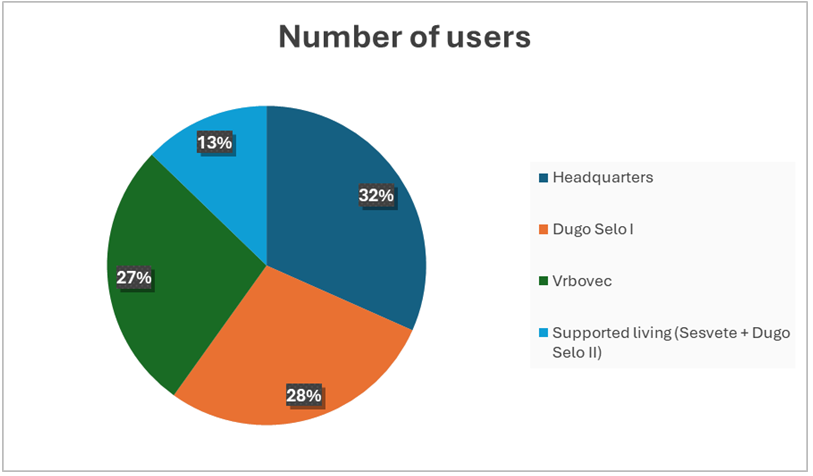
The Centre operates across multiple locations:
Headquarters (Stančić):
Residential care for 203 adults and 10 children (Administrative, healthcare, and rehabilitation departments)
Subsidiaries:
Sesvete and Dugo Selo II: Supported living for adults
Dugo Selo I: Services for 190 children
Vrbovec: Services for 141 children and 43 adults
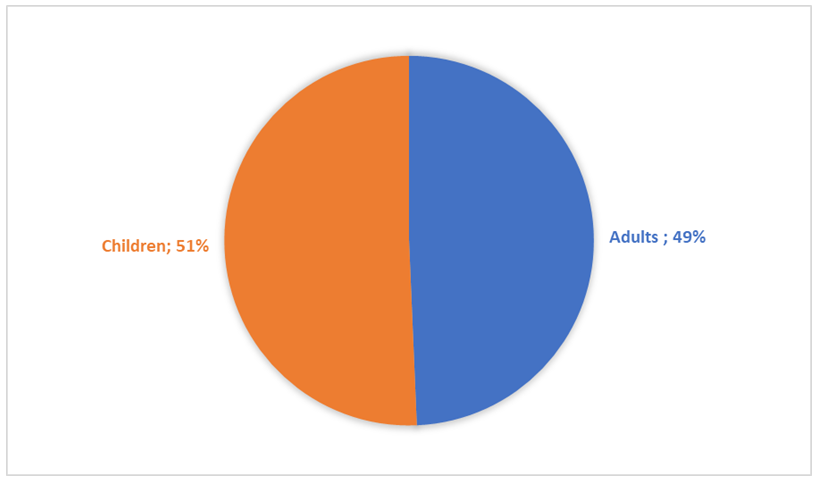
Types of Social Services:
Residential care
Supported living
Day care (half-day and full-day)
Psychosocial support
Early intervention
Professional assessment
Visual table 1: Access to Early Intervention
| Step | Description | Responsible |
| 1. | Identification of delays | Parents / Professionals |
| 2. | Application submission | Family |
| 3. | Review process | Social Welfare Office |
| 4. | Assessment | Multidisciplinary team |
| 5. | Service inclusion | Centre |
Continuous professional development represents a fundamental component of service quality within the Stančić Rehabilitation Centre. Our therapists regularly participate in specialized training programs, workshops, and international conferences to ensure the application of the latest evidence-based practices in their daily work. These educational activities cover a wide range of therapeutic approaches, including sensory integration, neurodevelopmental treatment, communication systems, and innovative psychosocial interventions.
By investing in lifelong learning, the Centre ensures that its multidisciplinary team remains competent, responsive, and aligned with contemporary standards in early intervention and rehabilitation. Continuous education not only enhances professional expertise but also directly contributes to improved outcomes for service users, fostering more effective, individualized, and holistic support. Furthermore, knowledge gained through education is systematically shared among team members, strengthening internal collaboration and promoting a culture of professional excellence within the institution.
Visual Table 2: Specialized Therapeutic Procedures
| Therapy | Focus | Outcome |
| Sensory Integration | Sensory processing | Regulation |
| Feeding Therapy | Oral-motor | Safe feeding |
| Swimming | Motor-skills | Strength |
| Horseback Riding | Posture | Confidence |
| Neurofeedback | Brain | Attention |
| PECS | Communication | Expression |
| Bobath | Movement | Control |
Therapy Dogs in Early Developmental Intervention
Animal-assisted interventions (AAI), particularly those involving therapy dogs, have gained increasing recognition as a complementary approach in early developmental support. Therapy dogs are specially trained to provide comfort, facilitate engagement, and support therapeutic goals in structured settings. Within early intervention contexts, they can play a significant role in enhancing social, emotional, and cognitive development in young children, including those with developmental delays or disabilities.
The presence of a therapy dog can reduce anxiety and increase motivation, creating a more engaging and less intimidating therapeutic environment. Studies suggest that interactions with therapy dogs may stimulate communication, encourage joint attention, and promote positive social behaviors such as turn-taking and empathy. For children with autism spectrum disorder (ASD), therapy dogs have been shown to support improvements in social interaction and decrease stress-related behaviors (O’Haire, 2013).
At the Rehabilitation Centre Stančić, two certified therapy dogs are actively integrated into early developmental support programs as part of a multidisciplinary therapeutic approach. Their inclusion reflects a growing recognition of animal-assisted interventions (AAI) as a valuable adjunct to conventional therapies for young children with developmental difficulties.
Within this setting, therapy dogs are incorporated into structured sessions aimed at supporting developmental domains such as communication, sensory processing, and emotional regulation. Clinical observations and practice-based evidence from the Centre indicate significant positive outcomes. In the area of communication, children demonstrate increased initiation of interaction, improved joint attention, and greater use of verbal and non-verbal communication strategies during activities involving the therapy dogs. The dogs often act as social facilitators, motivating children to engage more actively with therapists and their environment.
In terms of sensory regulation, interaction with the therapy dogs—such as tactile engagement through petting, grooming, or guided play—provides meaningful sensory input that supports modulation and integration processes. These activities contribute to improved self-regulation and reduced sensory-related distress. Furthermore, notable benefits have been observed in emotional regulation. The consistent, calm, and non-judgmental presence of the therapy dogs appears to reduce anxiety, enhance emotional security, and support the development of adaptive coping strategies in young children.
The experience at the Rehabilitation Centre Stančić aligns with existing literature highlighting the therapeutic potential of animal-assisted interventions in early childhood (O’Haire, 2013; Fine, 2019). While further systematic research is warranted to quantify outcomes, current practice strongly supports the continued inclusion of therapy dogs as an effective and meaningful component of early developmental support services.
Visual Table 3: Therapy Dog Program
| Element | Focus | Result |
| Therapy Dog | Emotional | Reduces anxiety |
| Sessions | Social | Better interaction |
| Sensory input | Integration | Adaptation |
| Motivation | Engagment | Participation |
Discussion
The transformation of the Stančić Rehabilitation Centre reflects a broader shift toward deinstitutionalization and community inclusion. Since 2014, EU-funded initiatives have enabled the development of decentralized services, allowing users to live more independently.
Early intervention plays a critical role in this system. The Centre’s multidisciplinary approach ensures that children receive timely and individualized support, while families are actively involved in the process. Collaboration with kindergartens, schools, and healthcare providers strengthens early detection and intervention outcomes.
Innovative therapies, such as neurofeedback and therapy dog programs, demonstrate the Centre’s commitment to evidence-based and user-centered care.
Family oriented early intervention
In our institution, we prioritize family-oriented early intervention to support children with developmental needs. Our professionals work closely with families by providing services directly in the child’s home. This approach is primarily designed for the youngest children, particularly those up to three years old.
Home-based early intervention offers a unique advantage: children receive support in their natural environment, where they feel safest and most comfortable. Since children under three spend the majority of their time with their families, it is essential to integrate developmental activities into everyday routines. This allows children to practice important skills within familiar contexts, making the learning process more meaningful and effective.
Family-oriented early intervention not only benefits the child but also encourages greater and more active parental involvement. The family is considered the central unit of support, empowering parents to become engaged partners in their child’s developmental journey.
By situating early intervention within the family home, we create a nurturing environment that respects the child’s rhythms and family dynamics, ultimately promoting greater success in developmental progress and stronger family resilience.
Experiences, Needs, and Challenges of Parents of Children with Developmental Risks and Difficulties within the Early Developmental Support Service at the Stančić Rehabilitation Center
The research was conducted with a sample of 31 parents or guardians of children who use the early developmental support service at the Stančić Rehabilitation Center, Dugo Selo branch. A purposive sampling method was applied to select participants who have direct experience with the service.
The main objectives of the study were to gain a deeper understanding of the parents’ or guardians’ experiences, identify the needs of families, and contribute to the improvement of the quality of early developmental support services.
Data collection was carried out through an online questionnaire hosted on the Google Forms platform, featuring both quantitative questions and elements that allowed qualitative insights. The research design combined quantitative methods with mixed-method analysis, focusing on parents’ satisfaction, the barriers they face, and the challenges encountered in daily life.
Results indicated that over 50% of parents reported moderate to high satisfaction with the early developmental support service. Notably, parents who believed that the service met the specific needs of their family also expressed higher overall satisfaction.
The study also highlighted a significant association between higher levels of parental concern about their family’s daily functioning and poorer family adaptation to the child’s difficulties.
When asked about who first noticed delays or irregularities in their child’s development, the majority of respondents (65%) identified themselves as the first to recognize these issues. Other identifications included specialists such as a medical doctor (6.5%), early childhood educators (9.5%), educational rehabilitation professionals or psychologists in preschool settings (3.2%), and diagnoses made during pregnancy (6.5%).
The age at which parents first noticed developmental differences in their children varied. Four parents observed these differences within the first 6 months, seven between 6 and 12 months, thirteen between 1 and 2 years, four between 2 and 3 years, and three parents noticed developmental concerns when their children were between 3 and 4 years old. This distribution highlights that the majority of parents identified developmental concerns during the early toddler years.
Regarding the pathway to specialist referral, 38% of parents reported that they sought expert advice on their own initiative. A medical doctor referred 22.6% of the children, while specialists within preschool settings, such as educational collaborators, directed 9.7%, and preschool teachers referred 6.5%.
The age at which families first engaged with the early developmental support service also varied: three children began receiving support within the first year, eight between 1 and 2 years, eleven between 2 and 3 years, five between 3 and 4 years, and four children started after 4 years of age.
These findings suggest parental vigilance in recognizing developmental concerns, often initiating contact with professionals independently, and varied timelines for service inclusion, pointing to the need for ongoing outreach and support to families at different stages of their child’s development.
Parents reported different pathways to accessing professional support for their children. About 22.5% of families engaged in support services simultaneously through both private public systems. Thirty-five and a half percent of parents first accessed support privately, while 41.9% began within the public system.
The waiting time from submitting a request to starting the early developmental support program within the social care system varied. Four parents waited between 0 and 3 months, another four between 3 and 6 months, fourteen waited from 6 to 12 months, eight between 1 and 2 years, and one family waited more than 2 years. These findings indicate notable delays for some families in accessing services.
Regarding their experiences with the early developmental support service, 80.6% of parents felt that the support helped them better understand their child’s needs. Communication with specialists was rated very positively, with 100% of parents reporting that interactions were pleasant, understandable, and that they felt comfortable asking questions related to their child. Additionally, 81.1% agreed that their child’s specific needs were respected and that the methods of work were appropriate for their child. Over 90% of parents also indicated that, over time, they gained greater confidence in managing their child’s difficulties.
These results highlight both the strengths of the service in supporting families and some of the challenges related to access and wait times.
When asked about difficulties in using early developmental support services, 56.3% of parents reported that they did not find the service demanding or challenging. However, 28.1% identified difficulties in balancing service use with family obligations, 15.6% cited lack of time due to work and other responsibilities, 21.9% reported emotional exhaustion, 12.5% mentioned financial strain, and 18.8% pointed to the distance of the facility as a barrier.
Regarding everyday life challenges and family adaptation to the child’s difficulties, 65.6% of parents acknowledged that their family faced numerous obstacles related to their child’s difficulties. Furthermore, 40.6% stated their family still struggles with some of these challenges. A significant 68.8% of parents reported that their personal adjustment to the demands related to their child’s difficulties was somewhat or very difficult.
Common obstacles faced by parents and guardians include societal misunderstanding, lack of empathy, and social judgment. Many also experience inability to work, major sacrifices, and a life fully adapted to the child’s needs. Additional challenges involve managing the child’s behaviors, difficulties with communication and everyday routines such as feeding, sleeping, and activities, as well as insufficient support from preschools and the broader system.
These findings underline the complex realities faced by families and highlight areas where services and community support could be enhanced to reduce burdens and improve adaptation.
Parents expressed a desire for various types of professional support related to their child’s difficulties. These included ongoing psychological assistance, improved intersectoral cooperation among professionals, the possibility of receiving all necessary therapies within a single institution, as well as educational activities such as lectures and literature related to the child’s challenges.
In terms of areas for further development and improvement of early developmental support services, parents highlighted the need for shorter waiting lists, expansion of service offerings with a greater number of therapies, increased opportunities for children’s inclusion in the local community through visits to events, and occasional workshops for both parents and children.
The research tested several hypotheses related to parental satisfaction and adaptation. The first hypothesis (H1) anticipated that at least 50% of parents would express moderate to high satisfaction with the service. Results confirmed this, with 88% of parents reporting moderate or high satisfaction, and an average satisfaction score of 4.5 on a 1 to 5 scale, indicating very high satisfaction.
The second hypothesis (H2) explored the relationship between how well the service met the specific needs of families and overall parental satisfaction. A statistically significant positive correlation was found (ρ=0.74, p<0.01), confirming that better alignment of services with family needs leads to greater satisfaction.
The third hypothesis (H3) examined the link between the level of parental concern about daily family functioning and family adaptation to the child’s difficulties. Results showed a significant positive correlation (ρ=0.51, p<0.01), with higher parental concern associated with poorer family adaptation. Conversely, lower parental concern was related to better family adjustment.
These findings emphasize the importance of tailored support that addresses the unique needs of each family, and the potential benefits of reducing parental stress to improve family adaptation.
An important aspect of contemporary early intervention services is the active inclusion of caregivers and the implementation of family-centered support approaches. Modern early intervention frameworks emphasize that parents and caregivers should be recognized as equal partners in the rehabilitation and developmental process, as their involvement significantly contributes to the child’s progress and overall family well-being (Dunst & Espe-Sherwindt, 2016). Family-centered approaches focus on strengthening parental competencies, respecting family priorities, and empowering caregivers to participate in decision-making related to intervention planning and implementation.
Research shows that when caregivers are actively involved in therapeutic activities and receive adequate emotional, educational, and psychosocial support, families report greater confidence in managing developmental challenges, reduced parental stress, and improved quality of family functioning (Dunst, Trivette, & Hamby, 2007). Support strategies may include parent counseling, psychoeducation, parent-child interaction workshops, home-based guidance, and continuous collaboration between professionals and families. Such approaches also encourage the integration of intervention strategies into everyday family routines and natural environments, which has been associated with more sustainable developmental outcomes for children.
Despite the positive experiences reported by many families, the implementation of early intervention and community-based support services continues to face numerous systemic challenges. One of the most significant difficulties is the shortage of qualified professionals, including speech and language therapists, rehabilitation specialists, psychologists, and occupational therapists, which often leads to long waiting lists and reduced service availability (WHO, 2010; Bruder, 2010). In addition, services are frequently centralized in larger urban areas, creating inequalities in access for families living in rural or less developed regions. Parents from smaller communities may experience transportation difficulties, increased financial burden, and limited continuity of support due to geographic distance from specialized centers.
Another challenge involves insufficient intersectoral collaboration between healthcare, education, and social welfare systems, which can result in fragmented service delivery and inconsistent communication among professionals (Dunst & Espe-Sherwindt, 2016). Families also report a lack of accessible information regarding available rights and support options, as well as limited opportunities for parent counseling and psychosocial support. Furthermore, many early intervention systems continue to struggle with inadequate funding, limited therapy intensity, and uneven distribution of resources, all of which may negatively affect the quality and sustainability of services. Addressing these barriers is essential for developing accessible, inclusive, and family-centered early intervention models within the community.
Conclusion
The Stančić Rehabilitation Centre exemplifies successful transformation from institutional care to a community-based service model. The availability and continuous development of early intervention services significantly contribute to improved developmental outcomes and social inclusion.
Future efforts should focus on:
Expanding community-based services
Strengthening interdisciplinary collaboration
Ensuring sustainability of intervention programs
Promoting equal developmental opportunities for all users.
This research provides valuable insights into the experiences, needs, and challenges faced by parents of children with developmental risks and difficulties who utilize early developmental support services at the Stančić Rehabilitation Center. The findings demonstrate that most parents are moderately to highly satisfied with the services, particularly when these are well aligned with their family’s specific needs.
However, families also encounter numerous obstacles, including balancing service use with daily obligations, emotional exhaustion, financial strain, and social misunderstanding. These challenges affect both the parents’ well-being and the family’s overall adaptation to the child’s needs.
Parents expressed a clear preference for comprehensive, coordinated support that includes psychological assistance, intersectoral collaboration, and educational resources. Improvements such as shorter waiting times, expanded therapy options, greater community inclusion, and more parent-child workshops could further enhance service quality and family outcomes.
Recent literature on early intervention models and community-based rehabilitation frameworks further supports these findings. Contemporary family-centered early intervention approaches emphasize collaborative partnerships between professionals and parents, individualized planning, and strengthening family competencies within everyday environments (Dunst & Espe-Sherwindt, 2016; Bruder, 2010). Studies indicate that interventions embedded in natural contexts, such as the home and community, contribute to better developmental progress, increased parental confidence, and improved family quality of life (Odom & Wolery, 2003; Guralnick, 2019). In addition, community-based rehabilitation frameworks highlight the importance of accessibility, inclusion, interdisciplinary cooperation, and active participation of families in decision-making processes (World Health Organization [WHO], 2010). Such frameworks are increasingly recognized as essential for ensuring continuity of care and promoting social participation for children with developmental difficulties.
Research published in recent years also demonstrates that long-term developmental outcomes are more favorable when early intervention services are timely, intensive, and tailored to the child’s and family’s needs (Spittle et al., 2015; Hadders-Algra, 2021). Children who participate in early developmental support programs often show improvements in communication, cognitive functioning, adaptive behavior, social interaction, and school readiness (Guralnick, 2017). At the same time, parents frequently report reduced stress levels, greater feelings of competence, and improved coping strategies (Dunst, Trivette, & Hamby, 2007). Longitudinal studies additionally suggest that early family-centered interventions may reduce the need for more intensive support services later in childhood and contribute to greater educational and social inclusion over time (Britto et al., 2017).
Overall, this study underscores the critical importance of responsive, family-centered early support services that address practical, emotional, and social dimensions to effectively assist families in navigating developmental challenges. The findings are consistent with current international evidence emphasizing that integrated early intervention and community-based rehabilitation approaches can positively influence both child development and family well-being in the long term.
In conclusion, accessible and family-centered early intervention services play a crucial role in promoting positive developmental outcomes, strengthening family capacities, and enhancing the social inclusion of children with developmental risks and difficulties. Timely and comprehensive support not only contributes to children’s cognitive, communication, and social development, but also facilitates their successful participation in educational settings and community life. Ensuring equal access to high-quality early intervention services within the community is therefore essential for improving long-term quality of life for both children and their families.
References
- Britto, P. R., Lye, S. J., Proulx, K., Yousafzai, A. K., Matthews, S. G., Vaivada, T., Bhutta, Z. A. (2017). Nurturing care: Promoting early childhood development. The Lancet, 389(10064), 91–102.
- Berry, A., Borgi, M., Francia, N., Alleva, E., & Cirulli, F. (2013). Use of assistance and therapy dogs for children with autism spectrum disorders: A critical review of the current evidence. The Journal of Alternative and Complementary Medicine, 19(2), 73–80.
- Bruder, M. B. (2010). Early childhood intervention: A promise to children and families for their future. Exceptional Children, 76(3), 339–355.
- Dunst, C. J., & Espe-Sherwindt, M. (2016). Family-centered practices in early childhood intervention. In B. Reichow, B. Boyd, E. Barton, & S. Odom (Eds.), Handbook of Early Childhood Special Education (pp. 37–55). Springer.
- Dunst, C. J., Trivette, C. M., & Hamby, D. W. (2007). Meta-analysis of family-centered helpgiving practices research. Mental Retardation and Developmental Disabilities Research Reviews, 13(4), 370–378.
- European Commission. (2018). Deinstitutionalisation and Community Living.UNICEF. (2013). Early Intervention Practices.
- Fine, A. H. (2019). Handbook on Animal-Assisted Therapy: Foundations and Guidelines for Animal-Assisted Interventions (5th ed.). Academic Press.
- Friesen, L. (2010). Exploring animal-assisted programs with children in school and therapeutic contexts. Early Childhood Education Journal, 37(4), 261–267.
- Guralnick, M. J. (2017). Early intervention for children with intellectual disabilities: An update. Journal of Applied Research in Intellectual Disabilities, 30(2), 211–229.
- Guralnick, M. J. (2019). Effective early intervention approaches for children with developmental disabilities. Developmental Medicine & Child Neurology, 61(11), 1241–1245.
- Hadders-Algra, M. (2021). Early human motor development: From variation to the ability to vary and adapt. Neuroscience & Biobehavioral Reviews, 90, 411–427. Odom, S. L., & Wolery, M. (2003). A unified theory of practice in early intervention/early childhood special education. The Journal of Special Education, 37(3), 164–173.
- O’Haire, M. E. (2013). Animal-assisted intervention for autism spectrum disorder: A systematic literature review. Journal of Autism and Developmental Disorders, 43(7), 1606–1622.
- Spittle, A., Orton, J., Anderson, P., Boyd, R., & Doyle, L. W. (2015). Early developmental intervention programmes provided post hospital discharge to prevent motor and cognitive impairments in preterm infants. Cochrane Database of Systematic Reviews, 2015(11).
- World Health Organization (WHO). (2012). Early Childhood Development and Disability.