Building Sustainable Aquaculture through Holistic Training in Animal Health and Biosecurity
Dr. Alexandre BELJEAN DVM
*Corresponding author: Alexandre BELJEAN DVM, Aquaculture Vet and Expert, Global Coordinator Aquaculture for WVEPAH
DOI: 10.37722/JAMBE.2025204
By 2050, the world will need to feed nearly two billion more people with only 5% additional arable land available. As global demand for animal protein continues to rise, particularly in aquaculture, sustainable and efficient production systems are essential to ensuring food security while preserving natural resources.
The growing demand for animal-sourced foods has further impacted soil, water, and air quality, as well as water availability and biodiversity. Therefore, adopting a holistic approach to enhance the sustainability of animal production is critical to achieving global food security.
While intergovernmental organizations such as the World Organisation for Animal Health (WOAH) and the Food and Agriculture Organization of the United Nations (FAO) continue to develop standards and guidelines to promote sustainable animal production and fair trade, veterinarians, animal production specialists, and producers urgently need practical, field-oriented training and support to implement these principles effectively.
The World Veterinary Education in Production Animal Health (WVEPAH), a WOAH Collaborating Centre for Advanced Training in Livestock Animal Health, delivers practical, high-level training for veterinarians and aquaculture professionals. Our programs emphasize a One Health and holistic approach that integrates animal health, environmental sustainability, and food safety.
Watch the Article in Motion
WVEPAH trains and certifies professionals working closely with producers. These experts work in the private or public sectors, in international institutions or companies acting locally, regionally or globally.
We strive to provide these experts with the latest knowledge and tools to address health management in a holistic approach, the only viable approach for the future of animal production.
Our experts are valuable partners to help producers:
- Attain the best possible outcome for their production systems
- Improve animal production and welfare in a sustainable manner, mitigating the impact of production in the environment
- Implement health management and biosecurity plans to prevent the occurrence of diseases and reduce the risks of antimicrobial resistance
- Adopt good husbandry practices to improve productivity, health and welfare of animals
- Detect problems at an early stage and act rapidly to mitigate their impact on productivity, health and welfare
- Understand that prevention is the best way to manage animals and deliver sustainable results
- React quickly to emergency situations
- Become more resilient to drastic changes with thorough understanding of optimal health and performance parameters on their farms and within their region
- Produce healthier and safer foods
- Adopt international standards to make trade smoother and more predictable.
WVEPAH brings a concrete One Health teaching and learning approach to animal production and health worldwide. Through advanced training and certification, we empower professionals to become key contributors to intergovernmental initiatives—driving the transformation toward sustainable, biosecure, and resilient food systems, ensuring no one is left behind.
WVEPAH certification holds 2 training modules. These modules have a hybrid format: On-line followed by a face-to-face 5-day event at one of WVEPAH’s host veterinary college all around the world, combining lectures and practical sessions, clinical cases review and discussion.
Module I — Fundamentals of Farm Health Management in Aquaculture
This foundational module includes 40 hours of online training and a 40-hour in-person session in Singapore. It teaches participants to adopt a holistic, systemic approach to health management in aquaculture.
In the context of global climate change, this perspective equips veterinarians and aquatic health professionals to adapt to evolving environmental conditions while maintaining and improving the health status of aquaculture species.
Participants will explore key areas such as:
• Environmental parameters and water quality
• Animal nutrition and feeding
• Farm and performance management
• Physiology and pathology
• Biosecurity, medication practices, and disease prevention
• Epidemiology and international regulations
• Genetics
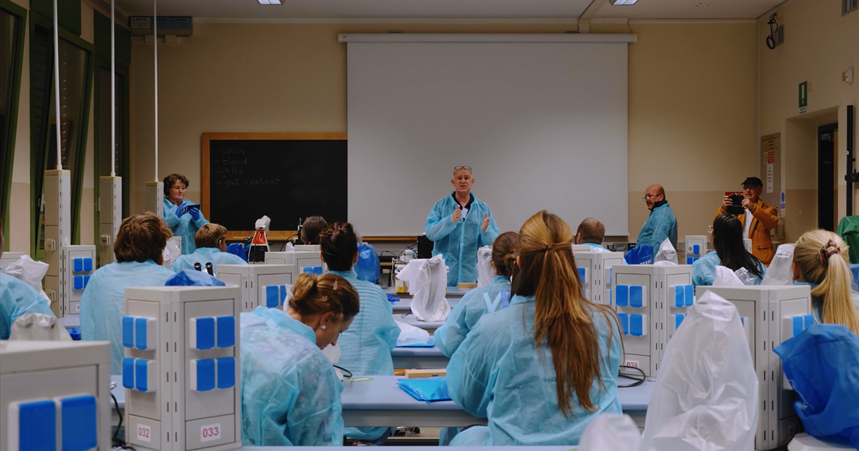
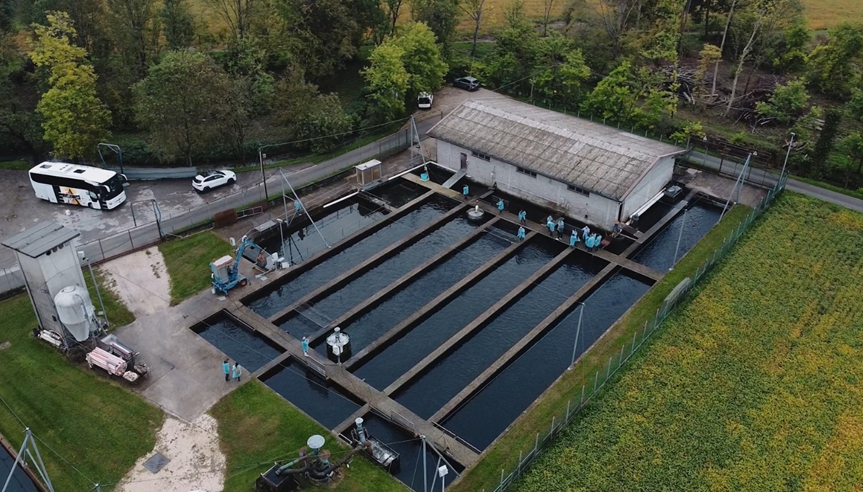
Through practical sessions, case discussions, and field visits, participants will:
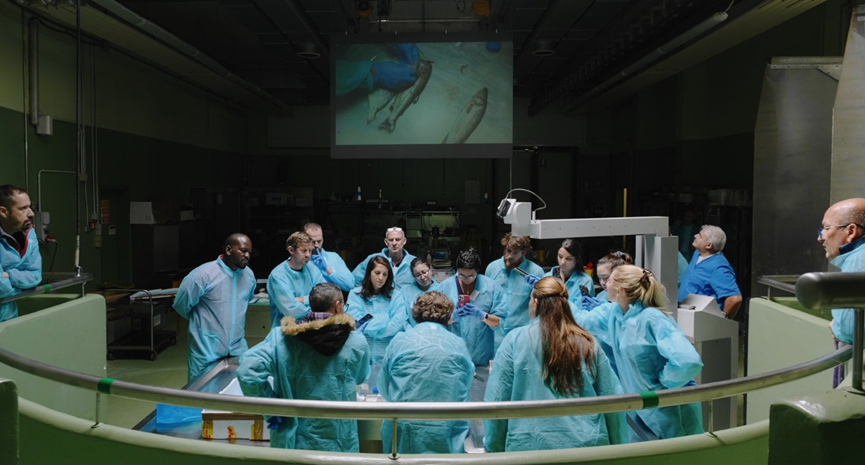
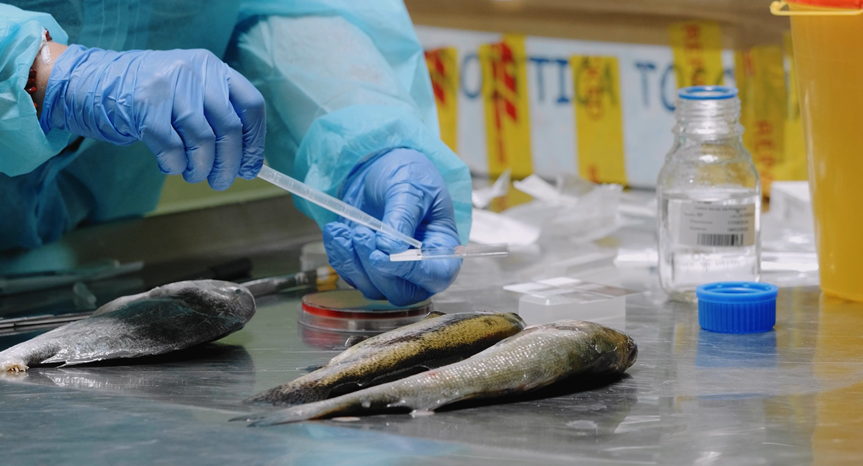
• Gain hands-on experience in autopsy and diagnostic techniques
• Analyze real clinical cases
• Deepen their understanding of zoonotic risks
• Strengthen medication practices and prevention programs
• Assess farm systems to identify strengths and weaknesses
• Understand how effective health management ensures high-quality products for consumers
The module also emphasizes the role of the WOAH and its international standards, preparing professionals to contribute to animal health, welfare, and safe international trade.
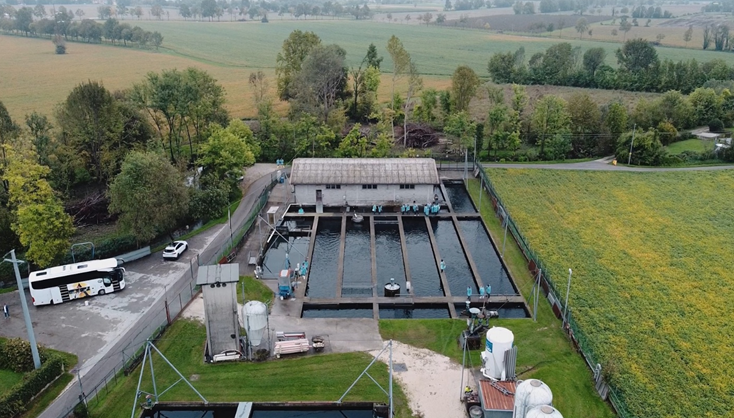
As an example, the following tables give the overview of a module I training that took place in Padova, Italy, in collaboration with ISZVe (Istituto Zooprofilattico Sperimentale delle Venezie).
| On-line part | In presence at ISZVe Padova | ||
| Hours | Hours | ||
| General Production and Holistic approach | 3 | Field Visit | 8 |
| Anatomy & physiology | 6 | Pathology & Autopsy | 10 |
| Genetics | 2 | Diagnostic | 7 |
| Structure & Environment | 6 | Epidemiology | 3 |
| Nutrition & Feeding | 4 | Medication / vaccination | 8 |
| Farm Management | 4 | Post-production | 3,5 |
| Pathology | 3 | General conclusions & discussions | 2,5 |
| Diagnostic | 6 | ||
| Biosecurity | 6 | ||
| Regulations | 4 | ||
| TOTAL Hours | 44 | Total Hours | 42 |
Module II — Advanced Health Management & Biosecurity
Delivers teaching focused on specific productions and geographical areas and challenges.
This advanced course includes 40 hours of online training and a 40-hour in-person session. It offers a comprehensive, hands-on exploration of modern aquaculture, focusing on Mediterranean species such as trout, carp, seabass, and seabream.
Key areas of expertise include:
• Fish physiology and development
• Farm systems and Recirculating Aquaculture Systems (RAS)
• Hatchery and broodstock management
• Genetics and deformity prevention
• Pathology, diagnostics, and disease control
• Biosecurity and hygiene from hatchery to harvest
• Epidemiology and health monitoring strategies
Field visits and farm audits give participants direct experience in evaluating biosecurity and production performance. Through this integrated training, WVEPAH empowers experts to lead the transition toward sustainable, biosecure aquaculture systems worldwide.
Certifications and Diploma — Validated Worldwide by WOAH
All participants in WVEPAH modules receive a certification of attendance. Those who complete Modules I and II, and submit 25 clinical cases or farm audits, are awarded the Professional Certificate in Animal Health: Aquaculture delivered by the Université de Montréal, and validated worldwide by WOAH.
This post-graduate qualification confers upon its recipients the status of International Expert in Aquaculture Health Management.
Achievements and Future Objectives
With hundreds of certified experts around the world, WVEPAH continues to build a global network of professionals equipped to ensure animal health, welfare, and sustainable food systems for all.
Our mission is clear; to empower experts who make food security for all a global reality.
WVEPAH’s next events:
Module I — Fundamentals of Operational Farm Health Management in Aquaculture
James Cook University, Singapore | March 2–6, 2026
Module II — Advanced Health Management & Biosecurity for Mediterranean Species
Oniris VetAgroBio Campus (National Veterinary School of Nantes), Nantes, France | May 18–22, 2026
Supplements:
Events/Seminars: