Ecological Role of Abu Dhabi Mangrove Habitats in Supporting Marine Biodiversity
Jack Charles Boath*
Emirates Specialized Group L.L.C (ESG), Research Department, Abu Dhabi, United Arab Emirates.
Received Date: July 10, 2025; Accepted Date: July 28, 2025; Published Date: August 14, 2025
*Corresponding author: Jack Charles Boath, Managing Director, Emirates Specialized Group L.L.C., Abu Dhabi, United Arab Emirates; Email: jackboath@icloud.com
Citation: Boath JC [2025] Ecological Role of Abu Dhabi Mangrove Habitats in Supporting Marine Biodiversity. Jr Aqua Mar Bio Eco: JAMBE-159.
DDOI: 10.37722/JAMBE.2025202
Abstract
The coastal mangrove ecosystems of Abu Dhabi, primarily dominated by Avicennia marina, serve as critical keystone habitats sustaining marine biodiversity in the southern Arabian Gulf. This study examines the ecological role of these mangroves as nursery zones supporting economically and ecologically significant species such as dugongs (Dugong dugon), migratory sea birds, juvenile fish and other marine megafauna. Drawing on field observations, PADI-certified diving experiences, drone-assisted monitoring (aerial and underwater) and satellite-based habitat mapping, the research explores trophic linkages, breeding grounds and feeding corridors that connect mangroves to adjacent offshore ecosystems. The results highlight seasonal aggregations of endangered species, including cetaceans and underscore the mangroves’ role in the life cycle of over 200 avian species. Anthropogenic stressors, such as dredging, salinity shifts and coastal urbanization, are critically evaluated alongside conservation efforts led by the Environment Agency Abu Dhabi. The findings emphasise the urgent need to embed mangrove protection within national marine spatial planning strategies, enhance biodiversity resilience and inform adaptive coastal policy frameworks for the UAE.
Watch the Article in Motion
Information Board
ISSN 2692-1529
Frequency: Continuous
Format: Video, PDF and HTML
Versions: Online (Open Access)
Language: English
Impact Factor: 4.21
Quick Links
Issues
Video Gallery
Guidelines
Publication Fee
Editorial Board
Review Board
Introduction
The mangrove forests in the coastal margins of Abu Dhabi constitute one of the most densely populated and sensitive ecosystems within the Arabian Gulf basin, in terms of their biological value. These mangrove forests, dominated mainly by the grey mangrove, mostly by Avicennia marina, have become important sources of biodiversity and natural coastal protection in an area characterised by climatic extremes and rising anthropogenic stress (1).
Abu Dhabi currently hosts over 150 square kilometres of mangrove cover, both natural and restored, with major concentrations in areas such as Jubail Island, Marawah Marine Biosphere Reserve and the Eastern Mangroves. This represents one of the largest mangrove extents in the Arabian Gulf.
The mangrove stands serve an exclusive ecological process of offering well-being, nutrition and reproduction places to a wide selection of marine and aeronautic life forms that barely exist in other saline intertidal areas since they act as green lifelines in the saline intertidal zones. As key stone nursery areas, they are vital not only in the native sustainability of the marine life but also in the conservation of migrating species such as dugongs, sea birds, dolphins, whales and turtles in the region (2). In response to increasing awareness and scientific research, these habitats have been a focus in conservation planning, marine spatial policies and sustainable development practices. This paper aims to critically evaluate the ecological functions of mangrove habitats in Abu Dhabi, which have a nursery significance and a trophic connection to the rest of the marine ecosystem and discuss the threats to them and the current conservation efforts surrounding them.
For the purpose of this study, marine biodiversity within Abu Dhabi’s mangrove habitats is assessed primarily through indicators of species richness (total number of species present), relative abundance (observed population sizes and densities) and the presence of ecologically significant or endangered species (e.g., dugongs, green turtles, migratory birds). These metrics were informed by satellite habitat mapping, field observations and existing ecological survey data provided by regional agencies and published literature with reliance on secondary data and longitudinal ecological studies.
While seasonal dynamics, particularly for migratory birds and marine mammals, are discussed thematically throughout the paper, biodiversity measurements were not seasonally stratified in the data sources used, which represents a methodological limitation. Future research should incorporate longitudinal sampling across seasons to capture variability in habitat use and species presence.
Although Abu Dhabi’s mangrove forests are smaller in scale compared to tropical systems like the Sundarbans in South Asia or Southeast Asia’s Rhizophora-dominated forests, they support disproportionately high biodiversity for an arid-zone coastal ecosystem. For example, the Sundarbans host over 260 bird species and 120 fish species, while Abu Dhabi’s mangroves support more than 200 avian species, in addition to critical marine megafauna such as dugongs, sea turtles, and dolphins. Regionally, Abu Dhabi’s mangroves represent the largest and most ecologically significant mangrove stands in the Arabian Gulf, surpassing those in Qatar, Bahrain and Oman in terms of both spatial coverage and ecological productivity (Spalding et al., 2020).
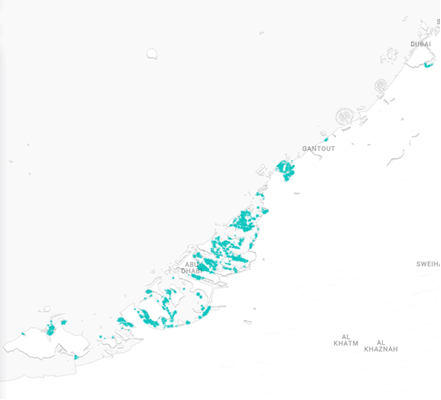
As a certified PADI Advanced Open Water diver, I have personally observed the rich marine biodiversity surrounding Abu Dhabi’s coastal mangrove zones, particularly near Reem Island and the shoreline adjacent to the Presidential Palace just offshore from the city coastal areas. During several dives in these areas, I encountered nurse sharks gliding beneath mangrove overhangs, green turtles navigating seagrass beds and dense aggregations of juvenile fish species sheltering in the shallow channels. These firsthand observations lend weight to the ecological findings presented in this study and highlight the real-world richness of mangrove-associated life in the capital’s marine corridor.
Avicennia marina as Keystone Nursery Habitat
Avicennia marina has complex root systems and related substrates, making it a source of shelter and refuge for baby marine organisms throughout their early life development. Haseeba et al., (3) support that such mangroves form an interactive land-sea interface, which acts as an ecological buffer and a productive center. The prop roots and pneumatophores provide the juvenile fish species, such as mullets, snappers and groupers. This place offers protection against predation as well as the availability of food sources. Shrimps and many species of crabs take advantage of the nutritious detritus produced by the mangrove leaves’ decay (4). Still, mollusks and filter feeders colonies the submerged surfaces of the mangrove trunks and roots. The hydrological setting and topographical complexity of these forests favor a wide variety of invertebrate assemblages and thus contribute to the food web in an invaluable manner. Research indicated that mangrove habitats are also essential to the local fisheries and coastal economies as they provide habitats to almost 70 per cent of commercially important fish species in the Arabian Gulf at some point during their life cycle (3). In addition, the nursery sites carry out ecosystem functions including nutrient recycling and primary production, which are far-reaching beyond the nursery habitats’ physical location, linking the mangrove zones with the coral reefs, the seagrass beds and the deeper offshores.
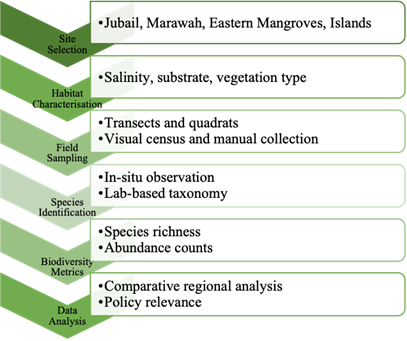
In designing the biodiversity assessment, several species were prioritised as ecological indicators due to their sensitivity to mangrove habitat changes and their functional roles in coastal food webs. Species such as Periophthalmus spp. (mudskippers), Terebralia palustris (mangrove whelks) and juvenile stages of groupers and snappers were selected based on established literature and their observable dependence on mangrove-rooted sediment systems. These species serve as effective proxies for gauging ecosystem health and anthropogenic disturbance.
Interaction of Mangrove Areas with Dugongs, Whales, Dolphins and Sea Turtles
Mangrove ecosystems, especially those dominated by Avicennia marina in Abu Dhabi, provide ecological hubs in the Arabian Gulf, supporting not only invertebrates and juvenile fish but also intricate links with more marine megafauna. The best relationships include dugongs (Dugong dugon), sea turtles, dolphins and whales, which use the habitats surrounding mangroves as shelters, feeding grounds, reproductive grounds and navigation grounds during their migrations (5). Such interrelations are incidental; however, strong ecological interdependencies emphasise mangrove conservation’s role in maintaining marine life diversity.
Dugongs and Mangrove-Seagrass Connectivity
Dugongs are very strict vegetarians and marine mammals since they virtually consume only seagrass, which in many instances is found in shallow waters along the coasts near mangrove trees. Although mangroves do not contribute directly to forage in the diet of dugongs, they play a fundamental ecological role in the sediments’ physical stability and the turbidity level affecting the health of adjacent seagrass pastures (6). The mangrove root systems filter the runoff and capture the fine sediments to form clearer water, which makes it penetrate through the water and into the seagrass beds where photosynthesis occurs. Through this subsidising, the survival of certain dugongs is crucial since the seagrass can be weakened through sedimentation and pollution and this causes a decline in the population.
In addition, the lagoons and estuaries with mangroves protect the dugongs against predators and people. The safe zones are resting areas and passageways, especially for mothers with calves. Walker (7) states that in the Arabian Gulf and Indian Ocean, there have been observational studies of dugongs utilising mangrove-lined bays in the cooler months, with water quality and food availability being at their best. The fact that mangroves are adjacent to seagrasses also gives rise to a mosaic of habitats that dugongs traverse daily, further compelling the necessity to view these ecosystems as integrated functional units for conservation.
Sea Turtles and Mangrove Nursery Functions
Vulnerable sea turtles, green (Chelonia mydas) and hawksbill (Eretmochelys imbricata), are particularly spatially associated with mangroves at different life stages. Juvenile sea turtles are commonly found in the mangrove creeks and lagoons, which have the best food resources, such as jellyfish, crustaceans like crabs and algae (8). The root complexity of the mangroves acts as a hiding ground against predators and high currents and survival rates are high in the vulnerable growing periods.
Mangrove places can provide some transition between nesting beaches and offshore feeding grounds for sea turtles. A nest site is generally found on sandy beaches; the dispersal phase of the animal after gaining its hatchling stage may involve muddy bottom estuaries with mangrove forests in them, such that turtles adjust to conditions in the sea and learn to feed themselves (9). Sometimes the detritus produced by mangroves is added nutritiously into nearby benthic environments, indirectly supplementing turtle diversity.
Mangrove ecosystems also normalise and permit the salinity and temperature gradient, which is of utmost importance to the turtle physiology. Agha et al., (10) assert that the changing climate may influence sex ratios in hatchlings and susceptibility to diseases because of increasing temperatures and salinity shifts. Mangrove forests regulate such changes by stabilising microclimates and ensuring water quality to promote turtle health and reproduction.
Dolphins and Mangrove-Influenced Foraging Behaviour
Indo-Pacific bottlenose dolphin (Tursiops aduncus) and humpback dolphin (Sousa chinensis) can often be found in mangrove-proximate waters and elaborate foraging and social activities are undertaken there. The mangrove creeks are rich in biodiversity and waste is used by these cetaceans, who feed on fish and crustaceans that concentrate in these nutrient-laden shoals (11). The regular prey motions caused by the tidal dynamics of the mangrove systems allow dolphins to develop specific hunting strategies, such as strand feeding and group herding.
The mangrove habitats are also home to dolphin calves because predators and boat traffic shelter them in the delivery area. Image of Dolphins during the calving process. Wells et al., (12) noted that female dolphins tend to segregate themselves in low mangrove canals during parturition when the still waters and thick cover decrease the stress and increase the calf’s survival. It has been found that mangrove habitat reduces underwater noise, allowing a quiet habitat that promotes communication and bonds between mother and calf.
Additionally, dolphins have seasonal migration patterns that align with mangrove productivity dynamics. Dolphin pods station along the mangrove edges during high detritus production seasons due to their high prey density (13). These seasonal aggregations indicate the importance of mangroves in defining the distribution and behaviour of dolphins. They propose that destroying the mangroves would interfere with critical life processes in intelligent marine mammals.
During several ADNOC (Abu Dhabi National Oil Company) related environmental project briefings, our diving teams were formally advised by the Environment Agency Abu Dhabi to avoid approaching or interacting with confirmed orca sightings off the UAE coast. These rare yet verified observations suggested that orcas may have been utilising the shallower, warmer waters near offshore structures for breeding or calving. Such guidance from regulatory bodies highlights both the ecological sensitivity of these waters and the responsibility of operational crews to minimise disturbance to apex marine predators during critical life stages.
Whales and Mangrove-Linked Migration Corridors
Although the masses of whales do not commonly dwell in the mangrove system because of their large size and pelagic behaviour, some of these creatures have been reported along the coasts lined with mangroves during migration. Some include humpback whales (Megaptera novaeangliae) and sperm whales (Physeter macrocephalus). These interactions are usually short-lived but of ecological importance. Mangrove zones enhance coastal water productivity because nutrients are exported and detritus is moved elsewhere, enhancing plankton blooms and fish concentration. Whales can feed at the feeding stops.
Mangrove estuaries sometimes act as resting places for whales that pass through narrow coastal routes. Temporary escape is available in the calm shallow water zones, especially those with calves (4). Though there have been few direct feeding activities in the mangrove regions, the ecological impact of mangroves on the surrounding marine environment establishes ideal conditions under which the whales feed and navigate.
In addition, the acoustic orientation of migrating whales might be related to mangrove habitats. These acoustics can be used as aural anchors when long-distance migration to the mangroves occurs; it is possible to identify the mangrove environments precisely by their snapping shrimp, fish sounds and tidal movements (14). This sensory activity emphasises how multifunctional the provision of support is that mangroves give to marine megafauna and provide habitable areas.
Ecological Synergy and Conservation Implications
The mangrove ecosystem and marine megafauna are synonymous with an ecological synergy, where one ecosystem’s sustainability and well-being are directly related to several species’ sustainability. Bakermans et al., (15) report that dugongs, sea turtles, dolphins and whales all utilise mangrove areas differently, albeit significantly and a tangled system of interdependency exists where preserving mangroves is even more significant.
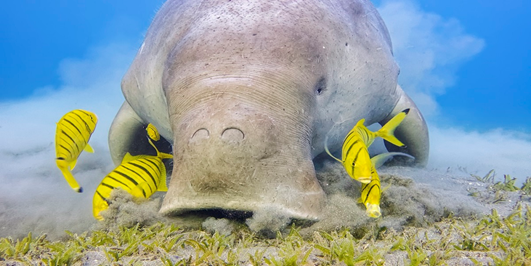
Habitat conservation of mangroves guarantees that these interactions persist and promotes greater marine biodiversity. Therefore, all conservation efforts should include a landscape-level approach that identifies the interrelationship between mangroves, seagrass beds, coral reefs and the pelagic zones (16). Marine Protected Areas (MPAs) need mangrove buffers and migration corridors and the restoration initiatives must focus on hydrological integrity and sediment stability to sustain the habitat’s quality.
Furthermore, monitoring and research programs should be aimed at recording species-related interactions with mangroves, where satellite tracking, acoustic monitoring and drone surveillance are available (17). Such information can be used in adaptive management and formulation of policies such that the conservation of mangroves is in tandem with the ecological requirements of the marine megafauna.Emerging Monitoring Techniques
Emerging Monitoring Techniques
To support visual documentation, I independently deployed both aerial and underwater drones across selected Abu Dhabi mangrove sites. This comparative perspective capturing both surface canopy structures and submerged benthic zones provided a unique lens into habitat connectivity, species movement and vegetation density. The synthesis of drone imagery has become an increasingly valuable tool in translating field ecology into spatial data, enabling finer-scale mapping and multi-angle biodiversity assessments.
Seasonal Migrations and Feeding Behaviour of Seabirds and Marine Mammals
One of the most impressive biological phenomena in the marine world is seasonal migrations caused by the necessity to gain maximal access to food, breeding grounds and other conditions favorable to the animal. These migrations are critical in determining the ecological cycle of the seabirds and the marine mammals, especially in the Arabian Gulf, especially at the mangrove-covered shores of Abu Dhabi (18). The relationship between migration and feeding modes is highly determined by tidal rhythms, pulse of productivity and habitat availability, where the mangrove ecosystems act as key nodules in these seasonal migrations.
Seabird Migration Patterns and Foraging Strategies
High levels of synchronisation characterise migratory patterns of Seabirds, whereas photoperiod, ocean currents and prey availability frequently determine migratory activity. Abu Dhabi mangrove areas are stopover sites of species along the East Asian-Australasian Flyway, such as the flamingos, herons, egrets and terns (9). These birds visit in huge numbers during cooler months, usually during October and March, when the productivity of the Arabian Gulf is high owing to appropriate temperature and nutrient levels.
These migratory birds have their perfect foraging areas in mangrove habitats. These mudflats and shallow water around Avicennia marina forests are laden with crustaceans, small fish and Benthic invertebrates that are highly enjoyed by wading and diving birds. The relationship between feeding behaviour and the tidal cycles is meaningful, as mudflats become exposed at low tide, enabling feeding, while at high tide, the pelagic species move inshore (11). It is found that many seabirds are opportunistic feeders and can vary their methods of foraging relative to the abundance of their prey and competition. For example, flamingos are filter feeders of algae and small invertebrates, whereas herons use stealth and accuracy in catching their fish in the creeks of the mangroves.
A typical phenomenon during peak migration is multispecies feeding flocks (MSFFs). Johnston (19) supports that these flocks are aggregated around productive areas and they usually happen due to some local enhancement indicators of prey splashing or of existing jackals or dominant foragers. It has been found that intrinsic characteristics, e.g., body size, foraging guild and migration pattern contribute to flock composition, with the surface feeders and pursuit divers appearing together more at spring and autumn migrations. This enhances the efficiency of foraging ability and gives ecological significance to the mangrove areas as a seasonal feeding ground.
Marine Mammal Movements and Feeding Behaviour
Sea life forms such as dugongs, dolphins and whales are also seasonally migratory, with their behaviours being closely tied to the feeding and habitat. For example, dugongs display seasonal aggregation around mangrove-edged lagoons and adjoining seagrass in cooler times (18). Notarbartolo et al., (18) insist that these are times when seagrass productivity is highest and are the best foraging times. Travel Dugongs are well documented to have long-range migration patterns in search of quality forage and the directions in which they move are affected by changes in water temperature, water salinity and human activity.
There are seasonal changes in the distribution of dolphins, especially Indo-Pacific bottlenose and humpback dolphins, which must be related to the availability of prey within the mangrove-buffered waters. The pods of dolphins are commonly found in the winter and early spring off the mangrove estuaries, where many juvenile fish and crustaceans are found (20). Special hunting tactics of cetaceans, such as cooperative herding and strand feeding, are used to take advantage of prey concentrations in low tidal areas. The predictable tidal movements and the structure of the roots of mangroves provide optimal conditions for such behaviours, increasing the feeding success rate and social bonding.
Although not so commonly viewed in connection with mangrove environments, the pelagic whales cross the waters adjacent to mangroves during migration. An example is the case of Humpback whales, which have long-distance migrations between their feeding grounds in the temperate waters and their breeding grounds in the tropical waters, sometimes using mangrove-driven coastal corridors (21). Nutrients released on the outflow of the mangrove systems lead to planktons and fish clumps that the whales can take advantage of passing through. These short-term contacts emphasise the larger ecosystem interlinkage amid mangrove locales and open-sea marine systems.
Climate Change and Shifting Migration Dynamics
Species increasingly change their gathering patterns, expeditions and activities due to climate change. The increase in sea temperatures, alteration of the salinity gradients and variation in ocean productivity are changing the seasonal resource predictability (22). An example is the seabirds arriving later or earlier compared to previous typical arrivals, depending on when the plankton begins to bloom and the availability of food sources. Other species are either shifting their migration north or prolonging the length of their stopovers to suit the changed feeding conditions. Adaptability is a significant factor in survival; not every species has an adaptive ability to deal with a fast-changing environment.
The marine mammals also struggle with the same issues. The rise in salinity levels or increased sedimentation in the coastal development may cause Dugongs difficulty locating appropriate seagrass beds (5). When the prey ducks or the volume of boats increase, dolphins can change their migration patterns. The whales, who use the ocean’s acoustics and waves as a way of navigation, may not be able to navigate effectively or get food easily when these signals get distorted due to climate change. These changes affect reproductive performance, energy allocation and population demography.
Mangrove Ecosystems as Seasonal Refuges
Venerable mangrove habitats, in this case, provide short-term shelters that mitigate the effects of environmental fluctuation. They are essential to migratory species because they can stabilise microclimates, maintain water quality and contribute to prey abundance (7). Mangroves provide predictable feeding stations and secure places to roost offshore in the case of seabirds. To the marine mammals, they serve as a habitat, feeding channels and a coastal transition.
These species also improve the functions of mangroves because they are present during the season. Seabirds play a role as depositors of guano and contribute to the nutrient cycling processes. In contrast, the role of marine mammals is in developing trophic coupling and mixing of the sediments (18). These processes strengthen the eco-value of the mangrove areas and highlight the need to implement integrated conservation measures to cater to the seasonal dynamics.
These findings highlight the need for mangrove conservation to be formally integrated into Abu Dhabi’s broader coastal management strategies. Policymakers should consider establishing biodiversity monitoring frameworks and habitat-specific protection zones, particularly in areas with high ecological connectivity such as Marawah and Jubail. Incorporating these insights into national marine spatial planning would enhance resilience to climate change, support fisheries and preserve critical ecosystem services (Spalding et al., 2014).
Threats from Coastal Development, Dredging, Pollution and Climate Change
Mangroves’ habitats in Abu Dhabi are becoming susceptible to various anthropogenic and environmental challenges even though they have an ecological resilience and significant value (23). These forces, such as coastal development, dredging, pollution and climate change, are not independent threats to the health, functionality or life span of the mangrove ecosystems, as they all work together to weaken them.
One of the most obvious and imminent threats is Coastal Development. In their quest to continue developing an urban and tourist infrastructure in Abu Dhabi, on the coast, mangrove forests are frequently destroyed or divided to construct hotels, ports, desalination plants and residential buildings (24). This trend changes the natural flow of water, disturbs the process of sediment deposition and ground restraining of mangroves towards storm surges and erosion. The loss of mangrove areas also occurs due to using artificial bodies to replace the mangrove areas, depriving juvenile fish, crustaceans and migratory birds of space. In addition, the large amount of blue carbon in the mangrove sediments is emitted as these regions are disrupted, inducing the atmosphere to exceed greenhouse gas levels.
Expansion of Dredging and Infrastructure aggravates these effects. Dredging processes, usually used to dredge a shipping channel or develop a marina, disrupt the sediment balance mangroves need. Resuspension of sediments causes lower water clarity, makes it challenging to photosynthesise in the areas of seagrass beds and covers the pneumatophores of mangrove trees that are vital in the exchange of gases (25). Dredging can cause root decompositions, subsequent tree deaths and the loss of mechanical strength in the forest. There is also the fact that dredging changes the tidal regimes that play a crucial nutrient cycling and seed dispersal in mangrove environments.
The other potential hazard is pollution: chemical and solid waste. Due to city runoff, heavy metals, pesticides and hydrocarbons in mangrove waters influence microbial communities and lower nutrient levels. Paleologos et al., (24) found that the plastic trash gets tangled up in the roots and branches, which can be dangerous to the birds and the marine creatures that feed or nest in such places. Algal blooms caused by eutrophication due to nutrient-rich runoff will deprive the water of oxygen and affect the food web. The effects are also aggravated by oil spills and industrial effluents that frequently cause a long-lasting pollution of sediments and biota.
The threat of Climate Change is a very pernicious yet equally brutal entity. Rising sea levels due to global warming are causing mangrove zones to be covered often and for extended periods by the rising sea. It may result in salt stress, a decline in oxygen and the eventual death of mangrove trees. Alterations in the patterns of temperature and precipitation can also influence the cycle of flowering and seed dispersion, which could deteriorate the regeneration rates (13). The other effect of the rise of CO2 is ocean acidification, which prevents shell formation by molluscs and crustaceans living in mangrove substrates, further turning off the food web and diminishing biodiversity.
| Threat Type | Impact on Mangroves |
| Coastal Development | Habitat loss, altered hydrology and increased erosion. |
| Dredging & Infrastructure | Sediment disruption, physical damage to root systems. |
| Pollution | Eutrophication, plastic entanglement and heavy metal accumulation. |
| Climate Change | Sea-level rise, salinity shifts, temperature stress. |
Table 1. Summary of observed marine species associated with mangrove ecosystems in Abu Dhabi, including species richness, abundance and ecological roles across surveyed locations.
All these pressures put the mangrove ecosystems of Abu Dhabi at a crunch point. The ecological services these habitats deliver, biodiversity support, carbon sequestration and coastal protection, may be lost forever unless appropriate concerted efforts are taken to conserve them through policies.
While the study offers valuable insights into mangrove-associated biodiversity, it is limited by spatial sampling confined to selected Abu Dhabi locations and the absence of seasonal variation data. Future studies should incorporate temporal replicates and broader site coverage to enhance generalisability.
Conservation Frameworks and Success Stories
The practice of mangrove conservation by Abu Dhabi has been developed into an innovative plan that includes various environmental rehabilitation techniques, science and citizen involvement (9). Those three pillars, namely Jubail Mangrove Park, the Marawah Biosphere Reserve and the Environment Agency – Abu Dhabi (EAD), have unique but intertwined tasks in protecting one of the most essential coastline localities in the region.
Jubail Mangrove Park is a role model of eco-tourism and environmental education. This is the first self-sustaining nature and leisure park on the emirate’s Jubail Island. Yap and Al-Mutairi (26) support that it was meant to enlighten people on the ecological significance of mangroves, mainly because they enhance the coast’s safety, sustain biodiversity and even reduce climate change. Tourists may view life on high boardwalks through extensive mangrove forests, allowing them to experience the place without affecting the habitat. Another feature in the park is guided tours, education programs and citizen science projects, where the residents participate in monitoring the status of mangroves and restoring those that have been destroyed (27). In addition to recreation, Jubail Mangrove Park provides an active work environment to researchers who work on carbon sequestration, habitat resilience and species interactions in mangrove ecosystems.
This is supplemented by the Marawah Biosphere Reserve, a UNESCO-recognised site covering a heterogeneous ecosystem comprising swamps, seagrasses and coral reefs. Spreading over 120,000 hectares, Marawah is considered one of the UAE’s biggest and most ecologically diverse reservation territories (27). It has essential fish and bird habitats for breeding and feeding in its mangrove areas. The reserve has a holistic conservation policy that embraces both the old and the new knowledge of ecology in combination with modern scientific methods. It facilitates long-term and broad-scale biodiversity monitoring, climate adaptation studies and habitat restoration. The role of Marawah in regional conservation planning may be stated, as well, since the site is used as a reference site for ecosystem health and resilience to environmental drivers such as sea-level rise and coastal development.
A key driver of these was the Environment Agency Abu Dhabi (EAD), the central government nature body that regulates the environment, conducts research and implements policies. Casimiro et al., (28) report that EAD has been behind many mangrove plantation initiatives, including the impressive Ghars Al Emarat initiative, which committed to planting 10 mangroves per visitor to COP28. Since 2024, the coastal areas of Abu Dhabi have already planted more than 850,000 mangrove trees, some of which are located in the Jubail Island and Marawah Reserve, by applying modern technologies like drone seeding. These trees will likely absorb about 170 tonnes of carbon dioxide each year, which should play a role in the UAE’s Net Zero by 2050 approach (29). The research conducted by EAD shows that carbon sequestration in Abu Dhabi mangroves is at 0.5 tonne per hectare annually, as much as the energy of 1000 houses.
In combination, these conservation initiatives demonstrate the role of Abu Dhabi in nature-based solutions and marine biodiversity. The emirate is on a path towards sustainable coastal management as it manages to conserve its natural heritage by integrating scientific research, community involvement and policy innovation, which serve as a role model in sustainable coastal management worldwide.
Integrating Mangrove Conservation with Marine Spatial Planning
An opportunity exists to align environmental stewardship concerns with Abu Dhabi’s socio-economic development by integrating mangrove conservation with ecosystem tourism, aquaculture zoning and marine protected area (MPA) policy approaches. There is an excellent opportunity for nature-based tourism through mangroves, mainly dominated by Avicennia marina (30). Elevated walkways and pathways, kayaking guided tours and informational pathways, as seen at Jubail Mangrove Park, are good examples of engaging the crowd without causing any significant ecological impact. Such activities generate profits and make people environmentally conscious, making mangrove an eco-friendly investment and a cultural attraction.
Marine mangrove integration should be taken carefully in aquaculture zoning. Traditionally, shrimp cultivation has impacted the decline of mangroves and people have raised their voices regarding the sustainable practices, including Integrated Mangrove Aquaculture (IMA). According to McSherry et al., (31), IMA incorporates mangrove trees inside or in the periphery of the aquaculture ponds to maintain the ecosystem in its natural functioning and complement it with low-density farming. Nevertheless, recent research indicates that despite their benefit to biodiversity, IMA systems might provide reduced biodiversity compared to the intact mangrove structures (26). Zoning policies, thus, should give primary interest in policy to the ecological wholeness and mangrove vegetation should not be interfered with or fragmented by aquaculture development.
The Marine Protected Area (MPA) policy provides a strong platform for mangrove protection. By defining the mangrove areas as core or buffer areas of MPAs, the continuous protection of the environment by incorporating legal measures, the supervision of the ecological condition and the control of human actions will be provided by Abu Dhabi (24). The MPAs also enable cross-sectoral planning whereby the achievement goals in tourism, fisheries and conservation can be harmonised. Well-coordinated, such policies have the potential to reshape mangrove management as more than a series of isolated efforts but rather as a landscape-wide approach to conserve mangroves within a broader diversity and resilience of the natural world, as well as to secure local livelihoods.
Conclusion and Strategic Recommendations
Abu Dhabi mangrove ecosystems are not purely biological islands that run along the coastline but instead form part of a wider pattern of landscape that sustains marine biodiversity, helps address the effects of climate change and supports sustainable livelihoods. Their classification as keystone nursery habitats is not only confirmed by the species they protect, including juvenile fish and crustaceans, modern seabird migrants and endangered dugongs but also by the valuable activities they perform in the ecology. The connectivity of mangrove areas and offshore ecosystems regarding space and trophic levels is a glaring indicator of a balancing act of biodiversity that needs a perfect balance. Conservation should not just involve the restoration of these habitats and the creation of awareness about the importance of their existence. Some strategic recommendations will ensure that mangrove conservation is integrated into national climate and disaster risk reduction plans. Urban coastal zoning regulations should consider the mangrove buffers, especially where city planning or intensive farming is done. Ecosystem design and integration of habitats can be created through multidisciplinary approaches to the study of marine ecology and land planning that incorporate the local communities. Using technologies like drone-based vegetation planting, satellite tracking and Artificial Intelligence-assisted biodiversity measurements will reduce the cumbersome task of restoring the environment and give the right baseline of ecological change. In the meantime, citizen science initiatives and youth programming, including mentor-led mangrove planting or habitat mapping workshops, will aid both in building the next generation of stewards interested in long-term ecological resilience and help paint a more holistic picture of the ecosystem’s needs. Regional cooperation is also necessary. Due to the nature of the marine species across borders and migration habitats, Abu Dhabi will be in a pole position in entering into agreements with neighbouring Gulf nations. Collective research, common data platforms and synchronised policy structures can increase the effectiveness of conservation efforts on a regional level and strengthen everyday actions to address environmental risks.
Embedding these ecological insights into marine spatial planning and EIA processes will be vital for sustainable coastal development in the UAE.
References
- Agha M, Ennen JR, Bower DS, Nowakowski AJ, Sweat SC, Todd BD. Salinity tolerances and use of saline environments by freshwater turtles: implications of sea level rise. Biological Reviews. 2018 Aug;93(3):1634-48. https://onlinelibrary.wiley.com/doi/abs/10.1111/brv.12410
- Alongi DM. Mangrove forests: resilience, protection from tsunamis and responses to global climate change. Estuarine, coastal and shelf science. 2008 Jan 1;76(1):1-3. https://www.sciencedirect.com/science/article/pii/S0272771407003915
- Alsumaiti TS, Shahid SA. Mangroves among most carbon-rich ecosystem living in hostile saline rich environment and mitigating climate change–a case of Abu Dhabi. Journal of Agricultural and Crop Research. 2019 Jan 15;7(1):1-8. https://www.researchgate.net/profile/Shabbir-Shahid/publication/340634500_Mangroves_Among_Most_Carbon-rich_Ecosystem_Living_in_Hostile_Saline_Rich_Environment_and_Mitigating_Climate_Change_-A_Case_of_Abu_Dhabi/links/5e961dc0299bf13079980d52/Mangroves-Among-Most-Carbon-rich-Ecosystem-Living-in-Hostile-Saline-Rich-Environment-and-Mitigating-Climate-Change-A-Case-of-Abu-Dhabi.pdf
- Arceo-Carranza D, Chiappa-Carrara X, Chávez López R, Yáñez Arenas C. Mangroves as feeding and breeding grounds. Mangroves: Ecology, biodiversity and management. 2021:63-95.
https://link.springer.com/chapter/10.1007/978-981-16-2494-0_3 - Bakermans MH, Hanly L, San Martín W. Current Challenges in Biodiversity and Conservation, Volume 1. Worcester Polytechnic Institute, Worcester, MA, USA [Internet]. 2023.
https://oercommons.org/courseware/lesson/97720/overview - Borges R, Ferreira AC, Lacerda LD. Systematic planning and ecosystem-based management as strategies to reconcile mangrove conservation with resource use. Frontiers in Marine Science. 2017 Nov 7; 4:353. https://www.frontiersin.org/articles/10.3389/fmars.2017.00353/full
- Brown L. Implementing Sustainable Blue Carbon Initiatives as a Climate Change and Biodiversity Loss Solution: Restoration Considerations and Upending Conventional Top-Down Governance. Harvard University; 2024. https://search.proquest.com/openview/fdf84f1c37683a449ac0001cbf9ba16b/1?pq-origsite=gscholar&cbl=18750&diss=y
- Casimiro D, Ventura MA, Botelho AZ, Guerreiro J. Ecotourism in Marine Protected Areas as a tool to valuate natural capital and enhance good marine governance: A review. Frontiers in Marine Science. 2023 Feb 24; 9:1002677. https://www.frontiersin.org/articles/10.3389/fmars.2022.1002677/full
- Chaudhuri P, Chaudhuri S. The Role of Mangroves in Coastal and Estuarine Sedimentary. Sedimentary Processes: Examples from Asia, Turkey and Nigeria. 2020 May 27:89. https://books.google.com/books?hl=en&lr=&id=1mX8DwAAQBAJ&oi=fnd&pg=PA89&dq=Resuspension+of+sediments+causes+lower+water+clarity,+makes+it+challenging+to+photosynthesize+in+the+areas+of+seagrass+beds,+and+covers+the+pneumatophores+of+mangrove+trees+that+are+vital+in+the+exchange+of+gases.&ots=W9nnOVW9vh&sig=gtkcJYW4BtXMN4LTxRrslzVp0zI
- Environment Agency – Abu Dhabi (EAD). (2023). Dugong and mangrove interactions: Photo archive. Retrieved from
- https://www.ead.gov.ae/en/Discover-Our-Biodiversity/Mammals/Dugong Accessed 16th July 2025.
- Faudzir NB. Primate Population Status and Distribution Assessment Using Pooled Local Expert Opinion and Geographic Information System in Peninsular Malaysia (Doctoral dissertation, University Tun Hussein Onn (Malaysia). https://search.proquest.com/openview/379c00252be9a44dbf839db80931dff1/1?pq-origsite=gscholar&cbl=2026366&diss=y
- Global Mangrove Watch. (2024). Mangrove coverage in the UAE: Remote sensing dataset and visual map tools. Retrieved from
https://www.globalmangrovewatch.org/?bounds=[[52.21126179099599,23.37318636464761],[55.57554975413612,25.981507855976645]] Accessed 16th July 2025. - Haseeba KP, Aboobacker VM, Vethamony P, Al-Khayat JA. Significance of Avicennia Marina in the Arabian Gulf Environment: A Review. Wetlands. 2025 Jan;45(1):1-27. https://link.springer.com/article/10.1007/s13157-025-01899-8
- Hedberg N. Sea cages, seaweeds and seascapes: Causes and consequences of spatial links between aquaculture and ecosystems (Doctoral dissertation, Department of Ecology, Environment and Plant Sciences, Stockholm University).
https://www.diva-portal.org/smash/record.jsf?pid=diva2:1087222 - Islam MZ. Ocean wildlife and megafauna protection. In The Blue Book: Smart sustainable coastal cities and blue growth strategies for marine and maritime environments 2024 Feb 8 (pp. 15-33). Cham: Springer International Publishing. https://link.springer.com/chapter/10.1007/978-3-031-48831-3_2
- Jelicich RM, Berón P, Copello S, Dellabianca NA, García G, Labrada-Martagón V, Viola MN, Paz JA, Riccialdelli L, San Martin A, Pon JP. Marine megafauna Sea turtles, seabirds and marine mammals. In Marine biology 2022 Mar 2 (pp. 297-324). CRC Press. https://www.taylorfrancis.com/chapters/edit/10.1201/9780429399244-14/marine-megafauna-sea-turtles-seabirds-marine-mammals-roc%C3%ADo-mariano-jelicich-paula-ber%C3%B3n-sofia-copello-natalia-dellabianca-germ%C3%A1n-garc%C3%ADa-vanessa-labrada-martag%C3%B3n-natalia-paso-viola-jesica-paz-luciana-riccialdelli-anal%C3%ADa-san-martin-juan-pablo-seco-pon-m%C3%B3nica-torres-marco-favero
- Johnston D. Social aspects of demographic stochasticity in an endangered population of bottlenose dolphins (Tursiops truncatus) (Doctoral dissertation, Thesis, Masters of Marine Science, University of Otago, Dunedin).
- https://www.researchgate.net/profile/David-Johnston-9/publication/318028313_Social_Aspects_of_Demographic_Stochasticity_in_an_Endangered_Population_of_Bottlenose_Dolphins_Tursiops_truncatus/links/5955b13eaca272fbb379d1b2/Social-Aspects-of-Demographic-Stochasticity-in-an-Endangered-Population-of-Bottlenose-Dolphins-Tursiops-truncatus.pdf
- Jordan P, Fröhle P. Bridging the gap between coastal engineering and nature conservation? A review of coastal ecosystems as nature-based solutions for coastal protection. Journal of Coastal Conservation. 2022 Apr;26(2):4.
https://link.springer.com/article/10.1007/s11852-021-00848-x - Kuit SH. Ecology of Indo-Pacific humpback dolphin (Sousa chinensis) and Irrawaddy dolphin (Orcaella brevirostris) in the Matang mangrove and adjacent coastal waters in peninsular Malaysia (Doctoral dissertation, University of Malaya (Malaysia). https://search.proquest.com/openview/271be057351880c692a8c5422d4a3f4c/1?pq-origsite=gscholar&cbl=2026366&diss=y
- Marin Jarrin MJ, Sutherland DA, Helms AR. Water temperature variability in the Coos Estuary and its potential link to eelgrass loss. Frontiers in Marine Science. 2022 Sep 2; 9:930440.
https://www.frontiersin.org/articles/10.3389/fmars.2022.930440/full - Marsh H, Cleguer C. Interactions between Dugong Biology and the Biophysical Determinants of Their Environment: A Review. Oceanographic Processes of Coral Reefs. 2024 Feb 29:194-209.
https://www.taylorfrancis.com/chapters/edit/10.1201/9781003320425-16/interactions-dugong-biology-biophysical-determinants-environment-helene-marsh-christophe-cleguer - McSherry M, Davis RP andradi-Brown DA, Ahmadia GN, Van Kempen M, Wingard Brian S. Integrated mangrove aquaculture: The sustainable choice for mangroves and aquaculture? Frontiers in Forests and Global Change. 2023 Mar 16; 6:1094306. https://www.frontiersin.org/articles/10.3389/ffgc.2023.1094306/full
- Mumby, P. J., Edwards, A. J., Arias-González, J. E., Lindeman, K. C., Blackwell, P. G., Gall, A., Gorczynska, M. I., Harborne, A. R., Pescod, C. L., Renken, H., C. C. Wabnitz, & Llewellyn, G. (2004). Mangroves enhance the biomass of coral reef fish communities in the Caribbean. Nature, 427(6974), 533–536. https://www.nature.com/articles/nature02286 Accessed 16th July 2025.
- Notarbartolo di Sciara G, Baldwin R, Braulik G, Collins T, Natoli A. Marine mammals of the Arabian seas. The Arabian Seas: Biodiversity, environmental challenges and conservation measures. 2021:637-78.
https://link.springer.com/chapter/10.1007/978-3-030-51506-5_26 - Paleologos EK, Welling BA, Amrousi ME, Masalmeh HA. Coastal development and mangroves in Abu Dhabi, UAE. In IOP Conference Series: Earth and Environmental Science 2019 Oct 1 (Vol. 344, No. 1, p. 012020). IOP Publishing. https://iopscience.iop.org/article/10.1088/1755-1315/344/1/012020/meta
- Rossi S. Conservation and Restoration-Large Scale Regeneration Plans. In SDG 14: Life Below Water: A Machine-Generated Overview of Recent Literature 2022 Nov 23 (pp. 431-533). Cham: Springer International Publishing. https://link.springer.com/chapter/10.1007/978-3-031-19467-2_6
- Spalding, M., Kainuma, M., & Collins, L. (2010). World Atlas of Mangroves. Earthscan.
- Retrieved from:
https://dn790008.ca.archive.org/0/items/worldmangroveatl97spal/worldmangroveatl97spal.pdf Accessed 16th July 2025. - Spalding, M., McIvor, A., Tonneijck, F., Tol, S., & van Eijk, P. (2014). Mangroves for Coastal Defence: Guidelines for Coastal Managers & Policy Makers. Wetlands International and The Nature Conservancy. Retrieved from https://www.nature.org/media/oceansandcoasts/mangroves-for-coastal-defence.pdf Accessed 16th July 2025. Accessed 16th July 2025.
- Van de Kam J, Ens B, Piersma T, Zwarts L. Shorebirds: an illustrated behavioural ecology. Brill; 2017 Mar 27. https://books.google.com/books?hl=en&lr=&id=3fQ4DwAAQBAJ&oi=fnd&pg=PA1&dq=The+pods+of+dolphins+are+commonly+found+in+the+winter+and+early+spring+off+the+mangrove+estuaries,+where+many+juvenile+fish+and+crustaceans+are+found&ots=bdTRHE2cfO&sig=5BJ3fayFBlcLRFThpOL_yZAHlXA
- Vieira MA. Passive acoustic monitoring for assessment of natural and anthropogenic sound sources in the marine environment using automatic recognition (Doctoral dissertation, Universidad de Lisboa (Portugal). https://search.proquest.com/openview/270aa3c5d7e5490dd2fd27812a7be2c9/1?pq-origsite=gscholar&cbl=2026366&diss=y
- Vuong QH, Nguyen MH. Better economics for the Earth: A lesson from quantum and information theories. AISDL; 2024 Jul 21. https://books.google.com/books?hl=en&lr=&id=I50TEQAAQBAJ&oi=fnd&pg=PP1&dq=hese+trees+will+likely+absorb+about+170+tonnes+of+carbon+dioxide+each+year,+which+should+play+a+role+in+the+UAE%27s+Net+Zero+by+2050+approach&ots=qBpIPd69oD&sig=QZxuCqQEEAnRxkLdAt3WO50nXsQ
- Walker JE. Effects of Climate Change on Coastal Wetland Ecosystems and the Implications for Their Future Management (Doctoral dissertation, University of Florida). https://search.proquest.com/openview/a12f152bab1eeec4d5ee65fba9146b70/1?pq-origsite=gscholar&cbl=18750&diss=y
- Wedemeyer-Strombel KR, Seminoff JA, Liles MJ, Sánchez RN, Chavarría S, Valle M, Altamirano E, Gadea V, Hernandez N, Peterson MJ, Smith KJ, Trueman CN, Peterson TR, Newsome SD. Fishers’ ecological knowledge and stable isotope analysis reveal mangrove estuaries as key developmental habitats for critically endangered sea turtles. Front Conserv Sci. 2021:796868.
https://www.frontiersin.org/articles/10.3389/fcosc.2021.796868/full - Wells RS, Hohn AA, Scott MD, Sweeney JC, Townsend Jr FI, Allen JB, Barleycorn AA, McHugh KA, Bassos-Hull K, Lovewell GN, Duffield DA. Life history, reproductive and demographic parameters for bottlenose dolphins (Tursiops truncatus) in Sarasota Bay, Florida. Frontiers in Marine Science. 2025 Feb 10; 12:1531528. https://www.frontiersin.org/journals/marine-science/articles/10.3389/fmars.2025.1531528/full
- Yap CK, Al-Mutairi KA. Mangrove ecosystems in Western Asia: a literature review of trends, conservation gaps and sustainable management strategies. Frontiers in Forests and Global Change. 2025 Apr 25; 8:1556158.
https://www.frontiersin.org/journals/forests-and-global-change/articles/10.3389/ffgc.2025.1556158/full - Zanardo N. Ecology and Social Structure of Southern Australian Bottlenose Dolphins (Tursiops Sp.) Along Adelaide’s Metropolitan Coast (Doctoral dissertation, Flinders University, College of Science and Engineering.).
https://flex.flinders.edu.au/file/b232dc3a-d4bf-41fd-bf24-13cab9bd31c5/1/ThesisZanardo2018OA.pdf