Efficacy of Hericium erinaceus in the Treatment of Resistant Chronic Active HP Gastritis
Erpenbach K1, Erpenbach AS1, Frank I2
1Institute for Medical Performance Optimization, Lange Heide 38, 50374 Erftstadt
2Eurofins/Lab4More, Augustenstraße 10, 80333 Munich
DOI: 10.37722/ANAFS.2026204
Abstract
Chronic gastritis (CG) is a worldwide prevalent disease frequently caused by the bacterium Helicobacter pylori (HP). Recent studies suggest that Hericium erinaceus (HE) induces clinical and histological improvements in patients with CG, as well as a pronounced antimicrobial effect against HP infection. Preclinical cellular findings also suggest an antineoplastic role in gastric carcinogenesis. The aim of this study is to examine this effect in patients with treatment-resistant chronic HP gastritis using four case studies.
Four female patients were enrolled in the study after providing written consent. Inclusion criteria: histological evidence of gastric HP infection following eradication therapy, adverse effects during the last eradication therapy, elevated HP IgA antibodies.
All patients (age: 49 years, range 33–56 years) met the inclusion criteria. HP-IgA antibodies were elevated in all patients prior to therapy (median: min;max = 27; 22.7; 31 U/ml – normal range < 20 U/ml), while HP-IgG antibodies were normal (25; 20.6; 31 U/ml – normal range < 35 U/ml). In one patient (47 years old) with a positive family history of gastric cancer, the CA72-4 tumor marker was markedly elevated prior to therapy (18.4 U/ml – normal range < 6 U/ml); however, gastric histology revealed only chronic active HP gastritis and no cancer cells. All patients were treated with HE (1.8 g daily – divided into 3 doses) for 3 months. All patients were free of symptoms after 3 months; HP IgA antibodies now were within the normal range (17:14; 18.3 U/ml), and HP IgG antibodies were elevated (36.6:34; 42 U/ml). In the patient with the elevated CA72-4 marker, the value decreased to 5.6 U/ml during therapy (normal range < 6 U/ml) and remained within the normal range at 6 U/ml even 6 months after HE therapy. In all 4 cases, histological examination during the follow-up gastroscopy after HE therapy revealed no further detectable HP colonization. No patient reported any side effects during HE therapy.
HE appears to effectively eradicate HP and normalize the CA72-4 marker in the treatment of chronic active HP gastritis. Further randomized, placebo-controlled studies would be desirable to demonstrate the efficacy of HE in the treatment of chronic active HP gastritis, as well as its excellent tolerability.

Watch the Article in Motion
Introduction
Helicobacter pylori (HP) infection is widespread and affects approximately half of the world’s population [1, 2]. Chronic gastritis (GC) caused by H. pylori (HP) results from persistent chronic inflammation that leads to atrophic damage to the gastric mucosa, as the bacterium first activates the innate immune system and subsequently the adaptive immune system [3]. This process leads to the formation of proinflammatory cytokines such as interleukin-1β (IL-1β) and tumor necrosis factor-alpha (TNF-a), which promote atrophic damage [3].Furthermore, HP can induce DNA damage through oxidative stress and epigenetic modifications via hypermethylation of tumor suppressor genes [3].Overall, these mechanisms contribute to an increased risk of developing gastric cancer [4, 5] and are the reason why HP has been classified by the International Agency for Research on Cancer as a Group 1 carcinogen for gastric cancer [6].This requires immediate eradication, typically through a combination of multiple antibiotics and acid-suppressing medications (such as proton pump inhibitors), as recommended by leading international guidelines [7, 8].However, these therapies are associated with a certain risk of adverse events such as intestinal cramps and bleeding, as well as arrhythmias [9, 10].Therefore, there is an urgent need to identify a non-toxic and safe new active ingredient derived from nature or food sources. Previous studies have shown that the mycelial polysaccharides of Hericium erinaceum (HE) exhibit a variety of biological effects, including immune system support, antioxidant and anti-inflammatory effects, and protection of the gastric mucosa [11, 12]. It has been reported that extracts from HE influences non-resistant (susceptible) pathogenic bacteria [13, 17], particularly on Helicobacter pylori [18, 19], a human gastrointestinal pathogen that causes ulcers, among other conditions, and is implicated in gastric cancer [4, 5].,The aim of this study is to examine the effect of HE in patients with treatment-resistant chronic HP gastritis using four case studies.
Methods
Four female patients with histological evidence of persistent active HP gastritis following eradication therapy, who had experienced side effects during their most recent eradication therapy and had elevated serum HP IgA antibodies, were informed about the possibility of HE treatment and enrolled in the study after providing written informed consent. To confirm successful eradication of HP, either mucosal infection with HP was assessed histologically before 3 months during HE treatment as well as HP antibodies IgA and IgG according to the results of Hayashi et al. [20]. The following serum parameters were measured before and during 3 months of HE treatment:
Helicobacter pylori IgA and IgG (SERION ELISA classic, Virion/Serion, Würzburg): Detection of H. pylori-specific IgG and IgA antibodies was performed using an indirect enzyme-linked immunosorbent assay (ELISA). After binding of the antibodies to the antigen-coated microtiter plate and detection via an alkaline phosphatase conjugate, the optical density was determined photometrically at 405 nm. The antibody concentration (U/ml) was calculated based on the sample absorbance using a manufacturer-specific logit-log standard curve. The test system exhibits a diagnostic sensitivity of >99% and a specificity of >94% for IgG (for IgA, >94% and >85%, respectively), based on comparison with biopsy-based reference methods.
CA 72-4 (Roche): CA 72-4 is measured using a sandwich-format electrochemi-luminescence immunoassay (ECLIA) that employs biotinylated and ruthenium-labeled antibodies. After the immune complex binds to streptavidin-coated microparticles, it is magnetically captured on an electrode. Final quantification is achieved by inducing voltage-dependent chemiluminescence, the light intensity of which is directly proportional to the antigen concentration.
All patients were treated with 3 x 2 capsules of BIO-Hericium powder (300 mg per capsule in hydroxypropyl methylcellulose), Tyrolean Glückspilze, Austria, per day. A follow-up gastroscopy to confirm successful HP eradication was performed after 3 months.
Results
The 4 study participants-median age 49 years (min; max = 33; 56 years) suffered from episodic stomach pain for a median of 6.5 years (min; max = 4; 10 years), caused by a histologically confirmed HP infection. All participants received at least one course of bismuth quadruple eradication therapy (BQET). All four participants discontinued this BQET due to intestinal cramps and bleeding; in one case, cardiac arrhythmia also occurred during BQET. At study enrollment, all participants had histologically confirmed active HP gastritis. In all participants, the activity of the HP infection was confirmed by elevated IgA antibodies against HP (median: min; max – 27: 22.7; 31 U/ml – normal < 20 U/ml). Surprisingly, despite the long duration of infection (median: min; max – 6.5: 4; 10 years) and completed BQET, the IgG antibody against HP was within the normal range (median: min; max – 25: 20.6; 31 U/ml – normal < 35 U/ml). In one patient with positive family history of gastric cancer, the tumor marker CA72-4 was elevated at 18.4 U/ml (normal range < 6 U/ml) prior to treatment. All other participants had CA72-4 levels within the normal range. (Table 1). HE treatment was well tolerated throughout the entire treatment period (3 months) without any side effects. In the follow-up gastroscopy after 3 months under continuous HE treatment, no further histological evidence of HP infection could be detected. The normalization of IgA antibodies during HE treatment (median: min; max – 17: 14; 18.3 U/ml – normal range < 20 U/ml) confirmed the absence of HP activity, and the increase in IgG antibodies against HP following treatment (median: min; max – 36.6: 34; 42 U/ml – normal range < 35 U/ml) confirmed successful eradication due to HE. The CA72-4 tumor marker returned to normal levels during HE eradication in the 47-year-old participant with positive family history of gastric cancer (before: 18.4 – after: 5.8 U/ml – normal range < 6 U/ml). In all other participants, CA72-4 remained within the normal range during therapy (median: min; max – before 0.7: 0.6; 1.2 U/mL / after 0.7: 0.6; 0.9 U/mL – normal < 6 U/mL [Table 1]). The 47-year-old participant with positive family history of gastric cancer continued HE treatment for 12 month. Reevaluation of histological and serological HP activity were still negative. After 12 month of HE treatment CA72-4 stayed within normal range as well (before: 18.4 – 3m after: 5.8 U/ml – 12m after: 6,0 U/ml – normal range < 6 U/ml).
Discussion
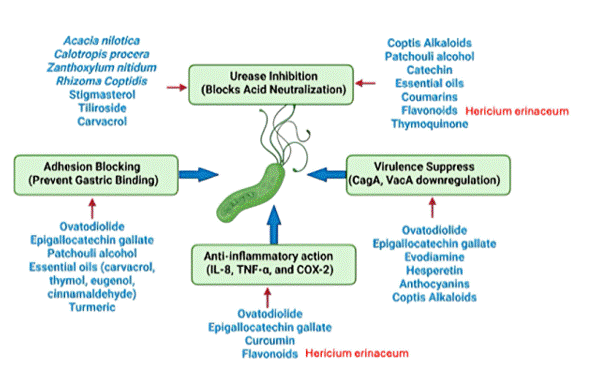
In response to growing antibiotic resistance, increasing therapy dropouts due to severe side effects and therapy failure, there is increasing interest in natural products as complementary treatments. Phytochemicals such as terpenoids, flavonoids, alkaloids and polyphenols have shown promising anti-H. pylori and anti-inflammatory effects in both in vitro and in vivo models [21]. These compounds inhibit bacterial urease activity, reduce adhesion to gastric cells, modulate immune responses and protect mucosal integrity. Especially, flavonoid-rich extracts containing quercetin, catechin, and rutin exhibit multiple mechanisms including urease inhibition and oxidative stress reduction [22]. This use of phytotherapy not only addresses the challenge of resistance and protection against gastric cancer but also offers no side effects [23].
HE provides numerous essential nutrients and constituents such as polysaccharides, proteins, lectins, phenols, isoindolinones, hericenones, erinacine terpenoids, and sterols, several of which possess various pharmacological properties [25, 27]. HE extracts showed to be effective in stimulating the synthesis of immune system components [25, 28]. which contribute to inhibiting tumor cell growth [29]. Polysaccharide fraction derived from HE has also induced immunomodulating and anti-tumor effects [29] and anti-gastritis activity [30]. Flavonoid extracts from HE fruiting bodies were reported to exhibit growth inhibitory effects on H. pylori by in vitro and/or in vivo studies [31-33], [Figure 1].
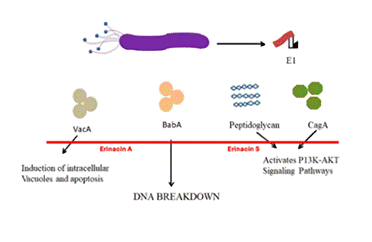
In our clinical cases, HE has demonstrated a histologically and serologically verifiable eradicating effect on HP and appears to possess antineoplastic properties. HE has a protective effect on the gastric mucosa, with the polysaccharide HEP-1 being the most important active ingredient [34]. HEP-1 can improve blood flow to the gastric mucosa and strengthen its defensive function by accelerating the regeneration and repair of the gastric mucosal epithelium [35-36]. HEP-1 can enhance the gastric mucosa’s defensive capacity, and its molecular mechanism of action may improve the gastric mucosa’s resistance to external stimuli as well as internal stimuli such as HP by promoting the activity of antioxidant enzymes, inhibiting the production of inflammatory factors, increasing the levels of eNOS-derived NO in gastric tissue, and upregulating the concentrations of EGF and VEGF [37]. This mechanism explains the disappearance of HP in the histological mucosal findings following HE therapy in our study. In cell culture studies, HE demonstrates antineoplastic potential in gastric cancer, which is primarily mediated by two components: erinacin S and A [38, 39]. Erinacin S induces a specific signaling pathway via reactive oxygen species, leading to the phosphorylation of focal adhesion kinase (FAK)/protein kinase B, also known as AKT, as well as p21-activated kinase 1 (PAK1) [38]. This signaling pathway promotes the trimethylation of histone H3 and facilitates the production of various molecules, including the TNF-related apoptosis-inducing ligand and Fas ligand receptors, which trigger the caspase-3, -8, and -9-mediated apoptotic cascade [38]. Similarly, in gastric cancer cell models, modulation of the FAK/AKT/PAK1 signaling pathway by erinacin A can regulate two key proteins: microtubule-associated scaffold protein 2 and the 14-3-3-sigma protein [39] [Figure 2]. This modulation negatively affects cell cycle regulation, particularly in the G2 and M phases, and exerts an antineoplastic effect. This provides an explanation for the normalization of the CA72-4 tumor marker during HE therapy in our case study.
Conclusion
HE treatment seems to be an effective alternative for patients with chronic active HP gastritis who are intolerant to conventional BQET; it can successfully eradicate HP from the gastric mucosa without side effects and exhibits antineoplastic properties. The small sample size limits the statistical power of our study and restricts the generalizability of our findings. Future research on HE to eradicate HPshould focus on conducting rigourous clinical trials, standardising extract quality, and studying safety and pharmacokinetics. Large randomized clinical trials should be done to validate the findings and to demonstrate a protective effect against gastric cancer in long-term studies.
Table 1: Demographics and results before and after HE treatment. HE = Hericium erinaceum, SE = side effects, HP = Helicobacter pylori, BQET = bismute quadruple eradication therapy, AK = Antibody, IgA = Immunoglobuline A, IgG = Immunglobuline G, U/ml = Units per milliliter
| age (years) | symptoms (years) | histology (SE of eradication) before | HP-IgA-Ak (norm: <20 U/ml) before | HP-IgA-Ak after | HP-IgG-Ak (norm: <35 U/ml) before | HP-IgG-Ak after | histology (SE) after | CA72-4 (norm: <6 U/ml) before | CA72-4 after |
| ♀47 | episodic gastric pain (7) | HP positive discontinuation of BQET (cramps, bleeding) | 28 | 18 | 31 | 36 | HP negative (none) | 18,4 | 5,8 |
| ♀56 | episodic gastric pain (10) | HP positive discontinuation of BQET (cramps, bleeding) | 22,7 | 16,3 | 20,6 | 37,2 | HP negative (none) | 1,2 | 0,9 |
| ♀33 | episodic gastric pain (4) | HP positive discontinuation of BQET (cramps, bleeding, arrhythmia) | 26 | 18,3 | 21 | 34 | HP negative (none) | 0,6 | 0,7 |
| ♀51 | episodic gastric pain (6) | HP positive discontinuation of BQET (cramps, bleeding) | 31 | 14 | 29 | 42 | HP negative (none) | 0,7 | 0,6 |
References
- Chen YC, Malfertheiner P, Yu HT, Kuo CL, Chang YY, Meng FT, Wu YX, Hsiao JL, Chen MJ, Lin KP, Wu CY, Lin JT, O’Morain C, Megraud F, Lee WC, El-Omar EM, Wu MS, Liou JM. Global Prevalence of Helicobacter pylori Infection and Incidence of Gastric Cancer Between 1980 and 2022. Gastroenterology 2024; 166: 605-619
- Hooi JKY, Lai WY, Ng WK, Suen MMY, Underwood FE, Tanyingoh D, Malfertheiner P, Graham DY, Wong VWS, Wu JCY, Chan FKL, Sung JJY, Kaplan GG, Ng SC. Global Prevalence of Helicobacter pylori Infection: Systematic Review and Meta-Analysis. Gastroenterology 2017; 153: 420-429
- Lim NR, Chung WC. Helicobacter pylori-associated Chronic Atrophic Gastritis and Progression of Gastric Carcinogenesis. Korean J Gastroenterol 2023; 82: 171-179
- Lahner E, Zagari RM, Zullo A, Di Sabatino A, Meggio A, Cesaro P, Lenti MV, Annibale B, Corazza GR. Chronic atrophic gastritis: Natural history, diagnosis and therapeutic management. A position paper by the Italian Society of Hospital Gastroenterologists and Digestive Endoscopists [AIGO], the Italian Society of Digestive Endoscopy [SIED], the Italian Society of Gastroenterology [SIGE], and the Italian Society of Internal Medicine [SIMI]. Dig Liver Dis 2019; 51: 1621-1632
- Abdun MA, Xu L, Li XT, Mekky A, Al Hussan M, Abuheit EMI, Zhang C, Rahman IU, Yu M, Sarwar HMS, Yan BB, Xie JB, Liu BW, Ding SZ. Global Prevalence of Helicobacter pylori Infection-Associated Gastric Preneoplastic Lesions in Pediatric Patients: A Systematic Review and Meta-Analysis. Helicobacter 2025; 30: e70021
- Wang F, Meng W, Wang B, Qiao L. Helicobacter pylori-induced gastric inflammation and gastric cancer. Cancer Lett 2014; 345: 196-202
- Malfertheiner P, Megraud F, Rokkas T, Gisbert JP, Liou JM, Schulz C, Gasbarrini A, Hunt RH, Leja M, O’Morain C, Rugge M, Suerbaum S, Tilg H, Sugano K, El-Omar EM; European Helicobacter and Microbiota Study group. Management of Helicobacter pylori infection: the Maastricht VI/Florence consensus report. Gut 2022
- Chey WD, Howden CW, Moss SF, Morgan DR, Greer KB, Grover S, Shah SC. ACG Clinical Guideline: Treatment of Helicobacter pylori Infection. Am J Gastroenterol 2024; 119: 1730-1753
- Kuna L, Jakab J, Smolic R, Raguz-Lucic N, Vcev A, et al. Peptic ulcer disease: a brief review of conventional therapy and herbal treatment options. Journal of Clinical Medicine 2019; 8:179
- Amang AP, Mezui C, Siwe GT, Emakoua J, Mbah G, Nkwengoua EZ, et al. Healing and antisecretory effects of aqueous extract of Eremomastax speciosa (Acanthaceae) on unhealed gastric ulcers. BioMed Research International 2017:1924320
- Zhang C, Li J, Hu CL, Wang J, Zhang JJ, et al. Antihyperglycaemic and organic protective effects on pancreas, liver and kidney by polysaccharides from Hericium erinaceus SG-02 in streptozotocin-induced diabetic mice. Scientific Reports 2017; 7:10847
- He X, Wang X, Fang J, Chang Y, Ning N, et al. Structures, biological activities, and industrial applications of the polysaccharides from Hericium erinaceus (Lion’s Mane) mushroom: a review. International Journal of Biological Macromolecules 2017; 97:228−37
- Friedman M. Antibiotic-resistant bacteria: prevalence in food and inactivation by food-compatible compounds and plant extracts. J Agric Food Chem. 2015; 63:3805-3822
- Kawagishi H, Masui A, Tokuyama S, Nakamura T. Erinacines J and K from the mycelia of Hericium erinaceum. Tetrahedron. 2006; 62:8463-8466
- Kim SP, Moon E, Nam SH, Friedman M. Hericium erinaceus mushroom extracts protect infected mice against Salmonella Typhimurium-induced liver damage and mortality by stimulation of innate immune cells. J Agric Food Chem. 2012; 60:5590-5596
- Friedman M, Rasooly R. Review of the inhibition of biological activities of food-related selected toxins by natural compounds. Toxins (Basel). 2013; 5:743-775
- Wong KH, Sabaratnam V, Abdullah N, Kuppusamy UR, Naidu M. Effects of cultivation techniques and processing on antimicrobial and antioxidant activities of Hericium erinaceus (Bull.:Fr.) Pers extracts. Food Technol Biotechnol. 2009; 47: 47-55
- Shang X, Tan Q, Liu R, Yu K, Li P, Zhao GP. In vitro anti- Helicobacter pylori effects of medicinal mushroom extracts, with special emphasis on the Lion’s Mane mushroom, Hericium erinaceus (higher Basidiomycetes). Int J Med Mushrooms. 2013; 15:165–7
- Zhu Y, Chen Y, Li Q, Zhao T, Zhang M, Feng W, Takase M, Wu X, Zhou Z, Yang L, Wu X. Preparation, characterization, and anti-Helicobacter pylori activity of Bi3+-Hericium erinaceus polysaccharide complex. Carbohydr Polym. 2014;110:231-237
- Hayashi S, Sugiyama T, Yokota K, Isogai H, Isogai E, Oguma K, Asaka M, Fujii N, Hirai Y Analysis of Immunoglobulin A Antibodies to Helicobacter pylori in Serum and Gastric Juice in Relation to Mucosal Inflammation. Am Society Microbiol 1998; 5(5): 617-621
- Chen D, Wang W, Chen X, Liang N, Li J, Ding W, Zhang H, Yang Z, Zhao H, Liu Z. Plant-derived extracts or compounds for Helicobacter-associated gastritis: a systematic review of their anti-Helicobacter activity and anti-inflammatory effect in animal experiments. Chinese Medicine 2025; 20: 53-97
- Ivyna de Araújo Rêgo R, Silvestre G, Ferreira de Melo D, Albino S, Pimentel M, Cruz S, Wurzba S, Rodriguez W, de Lima Damasceno B, Castellano L. Flavonoids-Rich Plant Extracts Against Helicobacter pylori Infection as Prevention to Gastric Cancer. Frontiers in Pharmacology 2020; 13: 951125 (1-20)
- Vale F, Oleastro M. 2014. Overview of the phytomedicine approaches against Helicobacter pylori. World Journal of Gastroenterology 2014; 20: 5594-5609
- Abdallah H. Translational Potential of Plant-Derived Therapeutics in Combating Helicobacter Pylori and Antibiotic Resistance. Science Tech Nexus 2025; 1 (2): 88-97
- Lee EW, Shizuki K, Hosokawa S, Suzuki M, Suganuma H, Inakuma T, Li J, Ohnishi-Kameyama M, Nagata T, Furukawa S, Kawagish H. Two novel diterpenoids, erinacines H and I from the mycelia of Hericium erinaceum. Biosci Biotechnol Biochem. 2000; 64(11): 2402-2405
- Kenmoku H, Shimai T, Toyomasu T, Kato N, Sassa T. Erinacine Q, a new erinacine from Hericium erinaceum, and ist biosynthetic route to erinacine C in the basidiomycete. Biosci Biotechnol Biochem. 2002; 66(3):571-575
- Ashour A, Amen Y, Allam AE, Kudo T, Nagata M, Ohnuki K, Shimizu K. New isoindolinones from the fruiting bodies of the fungus Hericium erinaceus. Phytochem Lett. 2019; 32:10-14
- Mori K, Obara Y, Hirota M, Azumi Y, Kinugasa S, Inatomi S, Nakahata N. Nerve growth factor-inducing activity of Hericium erinaceus in 1321N1 human astrocytoma cells. Biol Pharm Bull. 2008; 31(9):1727-1732
- Kim SP, Kang MY, Kim JH, Nam SH, Friedman M. Composition and mechanism of antitumor effects of Hericium erinaceus mushroom extracts in tumor-bearing mice. J Agric Food Chem. 2011; 59(18):9861-9869
- Xu H, Wu PR, Shen ZY, Chen XD. Chemical analysis of Hericium erinaceum polysaccharides and effect of the polysaccharides on derma antioxidant enzymes, MMP-1 and TIMP-1 activities. Int J Biol Macromol. 2010; 47(1):33-36
- Liu JH, Li L, Shang XD, Zhang JL, Tan Q. Anti-Helicobacter pylori activity of bioactive components isolated from Hericium erinaceus. J Ethnopharmacol. 2016; 183:54-58
- Wang G, Zhang X, Maier SE, Zhang L, Maier RJ. In vitro and in vivo inhibition of Helicobacter pylori by ethanolic extracts of lion’s mane medicinal mushroom, Hericium erinaceus (Agaricomycetes). Int J Med Mushrooms. 2019; 21(1):1-11
- Shang X, Tan Q, Liu R, Yu K, Li P, Zhao GP. In vitro anti-Helicobacter pylori effects of medicinal mushroom extracts, with special emphasis on the Lion’s Mane mushroom, Hericium erinaceus (higher Basidiomycetes). Int J Med Mushrooms. 2013;15(2):163-174
- Wang XY, Yin JY, Zhao MM, Liu SY, Nie SP, et al. Gastroprotective activity of polysaccharide from Hericium erinaceus against ethanolinduced gastric mucosal lesion and pylorus ligation-induced gastric ulcer, and its antioxidant activities. Carbohydrate Polymers 2018; 186:100−9
- Wang M, Gao Y, Xu D, Gao Q. A polysaccharide from cultured mycelium of Hericium erinaceus and its anti-chronic atrophic gastritis activity. International Journal of Biological Macromolecules 2015; 81:656−61
- Liao B, Zhou C, Liu T, Dai Y, Huang H. A novel Hericium erinaceus polysaccharide: Structural characterization and prevention of H2O2-induced oxidative damage in GES-1 cells. International Journal of Biological Macromolecules 2020; 154:1460−70
- Cui W, Zhu X, Li X, Song X, Jia L, ZhangC. Hericium erinaceus polysaccharides (HEP) protect against gastric mucosa injury via modulating inflammatory factors, promoting antioxidant activity, and activating the PI3K-AKT pathway. Food Innovation and Advances 2025, 4(3): 284−29
- Tung SY, Lee KC, Lee KF, Yang YL, Huang WS, Lee LY, Chen WP, Chen CC, Teng CC, Shen CH, Hsieh MC, Huang CY, Sheen JM, Kuo HC. Apoptotic mechanisms of gastric cancer cells induced by isolated erinacine S through epigenetic histone H3 methylation of FasL and TRAIL. Food Funct 2021; 12: 3455-3468
- Kuo HC, Kuo YR, Lee KF, Hsieh MC, Huang CY, Hsieh YY, Lee KC, Kuo HL, Lee LY, Chen WP, Chen CC, Tung SY. A Comparative Proteomic Analysis of Erinacine A’s Inhibition of Gastric Cancer Cell Viability and Invasiveness. Cell Physiol Biochem 2017; 43: 195-208
- Cardos I, Zaha D, Sindhu R, Cavalu S. Revisiting Therapeutic Strategies for H. pylori Treatment in the Context of Antibiotic Resistance: Focus on Alternative and Complementary Therapies. Molecules 2021; 26: 6078-6099