Growth and Reproductive Performance of Oreochromis Shiranus (Boulenger 1896) Broodstock Fed on Diverse Diets Under Intermittent Harvesting Regime
*Lyson Nakhwala, Austin Mtethiwa, Wilson Jere & Jeremiah Kang’ombe
Received Date: June 27, 2025; Accepted Date: July 02, 2025; Published Date: September 10, 2025
*Corresponding author: Lyson Nakhwala, Department of Aquaculture and Fisheries Science, Lilongwe University of Agriculture Natural Resources, Department of Aquaculture and Fisheries Science, Center of Aquaculture and Fisheries Science (AquaFish), P.O. Box 219, Lilongwe, Malawi. Email: lysonnakhwala@gmail.com
Citation: Nakhwala L, Mtethiwa A, Jere W, Kang’ombe J [2025] Growth and Reproductive Performance of Oreochromis Shiranus (Boulenger 1896) Broodstock Fed on Diverse Diets Under Intermittent Harvesting Regime. Jr Aqua Mar Bio Eco: JAMBE-154.
DOI: 10.37722/JAMBE.2025203
Abstarct
The study was conducted to assess the growth and reproductive performance of O. shiranus fed on unfermented maize bran (UMB) (control), fermented maize bran (FMB) and floating pellets (CFP) under intermittent harvesting (IM) regime. Fish were reared for a period of 126 days, while daily intermittent harvesting of juveniles started after 54 days of stocking. In experiment II, the broodstock fed on the CFP recorded a higher final weight (148.24±16.04g), followed by broodstock fed on UMB (93.46±9.95g) and 89.16±7.86 g from broodstock fed on FMB. The highest number of juveniles ≈ 8572±495 were harvested from broodstock fed on CFP diet and ≈ 2157±183 from broodstock fed on UMB, whereas broodstock fed on FMB reported ≈ 1717±12. In experiment I, the final weight of broodstock was not significantly different (P= 0.811) Single batch harvest (SB)(control) and IM. Number of Juveniles produced by broodstock under SB did not differ significantly (P =0.308) from intermittent harvest (IM). This suggests that the use of CFP under IM would produce better results as evidenced by the highest final weight and high number of juveniles above all treatments. IM is not better off than SB, as broodstock’s growth and reproductive were not affected by harvesting regimes.

Dr. Lyson Nakhwala
Watch the Article in Motion
Keywords: floating pellets,fermented maize bran, fish traps,intermittent harvest, Oreochromis shiranus andsingle batch harvest.
Introduction
Harvesting strategy is an important element of mixed-sex tilapia farming and is often overlooked. Based on number of times the fish are harvested during each production season, the harvesting strategies can be categorized either as: single batch harvest or intermittent harvest (Brummett, 2002). In single batch harvest, all the fish in the pond are harvested once, usually at the end of culture season, of ≈ 6-7 months of rearing (Sen and Janssen, 1989). Noting that, somatic growth and survival rates are density-dependent, single-batch harvesting can lead to intra-breeding and production of genetically, close related fry creating competitive pressures. These factors lower individual fish growth rates and increase mortalities due to overcrowding and accumulation of recessive traits (Kam, Yu, Leung and Bienfang, 2008). Intermittent harvest strategy, on the other hand, involves regular harvesting of fish at an interval followed by a complete or incomplete batch harvest at the end of production cycle (Sen and Janssen, 1989). In contrast to single-batch harvesting strategy, an intermittent harvesting regime enhances individual fish somatic growth rates, individual relative fecundities, and production (Kam et al., 2008).
Mono sex (‘all male’) tilapia is one of the advocate fish seed, which has peaked up well in globefish framing. However, the availability of mono sex “all-male” tilapia in developing countries such as Malawi is still a challenge. As such, most farmers in Malawi practice mixed-sex culture system of tilapias in varied facilities (Jamu and Ayinla, 2003). The major challenge of tilapia mixed- sex culture is the high level of unrestricted breeding in grow-out ponds, which translates to high competition for limited resources between fish and stunted growth, which negatively affect an overall yield (Saiti, Jamu, Chisala and Kambewa, 2007). Studies have been carried out to investigate ways of improving these conditions through the use of predatory fish and intermittent harvest of broodstock, in order to increase living space and availability of other limited resources for the fish left in the pond (Lin, Shrestha, Yi and Diana, 2001; Brummett, 2002; Biswas, Morita, Yoshikazi, Maita and Takeuchi, 2005; Yu and Leung, 2006; Sulem, Tchantchou and Nguefack, 2006). Brummett (2002) found that intermittent harvest of O. shiranus juveniles (<30g) increased yield more than intermittent harvest of broodstock (30g>) and fry (<5g). However, it has been reported that O. shiranus can breed at small sizes of 8g and 20g, and thus likely to jeopardize growth and reproductive performance of the initial broodstock through competition for limited resources (Maluwa, 1990; Saiti et al., 2007; Ludoviko and Kang’ombe, 2012). Despite this, no study has been focused on intermittent harvesting of O. shiranus juveniles before they reach spawning phase in the effort to provide more conducive environment for continuing with somatic growth and spawning of broodstock.
To date, high-cost fish feeds still remain main reasons limiting the expansion of fish farming in Malawi (Rurangwa and Kabagambe, 2018). This forcing fish farmer to opt for animal manures and cheaper feed materials to reduce production cost (Mataka and Kang’ombe, 2007). Consequently, attention is now being focused on wiser use of the cheaper resources of both animal and plant origins available on the farm (Chikafumbwa, Costa-Pierce, Jamu, Kadongola and Balarin, 1993). However, fish feed from plant origins such as maize bran and rice bran are noted for high fiber content, which is a major problem for their efficiency in fish nutrition (Musa, Aura, Ngugi and Kundu, 2012). However, the fiber content of these agro-by- products can be reduced through fermentation process (Debi,Wichert and Liesegang, 2019), thus increasing their efficiency as fish feeds. However, the potential use of fermented maize bran as an improved feed in aquaculture has not yet been explored in many developing countries including Malawi.
Therefore, this study was carried out to find out whether particular diet and daily intermittent harvesting of ≥5 g O. shiranus juveniles could be useful to improve growth and reproductive performance of initial broodstock in grow-out ponds. Concurrently, alleviating challenges faced by aquaculture sector by ensuring continuous fish availability to the community, thereby overcoming malnutrition and income challenges faced by severely food insecure population. To achieve these the study had two experimental set up. In experimental set up I, focused on growth and reproductive performance of O. shiranus under single batch harvest and intermittent harvest regimes. Whereas, experimental set up II, focused on growth and reproductive performance of O. shiranus fed on diverse diets under intermittent gravest regime
Material and methods
Study Area
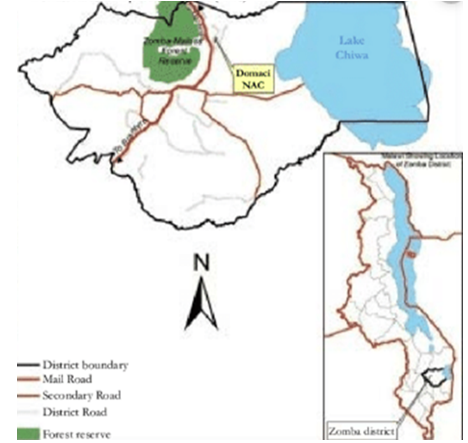
The study was carried out in Zomba district, southern region of Malawi, Domasi area at National Aquaculture Centre (NAC) for a period of 126 days during February through July, 2022 (Figure 2.1).
Pond Preparation
A month before stocking, ponds were prepared by being drained and exposed to sunlight. Weeds at the bottom and around the dike were removed; water inlet, outlet as well as the ditches and screens were cleaned. Ponds were applied with agricultural lime (CaCO3) at the rate of 300 g /m2 to improve pond’s pH and eliminate pathogens (Nagoli et al., 2020). Five days before stocking, ponds were fertilized with chicken manure at 200 g/m2 to improve pond’s primary production (Nagoli et al., 2020). Later, chicken manure was applied bi-weekly using tea bag method (filled sacks hanged on the edges of the ponds) at a rate of 25 kg/ pond, to improve primary production in accordance to Ngugi, James and Bethuel (2007).
Broodstock collection, conditioning and stocking
A total of 2400 O. shiranus broodstock of initial average weight of 64.14±0.47 g was collected from Chikhwawa, Blantyre, Zomba, Machinga, and Mzuzu. Broodstock were mixed upon arrival at the station in the tanks and were stocked randomly, and acclimatized for one week in experimental ponds before commencement of the study. During this time fish were observed for diseases and parasites. Broodstock were randomly stocked at a rate of 1 fish/m-2 (1 male:2 female) totaling 200 fish per pond.
Study design and layout
Experimental set up I:
Growth rate of O. shiranus broodstock and number of juveniles produced from O. shiranus broodstock cultured under single batch harvest and intermittent harvest regimes
The experiment employed Completely Randomized Design (CRD), where six (6) earthen ponds; each measuring 200m2 were used. The experiment had two treatments designated as T0 (single batch harvest) control and T1 (intermittent harvest) and were replicated thrice. A total of two (2) baited wire meshed traps were used to harvest juveniles on daily basis in T1.
Feeds and Feeding
Fish were fed on unfermented maize bran twice a day i.e., 9:00 (am) and 14:00 (pm). The fish were fed ad libitum by weighing the feed before and after feeding. Feed was checked in 15 minutes after feeding to see if all of it was consumed by the fish in all ponds.
Intermittent harvest of Juveniles
Two traps were placed in experimental pond in daily, 54 days after stocking broodstock and after observing the growth of first Juveniles that they were at least 5g. The traps set out in the morning, approximately one hour before the fish fed. Maize bran was used as bait to attract the fish into the traps. After two hours, the traps were removed from the pond to collect the harvested fish. The trap was made from wire mesh and shaped like a cylinder. Two additional wire mesh pieces shaped like a cone were attached at both ends. The diameter of the narrower end is kept smaller to allow only small fish to enter the trap. To lure them in, bait was placed inside. A piece of a net holds the bait. A string was fixed to the trap so that can easily sink and retrieve the trap easy.
Fish data collection
Juveniles were harvested on daily basis (T1) and data on total quantity (n) and weight (g) were recorded. During each harvest, 20 % of total juveniles were sampled and their individual weight, total length and standard length were measured and recorded. Initial weight and final body weights, and survival rate of broodstock fish data were computed from all treatments and all data entered in Microsoft® Excel.
Experimental set up II
Growth rate of O. shiranus broodstock and number of juveniles produced from O. shiranus broodstock fed on diverse diets under intermittent harvesting regime
The experiment employed Completely Randomized Design (CRD), where nine (9) earthen ponds; each measuring 200 m2 were used. The experiment had three treatments designated as T1 (O. shiranus fed on unfermented maize bran and intermittent harvest) as a control, T2 (O. shiranus fed on fermented maize bran and intermittent harvest) and T3 (O. shiranus fed on floating pellets and intermittent harvest) and were replicated thrice. Two traps were placed in each pond daily, 54 days after stocking broodstock and after observing the growth of first Juveniles that they were at least 5g.
Intermittent harvest of juveniles
Harvesting of juveniles was carried out using two sized meshed wire fish traps deployed in each experimental pond. The traps were set in the early morning, approximately one hour prior to feeding. Bait materials including maize bran. Fermented maize bran and floating pellets were selected based on the primary feed used in each respective experimental pond. These baits were used to attract fish into the trap as explained in experiment I. After two hours, the traps were retrieved and capture fish were collected for assessments.
Feeds and feeding
Unfermented maize bran, floating pellets and fermented maize bran were used as feed throughout the study period. Unfermented maize bran and molasses used for fermentation process were collected locally from Lusibilo, Lilongwe, and Illovo Sugar Africa, Nchalo, Malawi respectively. Commercial floating feed and Effective Microorganisms used for fermentation process were imported from Novatek Limited, Zambia and Germany respectively. To avoid overfeeding, feeding trays were fixed in all ponds where fish were fed on unfermented maize bran and fermented maize.The fish were fed ad libitum by weighing the feed before and after feeding. Feed was checked in 15 minutes after feeding to see if all of it was consumed by the fish in all ponds. Thereafter feed was adjusted by 10% or maintained depending on the amount feed fish consumed. Fish were fed twice a day (9:00 am and 14:00 pm). During feeding, fish fed on floating pellets display more active and aggressive feeding behaviour at the water surface compared to those fed on unfermented maize bran and fermented maize bran. Fish fed on floating pellets quickly gathered at feeding times, exhibiting strong feed acceptance and competitive interactions. In contrast, fish fed on unfermented and fermented maize bran showed slower feed response and reduced surface activity, likely due to lower palatability and feed availability near water surface.
Preparation of fermented maize bran
The fermentation process involved two steps; First step was the formulation of a liquid compound of activated effective microorganism (EM-A), which involved the mixing of 1.0 L of molasses from sugarcane and 1.0 L of effective microorganism (EM-1), into 28 L of warm water. The compound was kept in a 30 L tight closed canister, for a period of seven (7) days under anoxic condition and at 25oC to induce activation process (TNAU Agritech Portal, 2008). In the second step, every 1.0 L of activated solution (EM-A) prepared in first step was added to every 19 L of water in a 20 L bucket, and a 40 cm stirring rod was used to speed up the mixing process. The prepared solution was mixed with every 20 kgs of maize bran in 150 L drum, until the drum got filled; hence the ratio of prepared solution to maize bran was 1:1. A 1.0 m stirring rod was used in the mixing process to make sure that the maize bran and prepared solution were mixed properly in the drum. Then the compound product was covered with the plastics paper at the top and the drum was closed tightly with plastic lid, to prevent the entry of oxygen and to speed up the anaerobic process. The process took approximately twenty-one (21) days under anoxic condition and at 30oC (TNAU Agritech Portal, 2008). Hence, the whole fermentation process took approximately four weeks (28 days) to be completed. The pH paper was used in both steps to check if the activated effective microorganism (EM-A) and fermented maize bran were ready to be used as activator and feed respectively after 7 days and 21 days respectively. The product was deemed ready for use once registered a pH of below 4.0. after a specific period of time. The whole process took 28 days
Proximate analysis of the feed
Proximate analyses of the feed for the experiment were carried out at the Malawi Biaural of Stannard Laboratory following the procedures that broadly adhere to Association of Official Analytical Chemists (1990). The protocol was used to analyze moisture, crude protein, crude lipids and ash.
Table 2.1 Proximate chemical composition of experimental diets
| Parameters (%) | Unfermented maize bran | Fermented maize bran | Floating pellets |
| Moisture content | 11.5±0.21 | 6.1±0.01 | 9.6±0.05 |
| Crude protein | 8.4±0.04 | 6.1±0.04 | 32.0±0.03 |
| Crude lipids | 7.9±0.25 | 3.4±0.02 | 12.1±0.24 |
| Ash | 3.6±0.01 | 9.2±0.23 | 6.7±0.03 |
Fish data collection
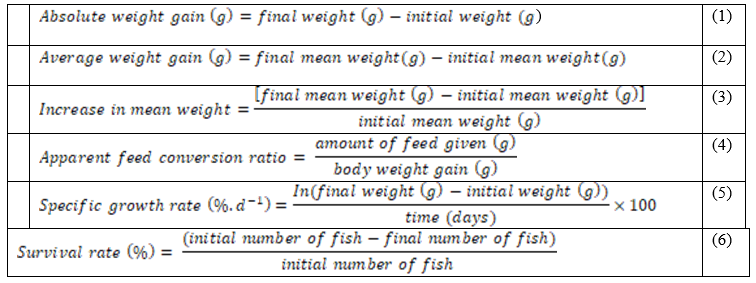
Juveniles were harvested on daily basis in all treatments (T1, T2 and T3) and data on total number (n) and weight (g) were measured and recorded. A total of 20 % juveniles were sampled per harvest and their individual weight, total length and standard length were measured using an electronic weighing balance and measuring board respectively. Initial weight and final body weights, and survival rate of broodstock fish as well as water quality parameters data were measured from all treatments and all data were recorded then entered in Microsoft® Excel pending foe analysis. Growth parameters such as specific growth rate, weight gain, percentage increase in weight, feed conversion ratio and total and average weight of fish harvested at the end of the study period were calculated using the following formulae (Stickney, 1994) in both experiments (I and II)
Productivity/yield (kgs /hectare of O. shiranus was calculated (Menezes, Hisshamunda, Lovshin and Marton, 2017) as:

Condition factor of Juveniles (Nashet al., 2006)

Whereby K is a condition factor, W is weight (cm) and L is standard length (cm)
Assessing number of juveniles produced from O. shiranus broodstock fed on diverse diets.
The total number of juveniles harvested intermittently and harvested at the end of the experimental period (final harvest) in both experiments were recorded. In the experiment I, the overall total number of Juveniles harvested in T1 was compared with the overall total number of Juveniles harvested in T0. In experiment II, the overall number of Juveniles harvested in T1 was compared with the overall number of Juveniles harvested in T2, and T3.
Measurement of the water quality
In both experiment (I and II) water quality parameters; temperature, dissolved oxygen, pH, turbidity , un-ionized ammonia (NH3), ionized ammonia (NH4+), nitrites (NO2) and nitrate (NO3–) were measured throughout the experimental period to establish the water quality of the ponds in both experiments. Dissolved oxygen, temperature, and pH were measured twice daily before feeding. Dissolved oxygen was measured at 05:00 hrs and 14:00 hrs, while temperature and pH were measured at 09:00 hrs and 14:00 hrs using HydroLite (HL103) oxygen meter and HydroLite (HydroTest101-pH) pH meter respectively. Labelled (500 ml) plastic sampling water bottles were used to collect water samples in ponds bi-weekly to measure: Un-ionized ammonia (NH3), ionized ammonia (NH4+), Total Nitrogen (TN), nitrites (NO2) and nitrate (NO3–). Indophenole Blue method was used for the detection of un-ionized ammonia (NH3), ionized ammonia (NH4+), whereas (N-(1-Naphthyl)-ethylendiamine method was used for determination of nitrites (NO2) and Zinc Reduction / NED method was used for detection of nitrate (NO3–) all results were recorded in mg/L. Water transparency, was measured using Secchi disk depth and results were recorded in centimeters (cm).
Data analysis
Statistical package IBM SPSS (ver. 25) was used in analysis of data and Microsoft Excel (2019) for Windows was utilized to create graphs in both experiments.
Experiment I:independent sample t Test was used at 5% probability level, to determine whether significant difference existed between final weight, weight gain, specific weight gain, apparent feed conversion ratio, yields and number of juveniles harvested, condition factor and water quality parameters between single batch harvest (T0) and intermittent harvest (T1) regime.
Experiment II: Levene’s and Shapiro-Wilk’ tests were used to test data for homoscedasticity and normality respectively. One-way analysis of variance (ANOVA) was deployed to determine whether significant differences existed between final weight, weight gain, specific weight gain, apparent feed conversion ratio, yields and number of juveniles harvested, condition factor and water quality parameters. When significant differences were found among treatments, Turkey test was used to test differences between treatment means.
Results
Experiment I: Growth rate of O. shiranus broodstock cultured under single batch and intermittent harvest regimes.
The growth performance and survival rates of O. shiranus under single batch harvest and intermittent harvest are shown in Table 3.1. The findings revealed that there was no significant difference (P>0.811) for the final mean weight, specific growth rate, apparent feed conversion ratio, survival rate and yields between O. shiranus broodstock under single batch harvest and O. shiranus broodstock under intermittent harvest regime. This suggests that intermittent harvest cab be adopted without negatively affecting growth performance and survival, offering flexibility in in harvesting schedules, without compromising productivity.
Table 3.1 Specific growth rate, yields and survival rate of O. shiranus broodstock under single batch harvest and intermittent harvest regimes.
| Parameters | Single batch harvest | Intermittent harvest | p-value |
| Initial weight (g) | 64.14±0.47 | 64.14±0.47 | 0.794 |
| Final weight (g) | 98.35±11.73 | 93.46±9.95 | 0.811 |
| Weight gain (g) | 34.21±11.73 | 29.32±9.95 | 0.811 |
| Average weight gain/ day (g, d-1) | 0.27±0.09 | 0.23±0.07 | 0.811 |
| % Increase in mean weight | 53.33±18.29 | 45.71±15.52 | 0.811 |
| Specific growth rate (%, d-1) Feed conversion ratio Gross yield (kg/ha/yr) Net yield (kg/ha/yr) | 0.31±0.10 4.97±0.82 3940±0.13 2170±0.13 | 0.28±0.08 5.57±0.44 3450±0.04 1820±0.05 | 0.811 0.553 0.287 0.327 |
| Survival rate (%) | 76.65±9.89 | 83.38±3.09 | 0.578 |
Number of juveniles produced from O. shiranus broodstock cultured under single batch harvest and intermittent harvest regimes.
The results unveiled that number of juveniles produce did not differ significantly (P>0.308), and as well as (P>0.945) for recruit’s condition factor between broodstock under single batch harvest and intermittent harvesting regime Table 3.2. This indicates that intermittent harvesting can be implemented without negatively affecting reproduction output or quality of juveniles.
Table 3.2 Number, yield and condition factor of O. shiranus Juveniles harvested throughout the experimental period from broodstock under single batch harvest and intermittent harvest regimes.
| Parameters | Single batch harvest | Intermittent harvest | p-value |
| Number of Juveniles (n) | 2201.33±215 | 2157±183 | 0.308 |
| Yield (kg/ha/y) | 1252.88±50.92a | 848.77±3.56b | 0.014 |
| Condition factor | 3.00±0.61 | 2.98±0.26 | 0.945 |
*Means (±SE) in the same rows with different superscripts are significant differences P < 0.05.
Experimental II: Growth rate of O. shiranus broodstock fed on diverse diets under intermittent harvesting regime.
Results on growth parameters, specific growth rate, apparent feed conversion ratio, yields and survival rates of O. shiranus broodstock fed on different diets areshown in Table 3.3. The findings revealed that there was a significant difference (P<0.05) for final mean weight, specific growth rate, apparent feed conversion ratio and yields between broodstock fed on unfermented maize bran and broodstock fish fed on fermented maize bran from broodstock fed on floating pellets. Furthermore, the findings unveiled that there was a significant difference (P<0.05) for gross and net yields between fish fed on fermented maize bran and fish fed on unfermented maize bran. It was found that broodstock fed on floating pellets gave significantly high final mean weight, specific growth rate, yields and better apparent feed conversion ratio than broodstock fed on unfermented maize bran and broodstock fed on fermented maize bran (Table 3.3). This means to improved broodstock performance and maximize production efficiency nutritionally balanced floating pellets should be prioritized over low-cost traditional feeds such as maize bran.
Table 3.3 Specific growth rate, yields and survival rate of O. shiranus broodstock fed on diverse diets under intermittent harvest regime.
| Parameters | Unfermented Maize bran | Fermented Maize bran | Floating pellets | p-value | |
| Initial weight (g) | 64.14±0.47 | 64.14±0.47 | 64.14±0.47 | 0.972 | |
| Final weight (g) | 93.46±9.95 | 89.16±7.86 | 148.24±16.04b | 0.002 | |
| Weight gain (g) | 29.32±9.95 | 25.02±7.86 | 84.10±16.04b | 0.002 | |
| AWG / day (g, d-1) | 0.23±0.07 | 0.20±0.06 | 0.67±0.13b | 0.002 | |
| % IMW | 45.71±15.52 | 39.01±12.25 | 131.12±25.01b | 0.002 | |
| SGR (%, d-1) | 0.28±0.08 | 0.25±0.07 | 0.64±0.09b | 0.003 | |
| FCR | 5.57±0.44a | 11.58±0.90c | 2.52±0.45b | 0.003 | |
| GY (kg/ha/yr) | 3450±0.04a | 2590±0.02b | 5390±0.19c | 0.001 | |
| Net yield (kg/ha/yr) | 1820±0.05a | 720±0.02b | 3530±0.19c | 0.001 | |
| Survival rate (%) | 83.38±3.09 | 84.00±3.87 | 73.77±5.14 | 0.165 | |
*Means (±SE) in the same rows with different superscripts are significant differences (P < 0.05)
†AWD (Average weight gain); IMW (increase mean weight); SGR (Specific growth rate); FCR (Feed conversion ratio) and GY (Gross yield)
Number of juveniles produced from O. shiranus broodstock fed on diverse diets under intermittent harvesting regime
There was a significant difference (P<0.05) for the average number of Juveniles, and yield harvested for the whole experiment and harvested on daily basis among the treatments (Table 3.4). This suggest that the type of feed not only affect overall production but also influences the consistency of daily harvests of juveniles, as broodstock fed on floating pellets outperform broodstock fed on maize bran.
Table 3.4 Number, yield condition factor of O. shiranus Juveniles harvested throughout the experiment, and on daily basis from broodstock fed diverse diets under intermittent harvest regime.
| Parameters | Unfermented Maize bran | Fermented maize bran | Floating pellets | p-value | |
| ANJ (n) | 2157±183a | 1717±123b | 8572±495c | 0.001 | |
| Yield (Kg/ha/yr) | 848.77±3.56a | 534.46±1.59b | 4162.74±6.94c | 0.001 | |
| ANJ/day (n) per | 4±1a | 1±1b | 15±2c | 0.001 | |
| ABJ (g) per day | 19±33a | 3.67±2.33b | 118±15c | 0.000 | |
| Condition factor | 3.00±0.61 | 2.93 ±0.63 | 3.47±0.36 | 0.760 | |
*Means (±SE) in the same rows with different superscripts are significant difference (P < 0.05)
†ANJ (Average number of juvenile); ABJ (Average biomass of juveniles)
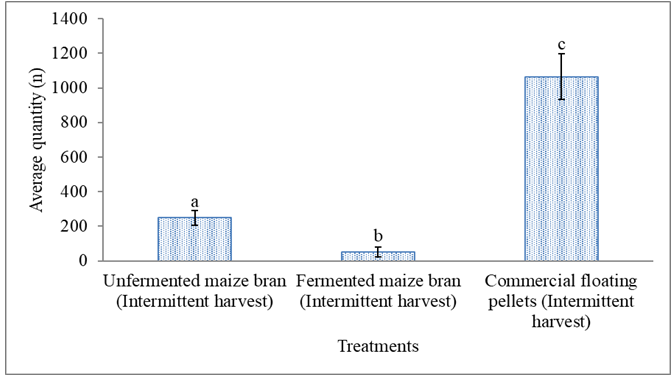
On average quantities of juveniles harvested during intermittent period among the treatments, the results indicated that, juveniles from broodstock fish fed on floating pellets differ statistically (P<0.05) from juveniles from broodstock fed on unfermented maize bran and juveniles from broodstock fed on fermented maize bran. The results also indicated that average quantity juveniles from broodstock fed on unfermented maize bran significantly differed (P<0.05) from broodstock fed on fermented maize bran. The average quantities of juveniles were found to be higher in broodstock fish fed on floating pellets (1065±133), while broodstock fish fed on fermented maize bran supported the lower average quantity of 58±28 (Figure 3.1). This indicates that floating pellets substantially enhance reproduction performance under intermittent harvest regime than maize bran. This makes floating pellets more effective feed choice.
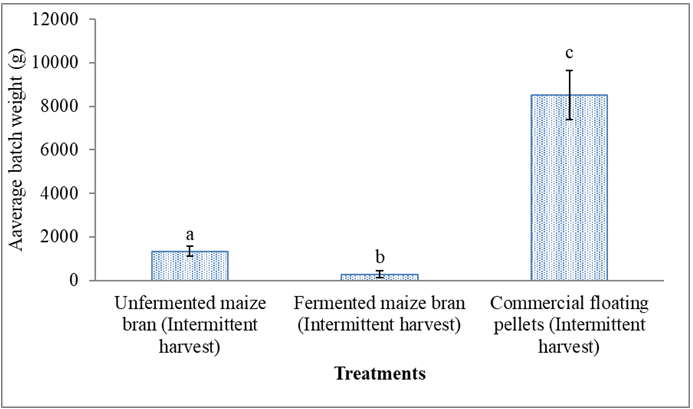
Data on the average biomass weight of O. shiranus Juveniles from broodstock fed on different diets under intermittent harvest (Figure 3.2), revealed that, number of Juveniles from broodstock fish fed on floating pellets were differ significantly (P<0.05) from Juveniles from broodstock fish fed on unfermented maize bran and Juveniles from broodstock fed on fermented maize bran. Furthermore, Juveniles from broodstock fed on unfermented maize was significant different (P<0.05) from broodstock fed on fermented maize bran. The average biomass weight of Juveniles was found to be higher in broodstock fish fed on floating pellets (8154± 114.96 g). This means feeding broodstock with floating pellets improves juveniles biomass and growth compared to maize bran diets.
Water quality parameter collected during the study.
The mean water quality parameters except morning DO, were within the recommended thresholds for O. shiranus growth and reproduction. However, the results revealed that, there was a significant difference (P<0.05) for dissolved oxygen (DO), un-ionized ammonia (NH3), ionized ammonia (NH4+), nitrate (NO3–), nitrites (NO2), and transparency among the treatments (Table 3.5). This means feed has negative impact on water quality parameters as floating pellets reported high levels of ammonia and high turbidity compare to maize bran diets (experiment II). In experiment I, single batch harvested increases the production of ammonia levels compare with intermittent harvest.
Table 3.5 Water quality parameters collected during the study of growth and reproductive performance of O. shiranus fed on diverse diets under intermittent harvesting regime
| Parameters | Maize bran (SB) | Unfermented maize bran (IM) | Fermented maize bran (IM) | Floating pellets (IM) |
| DO (am) | 0.65±0.04c | 0.61±0.04ac | 0.54±0.01a | 1.01±0.03b |
| DO (pm) | 5.43±0.06c | 5.50±0.05ac | 5.55±0.06a | 7.36±0.10b |
| Temperature (am) | 24.45±0.00c | 24.49±0.03ac | 24.46±0.03a | 24.45±0.04a |
| Temperature (pm) | 27.84±0.07c | 2786±0.02ac | 27.90±0.05a | 27.83±0.06a |
| pH | 7.28-7.56 | 7.17-7.65 | 7.03- 7.50 | 7.07- 7.49 |
| NH3(mg/l) | 0.14±0.01d | 0.09±0.00ac | 0.15±0.01b | 0.16±0.01b |
| NH4+(mg/l) | 0.15±0.01d | 0.09±0.01ac | 0.17±0.00b | 0.18±0.01b |
| NO3–(mg/l) | 0.47±0.07c | 0.26±0.05ac | 0.49±0.01ab | 0.55±0.08b |
| NO2–(mg/l) | 0.14±0.01c | 0.14±0.01ac | 0.11±0.00b | 0.14±0.01a |
| Transparency(cm) | 34.78±3.36c | 48.0.9±4.61ac | 42.44±6.79a | 21.98±1.78b |
*Means (±SE) in the same rows with different superscripts are significant differences (P< 0.05)
† DO: Dissolved Oxygen, NH3: Un-ionized ammonia, NH4+: Ionized ammonia, NO3–: Nitrate, NO2–: Nitrites, SB: Single Batch, IM: Intermittent Harvest
Discussion
Experiment I: Growth rate of O. shiranus broodstock cultured under single batch and intermittent harvest regimes.
In this study, final weight of broodstock under single batch harvest was not statistically different from broodstock under intermittent harvest. This is differed from the views of Saiti et al. (2007) who stated that intermittent harvest has the advantage of increasing fish growth rates by reducing competition of limited resources such as feed and oxygen. This indicates that there was no competition at all for the limited resources for fish under single-batch harvest. This suggests that there was at least a slight segregation of feeding niches between adults, fingerings and juveniles’ fish. There was an ontogenetic change in diet among the fish of different age groups, which lead to segregation of feeding niches (Brummett, 2000). Ayoade, Fagade and Adebisi (2008), also noted that juvenile tilapia mainly feed on zooplankton and insect larvae and some phytoplankton, of which diatoms is the major dietary component (Worie and Getahun, 2015; Temesgen, 2017), whereas fry mainly consume on rotifers (Robotham, 1990). Similarly, Bowen (1984) found that, other tilapias of diverse ages and sexes can eat similar foods, but occupy different niches to minimize intergenerational competition.
This study revealed that the interment harvest helped only to spread the harvest throughout the farming season, but not improving growth performance of broodstock. This is similar to results by Brummett and Noble (1995) and Saiti et al. (2007) who reported that intermittent harvest just helps to spread the overall harvest during the production season. The current study also suggests that the growth performance of broodstock under intermittent harvesting could have been affected by the daily harvesting activities, due to associated stress and related factors e.g., during harvesting of juveniles. This can be explained in accordance to Anh Anh, Hoa, Stappen and Sorgeloos (2010) who found that intermittent harvest of Artemia biomass, conducted every 3 days, results in a higher yield or better performance than daily harvesting. The study also suggests that at the time of harvest the ponds had not reached, their maximum carrying capacities. This may also explain why the interment harvest strategy was not effective enough for this set up, to outperform the single batch harvest in terms of growth performance of the O. shiranus broodstock.
The gross yield of fish under single batch harvest and intermittent harvest regime were much higher compared to the gross yield of 2.91±1.375 tons/ha/yr reported by Kapute et al. (2016) and 731 kg/ha/yr to 1587 kg/ha/yr reported by Chikafumbwa et al. (1993). The results of this study, suggests that O. shiranus were able to reproduce more juveniles compared with previous studies and did not necessarily perform better on growth rates. These differences could be attributed to differences in sex ratio (1 male :2 female) used in this study, which seems to improve the number of juveniles produced per female, whereby other studies used 1 male:1 female sex ratio. This is coherent with findings of Siddiqui and Al-Harbi (1997) who reported that a male: female sex ratio of 1:2 gave the best result with respect to quantity of fingerlings per female than higher female ratios or equal sex ratios in majority of Oreochromis species.
Experiment I: Number of juveniles produced from O. shiranus broodstock cultured under single batch harvest and intermittent harvest regimes.
There was no significant difference in reproductive performance between single batch harvest and intermittent harvest regimes. This suggest that intermittent harvest approach of Juveniles does not enhances reproduction performance of tilapias broodstock. This might be due to ponds not reached maximum carrying capacities to impend relative individual fecundity of O. shiranus broodstock. Yu and Leung (2006), Brummett (2002) and Saiti et al. (2007) suggested that in the absence of density-dependent growth and reproductive performance, intermittent harvest wound not outperform single-batch harvesting of aquatic organisms.
Experimental IIGrowth rate of O. shiranus broodstock fed on diverse diets under intermittent harvesting regime.
Broodstock fed on floating pellets recorded significantly high growth rates than broodstock fed on unfermented maize bran or fermented maize bran. These findings are similar to those of Abou-Zied (2015) and El-Gendy (2017) who reported that fish fed on floating pellets grew significantly faster than fish fed on sinking feed. This might be due to high and well-balanced nutrients, vitamin content, improved digestibility and palatability as well as availability of the feed close to the water surface. Bhujel (2013) also found that the high-quality feed increases ingestion, improves digestion and acceptability resulting in faster growth rate and improved reproductive performance. Similarly, Craig and Helfrich (2002) reported that floating pellets are usually more palatable than sinking feed. For many fish species, including tilapias, floatability is required since they tend to feed near to the water surface. The higher gross yield of fish fed on floating pellets recorded in this study, was related with high nutrition values of the feed. Siddiqui, Al-Hafedh and Ali (2008) reported that yield of fish per unit area is depends largely on the nutrition quality of the given feed. The finding of this study is in coherent with the findings of Ansah (2014) who reported that the use of floating pellets feed improves fish yield with 100% compared to the sinking feed type.
The poor growth performance of broodstock fish fed on unfermented maize bran recorded in this study maybe due to poor nutritional value of unfermented maize bran and its unavailability near to the water surface, where the tilapias mostly feed. Furthermore, fish found difficulties in accepting, digesting and palatizing unfermented maize. The study revealed that O. shiranus do not accept the unfermented maize bran and only about few is adequately utilized. Similarly, Imonikebe and Kperegbeyi (2014); Nayak et al. (2017) found that tilapias and other fish species have low capacity to handle cellulose, hemicellulose and lignin containing feed. Mwangi, Maina and Gachuiri (2017) reported that, nutritional values of maize bran are at the lower side in the range of nutritional value requirements for fish growth and reproductive. Hence, the wasted (unavailable unfermented maize bran) and poor nutritional values may have resulted to the lower weight gain and lower specific growth rate recorded in this study. The weight gain obtained in this study was much lower compared to those found by Kapute et al. (2016) under pond a system. This might be due to season difference, i.e., the current study was conducted close to winter season, whereby the physiological activities of the fish were affected by low temperatures. This also explains the gross yield recorded in this study.
The poor growth performance observed in broodstock fish fed on fermented maize bran differ with the views of Hong, Lee and Kim (2004) who reported that, fermented products improve acceptability, digestibility and palatability and nutritional value. Pinandoyo, Hutabarat, Darmanto, Radjasa and Herawati (2019) found that properly fermented Lemna minor improved growth performance of tilapias. The poor growth performance observed in this study may be due to poor nutrition content (crude protein 6.1%) of the feed as well as unavailability of feed at the water surface due to improper fermentation process i.e., high-water content of the fermented products, which affected the fish’s ability to grab enough feed augmented by the poorer nutrition values of the product. This also explains the lower gross yield obtained from fish fed on fermented maize bran, compared with gross yield of fish fed on floating pellets and unfermented maize bran. This differs with the finding of Najoan, Wolayan, Bagau and Sompie(2017) who recorded higher crude protein content in fermented rice bran than in unfermented rice bran. For comparison, the gross yield obtained from fish fed on fermented maize was higher than the gross yield reported by Chikafumbwa et al. (1993). These discrepancies could be attributed to the stocking density, sex ratio and nutrients content of the feed used in previous study.
Survival rates
In this study, the survival rates of O. shiranus were not affected by the feed diets and harvesting regimes. However, the survival rates may have been influenced by high level of predation, which occurred through the experimental period due to otters, birds and Clarias gariepinus. Otters attacked heavily in the months of May and July, while birds occurred throughout the production season. C. gariepinus fed mainly on juveniles and fry. Ali, Stead and Houlihan (2006)found that low survival rates occurred at the peak of winter season and persisted for a month in summer, likely coinciding with the breeding seasons of the predators. Survival rates recorded in this study were lower compared to those reported by Mataka and Kang’ombe (2007) under pond condition.
Apparent Feed conversion ratio
Apparent feed conversion ratio was significantly different between O. shiranus fed on floating pellets and O. shiranus fed on unfermented maize and fermented maize bran. This can be attributed to taste properties of the feed, which have high stimulating implication on feed intake and growth (Kasumyan, 1997). High quality feeds meet all the nutritional requirements and have a high level of acceptability, palatability and digestibility by fish (Eriegha, 2017). Although, it is difficult to determine the acceptance to taste or agreement with flavour, it very feasible to verify deviations in the amount of feed consumed by fish (Forestel and LoLordo, 2003).
The difference in apparent feed conversion ratio obtained in all treatments was also attributed to the late mortalities, temperature, and production season, self-recruited species (C. gariepinus and B. paludinosus paludinouss) and frogs. Phiri, Wales, Kapute and Jere (2018) found that over-estimation of feeds rates due underestimation of fish mortality can result in apparently higher feed conversion ratio. In this study it was observed that fish decrease in feed uptake during the month of June and July, which was accompanied with decline in water temperature (< 20°C). This can be explained by Mjoun, Rosentrater and Brown (2010) who observed a decline in growth rate at temperature below 20°C with little or no growth registered at temperature below 15 °C. It was also observed that there was a reduction in feed intake by broodstock fish during breeding season; this may be due to mouthbrooding nature of the females and changes in reproduction hormones. This is can be explained by Grone, Carpenter, Lee, Maruska and Fernald (2012) who reported that maternal mouthbrooding of cichlid fishis associated with reduced food intake, which in turn affect body mass. Furthermore, Fletcher (1984), reported that reproduction hormones such as androgen and estrogen may indirectly or directly induce or suppress appetite by inducing the alteration in levels of various plasma nutrients. C. gariepinus and B. paludinosus and frogs were also observed compete for the same feed that were given to targeted fish throughout the study.
Number of juveniles produced from O. shiranus broodstock fed on dirvese diets under intermittent harvesting regime
Broodstock fed on floating pellets produced a higher quantity recruit than broodstock fed on unfermented maize bran. This similar with findings of Siddiqui et al. (2008) whole reported that high and well-balanced protein, vitamins and minerals diets usually increases total weight eggs/ female, and number of eggs produced by female. Suloma, Tahoun and Mabrok (2017) also reported the best reproductive performance of female tilapia brood-stock fed on diets supplemented with vitamins while the lowest values were recorded for the feed without vitamin. Vitamin’s content of broodstock diet is necessary for the synthesis of collagen during embryo development and also improve the survival of embryo (Kumar, Gupta, Vikas and Sharma, 2018). Furthermore, vitamin requirement is important during gonadal maturation and spawning, for embryo and larval development due to its important role in bone development, retina formation and differentiation of immune cells (Kumar et al., 2018). This suggest that the best reproductive performance revealed in broodstock fish fed on floating pellets in this study was because of the high and well-balanced levels of nutrients, vitamins and minerals of the floating pellets. Similarly, Migaud et al. (2013) reported that the broodstock diets, that contain all essential nutrients requirement for fishes are highly recommended for the development of the embryo, improves egg morphology and hatching rates.
Watanabe and Vassallo-Aginus (2003) reported that, low protein diets have been shown increase maturation time and reducing reproduction performance, oocytes maturation and ovulation, number and quality of eggs produced. Similarly, this study revealed that broodstock fish fed on unfermented maize bran and fed on fermented maize bran produces a smaller number of juveniles. Kumar et al. (2018) reported that poor reproductive performance could be as a result of either nutrient imbalance on the body systems or the restriction in the availability of a biochemical component for egg formation. This explains why broodstock feed on unfermented maize bran and fed on fermented maize bran supported poor reproductive performance, due to lower crude protein values of (6.1 CP) and (8.4 CP) respectively. Hence, the study suggested that, the spawning cycle was interrupted due to low feed crude protein values recorded. These results are similar with the finding of Gunasekera and Lam (1997) who reported that broodersfed on 20 and 35% protein levels maintained their spawning cycle, whereas at 10% spawning intervals were prolonged after about 4 months of feeding. Furthermore, brooders fed on 20 and 35% protein diets produced a higher number of juveniles than those fed on10%.
The number of juveniles obtained in the current study was also affected by the presence of C. gariepinus, B. paludinosus, otters, birds and alligators. Otters and birds had a direct impact on the quantity of juveniles by predating on the brooders, and on non-consumptive impacts. Creel and Chritianson (2008) reported that brooders’ reproduction success is often impaired as a result of changes in foraging behavior and restricted access to energy in non-consumptive situations. This suggested that predators induced brooder’s physiological stress and brooders produces higher levels of stress hormones in response to stress, which in turn suppresses digestion, growth and reproduction (Hawlena and Schmitz 2010). These results are similar to the finding of Mukherjee, Heithaus, Trexler, Ray-Mukherjee and Vaudo (2014) who found that Gambusia holbrooki subjected to predators generated 43% fewer progeny than free individuals (control group). This might be due to lack of energy required to maintain reproduction process in the presence of predators and also lack of parental protection, which exposed juveniles and fry to high predation.
In this study, the condition factors (k) of all juveniles in all treatments were above one. The higher condition factor (k > 0.1) the improved physiological state of the juveniles, and the lower condition factor (k < 1.0) the worse physiological state of juveniles (Ogunji, Toor, Schulz and Kloas, 2008). This suggests that, recruit’s physiological state was not negatively affected by different feed diets and harvesting strategy.
Water quality parameters collected during the study
The quality of water plays an important role in the physiology of fish, and should be kept within the recommend range for good growth and reproduction of cultured fish (Martinez-Palacio, Tova, Taylor, Duran and Ross, 2002). O. shiranus is a warm-water fish with preferred temperatures range of between 24 to 32° C (Moyo and Rapatsa, 2021). The growth rate decreases quickly at temperature below 20°C with poor growth recorded at temperature below 15° C (Mjoun et al., 2010). Breeding usually occurs at temperatures above 22°C (Mjoun et al., 2010). Kamal, Kurt and Michael (2010) reported that temperature of higher than 22o C are required to induce tilapia reproduction. In this study growth and reproductive performance of O. shiranus broodstock were affected with a decrease in temperature of less than 20 o C especially between the months of May and July, this is similar to results by above scholars. The average temperature recorded in this study was within range of those reported by (Bahnasawy, Abdel-Baky and Abd-Allah, 2003); Mataka and Kang’ombe (2007) and Kassam and Sangazi (2016).
Dissolved oxygen levels recorded during afternoon in this study were within the acceptable range of inducing tilapia growth and reproductive performance, which was above 5 mg/l. This similar to findings of Chapman (1992); Mataka and Kang’ombe (2007); Bhatnagar and Singh (2010) Chirwa et al. (2019) in earthen ponds; Gupta, Haque and Khan (2012) cage systems and Setiadi, Widyatsuti and Prihadi (2018) in aquaponics systems. Ekubo and Abowei (2011) reported that if tilapias are subjected to dissolved oxygen levels of less than 0.3 mg/l for an extended period of time, they are likely to die. In the present study, the early morning dissolve oxygen was above 0.3 mg/l. The low oxygen levels observed during morning hours maybe due to high biochemical oxygen demand during night, high competition among the fish and low nutrient inputs in all ponds. However, the levels of dissolved oxygen were improved with sun rises and temperature.
Hargreaves and Tucker (2004) reported that an average threshold toxicity levels of un-ionized ammonia for Oreochromis species is below 0.5 mg/L, while Bhatnagar and Singh (2010) ammonia values of below 0.2 mg/l are suggested for Oreochromis species ponds. Joel and Amajuoyi (2010) reported that the level of un-ionized ammonia, which have an impact on fish production and can cause high mortality over a few days is ranged between 0.2 and 0.6 mg/L. Based on these scholars, the ammonia levels in this current study were within the recommended levels for O. shiranus farming. However, the ammonia levels obtained in this current study were high compared to the findings of Makori, Abuom, Kapiyo, Anyona and Dida (2017) who found an ammonia level of ranged from 0.01 mg/l to 0.09 mg/l. The increase in values of un-ionized ammonia (NH3–) observed in this study maybe due to the buildup of uneaten fish feed and excretes from fish. The higher un-ionized ammonia (NH3–)value obtained in ponds with fish fed on floating pellets may be clarified according to Brunty, Bluclin, Davis, Baird and Nordstedt (1997) who observed that un-ionized ammonia (NH3–) levels increased as fed crude protein increases, since the nitrogen element of feed increases as protein levels increases.
It was also revealed that, a slight decline of un-ionized ammonia (NH3–) values were followed by an increase in ionized ammonia (NH4+) and nitrate (NO3–), this suggests that conversion of un-ionized ammonia (NH3–) to nitrate (NO3–) through nitrification process occurred much more intensive, this is similar to results by Effendi, Widyatmoko, Utomo and Pratiwi (2020). Ionized ammonia (NH4+), nitrites (NO2) and nitrate (NO3–) are absorbed by aquatic plants (Liu, Sung, Chen and Lai, 2014). In this study, some aquatic plants both emerged, and submerged were observed in all ponds. This suggests that the low nitrogen levels recorded was due to the present of these aquatic plants. Bhatnagar and Devi (2013) found that ammonia of > 0.1 mg/L tends to cause poor growth and reduced disorder resistance. The ammonia levels recorded in this study were within the acceptable levels of ammonia found by Mataka and Kang’ombe (2007), which ranged 0.16± 0.02 mg/l – 0.21± 0.04 mg/l.
The transparency recorded in this study was affected by feeding methods and nutrients content of the feed. The best transparency was observed in ponds with fish fed on floating pellets, this may be associated with the feeding practices (broadcasting method) and nature of the feed. The particles of uneaten feed, which were raised in a flux during scrambling for feed were observed remain suspended along the edges of the ponds. Bhatnagar et al. (2004) as cited in Bhatnagar and Devi (2013) reported that, transparency of more than 0.3 m its good for fish healthy; 0.15 to 0.4 m is good for high fish stocking density and < 0.12 m causes low fish production. This explains an improvement of fish production observed from ponds with fish fed on floating pellets, which reported a transparency level of 21 cm.
Conclusion
The study revealed that harvesting regimes have no any impact on both growth and reproductive performance of O. shiranus broodstock. This may be due to the stocking densities have not reached maximum carrying capacity to the extent of impeding growth and reproductive performance of O. shiranus broodstock. Furthermore, the study revealed that, diets have a significant impact on growth and reproductive performance of O. shiranus under intermittent harvest. Broodstock fed on floating pellet showed an improvement in both growth and reproductive performance, compared with fish broodstock fed on unfermented maize bran and broodstock fish fed on unfermented maize bran. However, it was noted that floating pellets, fermented maize and single batch harvest had an impact on some of the selected water quality parameters such as un-ionized ammonia, nitrate, and nitrite dissolved oxygen and turbidity levels. The study encouraged food insecure farmers to prioritize the use of nutritionally balanced diets to enhance growth broodstock and reproduction performance. Implementing intermittent harvest can facilitate fish availability, thereby improving household access to fish protein throughout the production season.
Limitations of the study
Although feed was provided ad libitum, variability in actual feed intake among experimental ponds could not be precisely measured, as self-recruited species such as frogs, C. gariepinus and B. paludinosus were also observed consuming the same feed. This potentially reducing feed availability for the target fish. Predation by otters, birds and these self-recruited species likely affected growth, survival and juvenile reproduction, introducing uncontrolled variability. The study duration of 126 days was insufficient to fully capture the growth and reproduction cycle, particularly as it did not align with the peak breeding season. Additionally, the study was conducted in cold season, this affected metabolic and reproduction performance, reducing the applicability of the results to optimal condition.
References
- Abarike, E. D., Obodai, E. D., & Attipoe, K.Y.F. (2013). Growth and economic performance of fingerlings of Oreochromis niloticus fed on different non-conventional feeds in out-door hapas at Akosombo in Ghana. African Journal of Agriculture Research, 8 (26): 3384-3391. DOI: 10.5897/AJAR12.593.
- Abou-Zied, R.M. (2015).Effect of diet extruded type on growth performance, feed utilization and economic efficiency of Nile tilapia in commercial farms. Egyptian Journal of Nutrition and Feeds, 18 (1): 143-150. Available at https://journals.ekb.eg/article1047950b4ecaafd59d86eb08ec166597a359d1.pdf
- Ali M.S., Stead S.M., & Houlihan. (2006). Effect of stocking density on ammonia excreting and the growth of Nile tilapia (Oreochromis niloticus). Bangladesh journal of Fish Research, 10(1): 13- 24. Available at http://aquaticcommons.org/18857/1/BJFR10.1 013.pdf
- Anh, N.T.N., Hoa, N.V., Stappen, G.V., & Sorgeloos, P. (2010). Effect of partial harvesting strategies on Artemia biomass production in Vietnamese salt works.Aquaculture Research, 41:289-298. DOI: 10.1111/j.1365-2109.2010.02529. x
- Ansah Y.B. (2014). Enhancing Profitability of Pond Aquaculture in Ghana through Resource Management and Environmental Best Management Practices, (PhD Thesis). Virginia Polytechnic Institute and State University.
- Association of Official Analytical Chemists (AOAC). (1990). Official methods of analysis (15th Ed.). Association of official analytical chemists. Washington DC, USA.
- Ayoade, A., Fagade, S., & Adebisi, A. (2008). Diet and dietary habits of the fish
Schilbemystus (Siluriformes: Schilbeidae) in two artificial lakes in
Southwestern Nigeria. International Journal of Tropical Biology, 56
(4):1847-1855. Available at https://pdfs.semanticscholar.org/66b7/a20ff874a700b6a2c617d5fb357420dca61e.pdf?ga=2.264929167.1679659634.1625217165319003319.1607329353 - Bahnasawy, H.M., Abdel-Baky, E.T., & Abd-Allah, A.G. (2003). Growth performance of Nile tilapia (Oreochromis niloticus) fingerlings raised in an earthen pond. Archives of Polish Fisheries, 11: 277-285. Available at https://www.researchgate.net/publication/237552775
- Bhatnagar, A., & Devi, P. (2013). Water quality guidelines for the management of pond fish culture. International Journal of Environmental Science, 3(6):1980–2009. DOI: 10.6088/ijes.2013030600019.
- Bhatnagar, A., & Singh, G. (2010). Culture fisheries in village ponds: a multi-location study in Haryana, India. Agriculture and Biology Journal of North America, 1(5):961–968. DOI:10.5251/abjna.2010.1.5.961.968.
- Bhujel, R.C. (2013). On-farm feed management practices for Nile Tilapia (Oreochromis niloticus) in Thailand. In M.R. Hassan & M.B. New (Eds), On farm feeding and feed management in aquaculture. FAO Fisheries and Aquaculture Technical paper. No 583.Rome. Available at http://www.fao.org/fishery/docs/CDrom/T583/root/06.pd
- Biswas, A.K., Morita, T., Yoshikazi, G., Maita, M., & Takeuchi, T. (2005). Control of reproduction in Nile tilapia Oreochromis niloticus (L.) by photoperiod manipulation. Aquaculture, 243: 229-239.DOI: 10.1016/j.aquaculture.2004.10.008.
- Bowen, S.H. (1984). Differential habitat utilization by sexes of Sarotherodon mossambicus in Lake Valencia, Venezuela: significance for fitness. Journal of Fish Biology, 24 (1): 115 – 121. DOI:10.1111/j.1095-8649. 1984.tb04781. x.
- Brummett, R.E. (2000). Food organism availability and resource partitioning in organically or inorganically fertilized Tilapia rendalli ponds. Aquaculture, 183: 57-71. DOI:10.1016/S0044-8486(99)00289-6.
- Brummett, R.E. (2002). Comparison of African tilapia partial harvesting systems. Aquaculture, 214: 103 – 114. DOI:10.1016/S0044-8486(01)00850-X.
- Brummett, R.E., & Noble R. (1995). Aquaculture for African Smallholders: International Center for Living Aquatic Resources Management (ICLARM)Technical Report, 46: p.69. International Center for Living Aquatic Resources Management, Manila, Philippines and Deutsche Gesellschaft für Technische Zusammenarbeit (GTZ), Eschborn, Germany.
- Brunty, J.L., Bluclin, R.A., Davis, J., Baird, C.D., & Nordstedt. (1997). The influence of feed protein intake on tilapia ammonia production. Aquaculture Engineering, 16 (3):161-166. DOI: 10.1016/S0144-8609(96)01019-9.
- Chapman, F. A. (1992). Culture of Hybrid Tilapia: A Reference profile. University Florida, Institute of Food and Agriculture Science. Florida: U.S.A.
- Chikafumbwa, J.K.T., Costa-Pierce, B.A., Jamu, D.M., Kadongola, W.K., & Balarin, J.D. (1993). Investigations on the use of on-farm resources as pond inputs to culture Tilapia rendalli and Oreochromis shiranus on smallholder farms in rural Malawi. Aquaculture, 117 (3-4): 261-271.DOI: 10.1016/0044-8486(93)90324-r.
- Craig, S. & Helfrich, L. A. (2002). Understanding fish nutrition, feeds, and feeding. Virginia Cooperative Extension, Virginia Polytechnic Institute and State University, Publication 420-256: 1-6. Available at https://fisheries.tamu.edu/files/2019/01/FST-269.pdf
- Creel, S., & Christianson, D. (2008). Relationships between direct predation and risk effects. Trends Ecological Evolution. 23 (4):194–201. DOI: 10.1016/j.tree.2007.12.004.
- .
- Debi,M.R., Wichert, B.A., &, Liesegang, A. (2019). Method development to reduce the fiber content of wheat bran and rice bran through anaerobic fermentation with rumen liquor for use in poultry feed. Animal Bioscience, 32(3): 395-404. DOI: 10.5713/ajas.18.0446
- Effendi, H., Widyatmoko, Utomo, B.A., & Pratiwi N.T.M. (2020). Ammonia and orthophosphate removal of tilapia cultivation wastewater with Vetivera zizaniodies. Journal of King Saud University Science, 32: 207- 212. DOI: 10.1016/j.jksus.2018.04.018.
- Ekubo, A.A., & Abowei, J.F.N. (2011). Review of some water quality management principles in culture fisheries. Research Journal of Applied Science Engineering Technology, 3(2):1342–1357. Available at https://maxwellsci.com/print/rjaset/v3-1342-1357.pdf
- El-Gendy, M.O. (2017).Evaluation of two commercial fee (floating and sinking) for Nile tilapia fingerlings (Oreochromis niloticus) reared in earthen ponds. 1st international conferences (Central Laboratory for Aquaculture Research in Cooperation with WorldFish), Cairo, Egypt, 1: 236-259.
- Eriegha, O. J., & Ekokotu, P. A. (2017). Factors affecting feed intake in cultured fish species: A review. Animal Resource International, 14 (2): 2697-2709. Available at file:///C:/Users/User/AppData/Local/Temp/186884-Article%20Text-475082-1-10-20190527-5.pdf
- Fletcher, D. J. (1984). The physiological control of appetite in fish. Comparative Biochemistry and physiology part A, 78(4):617- 628. Available at https://www.sciencedirect.com/sdfe/pdf/download/eid/1-s2.0-030096298490608X/first-page-pdf
- Forestel, C.A., & LoLordo, V.N. (2003). Palatability shifts in taste and flavour preference conditioning. Journal of experimental psychology, 56b (1): 140–160. DOI: 10.1080/02724990244000232.
- Grone,B.P., Carpenter, R.E., Lee, M., Maruska, K.P & Fernald R.D. (2012).Food deprivation explains effects of mouthbrooding on ovaries and steroid hormones, but not brain neuropeptide and receptor mRNAs, in an African cichlid fish. Hormones and Behavior,62(1): 18–26. DOI: 10.1016/j.yhbeh.2012.04.012.
- Gunasekera, R.M., & Lam, T.J. (1997).Influence of dietary protein level on ovarian recrudescence in Nile tilapia, Oreochromis niloticus L. Aquaculture, 149 (1-2): 57–69. DOI: 10.1016/S0044-8486(96)01441-X.
- Gupta, N., Haque, M.M., & Khan, M. (2012). Growth performance of tilapia fingerlings in cage in ponds managed by Adivasi households: An assessment through length weight relationship. Journal of Bangladesh Agriculture University, 10(1): 149-155. Available at https://pdfs.semanticscholar.org/9f58/9d8d182865265713506f77de08f5c2de86b0.pdf
- Hargreaves, J.A., &Tucker, C.S. (2004). Managing ammonia in fish ponds. Southern Regional Aquaculture Center, Stoneville. Available at https://fisheries.tamu.edu/files/2013/09/SRAC-Publication-No.-4603-Managing-Ammonia-in-Fish-Ponds.pdf
- Hawlena, D., & Schmitz, O.J. (2010). Herbivore physiological response to pre-dation risk and implications for ecosystem nutrient dynamics. Proceedings of the National Academy Sciences. 107:15503–15507. DOI:10.1073/pnas.1009300107.
- Hong, K. I., Lee, C. H., & Kim, S. W. (2004). Aspergillus oryzae GB-107 fermentation improves nutritional quality of food soybeans and soybean meal. Journal of Medical Food, 7:430-436.DOI:10.1089/jmf.2004.7.430.
- Imonikebe, U. G., & Kperegbeyi, J. I. (2014). Effect of substitution of maize with brewer’s dried grain in pig starter diet on the performance of weaner pig. Global Journal of Agricultural Research, 2 (4): 42-48. Available at https://www.eajournals.org/wp-content/uploads/Effect-of-Substitution-of-Maize-with-Brewer—s-Dried-Grain-in-Pig-Starter-Diet-on-the-Performance-of-Weaner-Pig..pdf
- Jamu, D.M., & Ayinla, O.A. (2003). Potential for the development of aquaculture in Africa. Naga, WorldFish Center Quarterly, 26 (3): 9-13. Available at http://aquaticcommons.org/9248/1/na 447.pdf
- Joel, O., & Amajuoyi, C.S. (2010). Determination of the concentration of ammonia that could have lethal effect on fish pond. Journal of Engineering and Applied Sciences, 5 (2): 1-5.DOI:10.1.1.629.5108&rep=rep1&type=pdf
- Kam, L.E., Yu, R, Leung, P., & Bienfang, P. (2008). Shrimp partial harvesting model: decision support system user manual. Center for Tropical and Subtropical Aquaculture: University of Hawaii, 23pp. Available at https://www.researchgate.net/publication/22845421
- Kamal, M., Kurt, A., & Michael, L.B. (2010). Tilapia Profile and Economic Importance. SDSU Extension Fact Sheets. 163. USA: Cooperative Extension Service, South Dakota State University.
- Kapute, F., Valeta, J., Likongwe, J., Kang’ombe, J., Nagoli, J., Mbamba, D. (2016). Growth performance of three tilapia fish species raised at varied pond sizes and water depths. International Journal of Fisheries and Aquaculture, 8(8): 81-86. DOI: 10.5897/IJFA2016.0566.
- Kassam, D., & Sangazi, M. (2016). Comparative Performance of Oreochromis Hybrids and Selectively – Bred Strain (F8) in Malawi. Sustainable Aquaculture Research, 5(4) :13. DOI:10.5539/sar. v5n4p13.
- Kasumyan, A.O. (1997). Gustatory reception and feeding behavior in fish. Journal of Ichthyology, 37(1): 72 – 86. Available at https://www.researchgate.net/publication/291214444
- Kumar, M., Gupta, G., Vikas. & Sharma, S. (2018). Role of broodstock nutrition on fish reproductive performance. Aquaculture Star, 3: 24-26. Available at https://www.researchgate.net/publication/327573872
- Lin, C.K., Shrestha, M., Yi, Y., & Diana, J.S. (2001). Culture of mixed-sex Nile tilapia with predatory snakehead. In: Fitzsimmons, K, Bolivar, RB, Mair, G (Eds), Proceedings from the 6th International Symposium on Tilapia Aquaculture in Manila, Philippines. Conference Paper.
- Liu, C., Sung, Y., Chen, B., & Lai, H. (2014). Effect of nitrogen fertilizers on the growth and nitrate content of lettuce (Lactuca sativa L). International journal of Environmental and Resource Public Health, 11(4): 4427-4440. DOI: 10.3390/ijerph110404427.
- Ludoviko, G.M., & Kang’ombe, J. (2012).Comparison of the effectiveness of broadcasting, bagging and compost cribs as methods of pond fertilization of organic manure on growth and survival of Oreochromis shiranus. Livestock Research for Rural Development, 24 (4).
- Makori, A.J., Abuom, O.P., Kapiyo, R., Anyona, A.D., & Dida, O.D. (2017). Effects of water physico-chemical parameters on tilapia (Oreochromis niloticus) growth in earthen ponds in Teso North Sub-County, Busia County. Fisheries and Aquatic Sciences, 20, 30. DOI: 10.1186/s41240-017-0075-7.
- Maluwa, A.O.H.O. (1990). Reproductive Biology and Fry Production of Oreochromis shiranus Boulenger,1896 (Pisces: Cichlidae) (MSc Thesis). University of Malawi, Zomba, Malawi.
- Martinez-Palacio, C.A., Tova, E.B., Taylor, J.F., Duran, G.R., & Ross, L.G. (2002). Effect of temperature on growth and survival of Chirostoma estor ester, Jordan 1879, monitored using simple video technique for remote measurement of length and mass of larval and juvenile fishes. Aquaculture, 209: 369-377. DOI:10.1016/S0044-8486(01)00873-0.
- Mataka, L., & Kang’ombe, J. (2007).Effect of substitution of maize bran with chicken manure in semi-intensive pond culture of Tilapia rendalli (Boulenger). Aquaculture Research, 38 (9): 940-946. DOI: 10.1111/j.1365-2109.2007.01754. x.
- Menezes, A., Hisshamunda, N., Lovshin, L., & Marton, M. (2017). Doing aquaculture as a business for small- scale – and medium –scale farmers. Practical training Manuel. Food and Agriculture Organization of United Nations (FAO), pp. 1- 53. Available at http://www.fao.org/3/i7461e/i7461e.pdf
- Migaud, H., Bell, G., Cabrita, E., McAndrew, B., Davie, A., Bobe, J., Herráez, M.P., & Carrillo, M. (2013). Gamete quality and broodstock management in temperate fish. Review in Aquaculture, 5(1):195-223. DOI: 10.1111/raq.12025.
- Mjoun, K., Rosentrater, K., & Brown, M.L. (2010). “TILAPIA: Profile and Economic Importance”). Fact Sheets. Paper 163. Available at https://openprairie.sdstate.edu/cgi/viewcontent.cgi?article=1162&context=extension fact
- Moyo, N.A.G., & Rapatsa, M.M. (2021). A review of the factors affecting tilapia aquaculture production in Southern Africa. Aquaculture, 535. 736386. DOI: 10.1016/j.aquaculture.2021.736386.
- Mukherjee, S., Heithaus, M.R., Trexler, J.C., Ray-Mukherjee, J., & Vaudo, J. (2014). Perceived Risk of Predation Affects Reproductive Life-History Traits in Gambusia holbrooki, but Not in Heterandria Formosa. PLoS ONE 9(2): 1-6. DOI: 10.1371/journal.pone.0088832.
- Musa, S.M., Aura, C.M., Ngugi, C.C., & Kundu, R. (2012).The Effect of Three Different Feed Typeson Growth Performance and Survival of African Catfish Fry (Clarias gariepinus) Reared in a Hatcher. International Scholarly Research Network ISRN Zoology, 2012: 1- 6. DOI: 10.5402/2012/861364.
- Mwangi J.M., Maina, J.G., & Gachuiri, C.K. (2017). Evaluation of fish farming practices and utilization of rice milling byproducts as fish feeds in Kirinyaga County, Kenya. International Journal of Fisheries and Aquatic Studies, 5(6): 191-197. Available at https://www.researchgate.net/publication/323959205 .[Accessed on 22nd September, 2020].
- Nagoli, J., Pulaizi, A., Unyolo, S., Phiri, L.Y., Kanthenga, K., Chemula, D., Mbamba, D., Thidza, I., & Sainani H. (2020). Fish farming trainers’ guide – Pond Aquaculture. Malawi: WorldFish. Manual.
- Najoan, M., Wolayan, F., Bagau, B., & Sompie, N. (2017). “The effect of Trichoderma viride usage of nutritional value goroho banana stem (Musa acuminafe,sp),” Scientific Papers Series Management, Economic, Engineering in Agriculture and Rural Development, 17(1): 281-286. Available at http://managementjournal.usamv.ro/pdf/vol.17 1/Art41.pdf
- Nash, Richard D. M., Valencia., Antonio H., Geffen., & Audrey, J. (2006). The Origin of Fulton’s Condition Factor. Setting the Record Straight. Fisheries, 31 (5): 236–238. Available at https://www.researchgate.net/publication/233388972
- Nayak, A.P., Misra, S.K., Nanda, S., Mohanta, K.N., Satpathy, D., Mishra, R.N., & Siddaiah G.M. (2017). Evaluation of nutritionally enhanced feed through microbial fermentation on growth and survival of fingerlings of Labeo rohita (Hamilton). International Journal of Fisheries and Aquatic Studies, 5(4): 458-462. Available at https://www.fisheriesjournal.com/archives/2017/vol5issue4/PartF/5-4-36-188.pdf .
- Ngugi, C.C., James, R.B., & Bethuel, O.O. (2007). A New Guide to Fish Farming in Kenya., USA: Oregon State University.
- Ogunji, J., Toor, R., Schulz, C., & Kloas, W. (2008). Growth performance, nutrient utilization of Nile tilapia Oreochromis niloticus fed housefly maggot meal (Magmeal) diets. Turk. Journal of Fisher and Aquatic Science, 8:141-147. Available at https://www.trjfas.org/uploads/pdf_602.pdf
- Phiri, F., Wales, S., Kapute F., & Jere B. (2018). Effect of Linear and Non-Linear Estimation of Fish Mortality on Feed Conversion Rate and Economic Profitability of Oreochromis shiranus in Cages. Annals of Reviews and Research, 3(2): 0021-0026. Available at https://juniperpublishers.com/arr/pdf/ARR.MS.ID.555606.pdf
- Pinandoyo., Hutabarat, J., Darmanto., Radjasa K.O., & Herawati, V.E. (2019). Growth and nutrient value of tilapia (Oreochromis niloticus) fed with Lemna minor meal based on different fermentation time. AACL Bioflux,12 (1): 191-200. Available at2019.191-200.pdf (bioflux.com.ro)
- Robotham, P.W.J. (1990). Trophic niche overlap of the fry and juveniles of Oreochromis leucostictus (Teleostei, Cichlidae) in the littoral zone of a tropical lake (L. Naivasha, Kenya). Revolution Hydrobiology of Tropical, 23 (3): 209–218. Available at https://horizon.documentation.ird.fr/exl-doc/pleins-textes/cahiers/hydrob-trop/34175.pdf
- Rurangwa, E., & Kabagambe, J.B. (2018). Review and analysis of small-scale aquaculture Production in East Africa; Part 2. RWANDA: (Report WCDI; No. WCDI-18-022). Wageningen: Wageningen Centre for Development Innovation. Available at https://edepot.wur.nl/466985.
- Saiti, F., Jamu, D.F., Chisala, B., & Kambewa, P. (2007). Simulation of optimal harvesting strategies for small-scale mixed-sex tilapia (Oreochromis shiranus Boulenger 1896) ponds using a bio-economic model. Aquaculture Research, 38: 340-350. DOI: 10.1111/j.1365-2109.2007. 01671.x
- Sen, S., & Janssen, J. (1989, February). The concept of intermittent harvesting. Report prepared for the aquaculture for local community development programme: Available at http://www.fao.org/3/ac987e/AC987E02.htm.
- Setiadi, E., Widyatsuti, Y. R., & Prihadi, T.H. (2018). Water Quality, Survival and Growth of Red Tilapia, Oreochromis niloticus Cultured in Aqualponics systems. E3S Web of Conferences, DOI:10.1051/e3sconf/20184702006.
- Siddiqui, A.Q., & Al-Harbi, A. H. (1997). Effects of sex ratio, stocking density and age of hybrid tilapia on seed production in concrete tanks in Saudi Arabia. Aquaculture International, 5: 207–216. DOI:10.1023/A:1018383201054.
- Siddiqui, A.Q., Al-Hafedh, Y.S., & Ali, S.A. (2008). Effect of dietary protein level on the reproductive performance of Nile tilapia, Oreochromis niloticus. Aquaculture Research, 29(5): 349-358. DOI: 10.1046/j.1365-2109.1998.00206. x.
- Stickney, R. (1994). Principles of Aquaculture. New York: John Wiley & Sons.
- Sulem, Y. S., Tchantchou, L., & Nguefack, E. (2006). Advanced nursing of Clarias gariepinus (Burchell, 1822) fingerlings in earthen ponds, through recycling of tilapia juveniles. Aquaculture, 256: 212–215. DOI: 10.1016/j.aquaculture.2006.01.040.
- Suloma, A., Tahoun, A.M., & Mabrok, S.R. (2017). Development of brood-stock diets for Nile tilapia Under hapa-in-pond hatchery system; optimal dietary vitamin C Level for the optimum reproductive performance and fry survival. Journal of Aquaculture Research and Development, 2: 1-4. DOI: 10.4172/2155-9546.S2-010.
- TNAU Agritech Portal, (2008). Organic farming:Effective Microorganisms. Available at https://agritech.tnau.ac.in/org farm/or farm index.html
- Watanabe, T., & Vassallo-Agius, R. (2003). Broodstock nutrition research on marine finish in Japan. Aquaculture, 227(1-4):35-61. DOI:10.1016/S0044-8486(03)00494-0
- Yu, R., & Leung, P. (2006). Optimal Partial Harvesting Schedule for Aquaculture Operation. Marine Resource Economics, 21: 301–315. Available at https://core.ac.uk/download/pdf/6522855.pdf.