Regional Genebank in The Province Of Östergötland Sweden
Bo Antberg
*Corresponding author: Bo Antberg, Coordinator and Founder of Regional Genebank In Östergötland, Naturcentrum, Linköping, Sweden; Email:
DOI: 10.37722/ESPRAM.2026103
Östergötland is a province in south-east Sweden with an area of approx. 10000 squarekilometers. In the south and in the north of the province you find woodland and in between open flat largely agricultural area.
In Östergötland 133 species of vascular plants are redlisted and the main reasons for the decreasing populations are overgrowth of land, changed agriculture management and changed forestry management. 23 of these plants are classified as Endagered (EN)
The genebank is situated at Naturcentrum in Linköping. Naturcentrum is a meeting point for people interrested in nature and wildlife operated by Calluna, one of the leading swedish companies for ecological consultancy. We also have support from Linköping municipality.
Information Board
ISSN: 2641-6816
Frequency: Continuous
Format: Video, PDF and HTML
Versions: Online (Open Access)
Language: English
Impact Factor: 4.21
Publish your article not just in PDF and HTML, but also in documentary format. Simply submit your manuscript as usual — we’ll take care of the rest.
Keywords: Regional Genebank Sweden, Östergötland Biodiversity, Red-listed Plant Conservation, Seed Banking and Genetic Resources, Endangered Plant Species Sweden, In-situ and Ex-situ Conservation, Ecological Restoration Projects
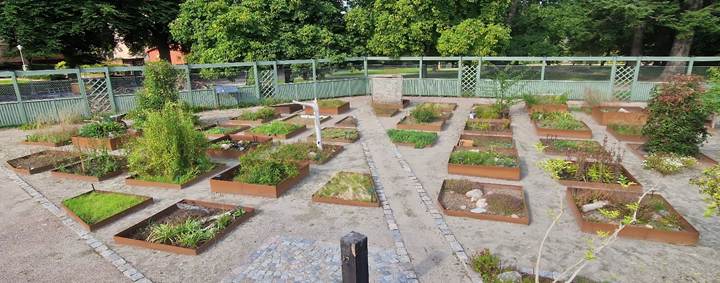
We are the only genebank in Sweden who are working with wild redlisted plants but we hope that we can stimulate other regions of Sweden to start conserve local rare plants.
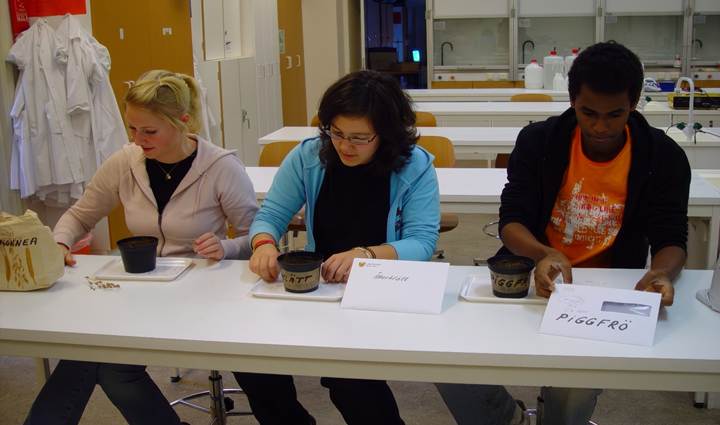
Everything started 1990 when the biological association Östergötlands Naturalhistoriska Förening introduced the project Flora Guardians in Östergötland. About 25 flora guardians visited localities with rare plants and with the permission from the County Administrative Board they collected seeds from the redlisted plants. From the beginning it was a school science project so the pupils from Birgitta gymnasium sawed the seeds in pots.
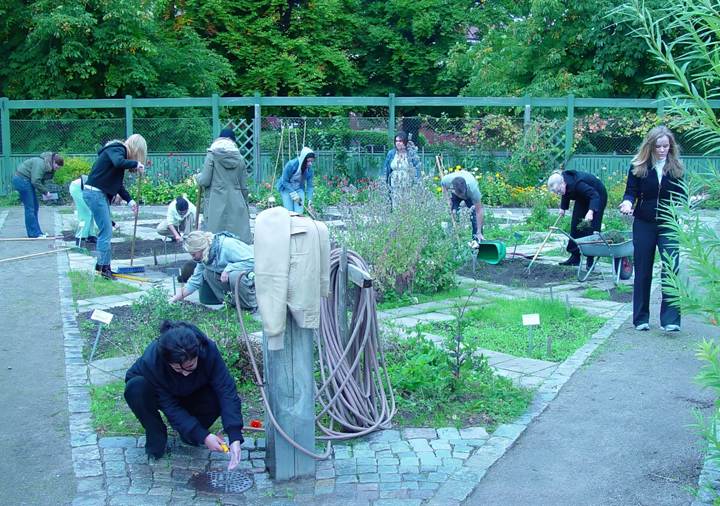
After germination they planted out their cultivation at a nearby area belonging to Naturcentrum and they took care of their plants during one year. They removed weeds, water the plants and collected seeds. After one year a younger pupil took over the responsibility.
The main focus from the beginning was to exhibit the most uncommon plants in our province and try to explain why plant conservation is important. 2005 we visited the Nordic genebank , a knowledge center for genetic resources, in Alnarp in south of Sweden. Two years later they changed name to NordGen. NordGen promised to take care of our seeds and store them in freezers for longtime conservation.
2006 it was time to inaugerate our regional genbank and by that time we had approx. 60 different species of redlisted plants. Until 2016 we had great help from the pupils at Birgitta gymnasium but nowadays me and the gardener Klas Schlichting are operating the cultivation. 2020 we accomplished a renovation by replacing the paving stones with stone dust and weather-resistant steel.
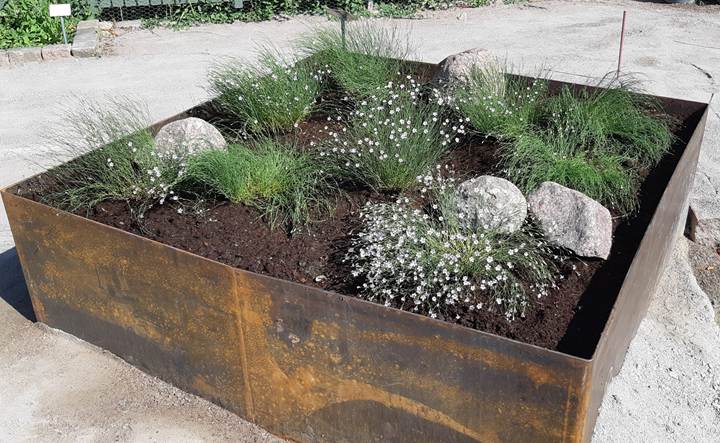
The genebank project is a cooperation between me as a botanist and Klas as a gardener. It is a win-win arrangement where I have the knowledges about plant and plantecology and Klas is an expert in cultivation.
I bring Klas to the original plant localities all around Östergötland to show him the environment. Home in the genebank Klas design the square with the plant of interest so every square has a unique design. Together we try to find out the most suitable soil. We have increased the number of species from 60 to 86 during the latest years and now we need more space to expand the cultivation area. There are more species of redlisted plants to add.
Here is a table showing the species we have in the genebank 2025.
| Species | Redlist category | Species | Redlist category |
| Agrostemma githago | EN | Lappula squarrosa | EN |
| Aira caryophyllea | NT | Lathyrus tuberosus | VU |
| Alchemilla samuelssonii | VU | Leonurus cardiaca | VU |
| Alyssum alyssoides | NT | Malva pusilla | VU |
| Anthemis arvensis | NT | Marrubium vulgare | EN |
| Anthericum liliago | EN | Melampyrym cristatum | NT |
| Apera spica-venti | NT | Mentha x gracilis | EN |
| Aristolochia clematitis | EN | Misopates orontium | NT |
| Arnica montana | VU | Nepeta cataria | EN |
| Asperugo procumbens | NT | Neslia paniculata | EN |
| Betonica officinalis | EN | Nonea versicolor | RR |
| Blitum bonus-henricus | VU | Onobrychis viciifolia | RR |
| Blysmus compressus | VU | Oxytropis pillosa | EN |
| Bromopsis benekenii | RR | Petrorhagia saxifraga | NT |
| Bromopsis ramosa | NT | Phleum phleoides | NT |
| Bromus arvensis | EN | Pilularia globulifera | VU |
| Bromus commutatus | EN | Pleurospermum austriacum | VU |
| Bromus secalinus | EN | Poa remota | NT |
| Buglossoides arvensis | NT | Potentilla recta | RR |
| Camelina microcarpa | VU | Primula farinosa | NT |
| Campanula cervicaria | NT | Pulsatilla vernalis | EN |
| Cardamine parviflora | VU | Pulsatilla vulgaris | VU |
| Carex caryophyllea | NT | Ranuculus arvensis | NT |
| Carex hartmanii | VU | Rubus hartmanii | RR |
| Carex hostiana | NT | Salix hastata ssp vegeta | VU |
| Catabrosa aquatica | VU | Salvia pratensis | VU |
| Cerastium brachypetalum | VU | Scolochloa festucaea | NT |
| Chenopodiastrum murale | CR | Sibbaldianthe bifurca | RR |
| Chenopodium vulvaria | EN | Silene dichotoma | RR |
| Chimaphila umbellata | EN | Taraxacum maculigerum | VU |
| Consolida regalis | NT | Taraxacum pseudosuecicum | CR |
| Cypripedium calceolus | RR | Thesium alpinum | NT |
| Dianthus armeria | VU | Thymus pulegioides | VU |
| Draba nemorosa | VU | Trifolium aureum | NT |
| Dracocephalum ruyschiana | EN | Trifolium montanum | NT |
| Dracocephalum thymiflorum | EN | Vicia dumetorum | EN |
| Drymochloa sylvatica | NT | Vicia pisiformis | EN |
| Erucastrum gallicum | RR | Vicia villosa | VU |
| Euphrasia micrantha | VU | Viola uliginosa | NT |
| Euphrasia officinalis ssp officinalis | EN | ||
| Falcaria vulgaris | EN | CR Critically endagered | |
| Genista germanica | CR | EN Endagered | |
| Geranium bohemicum | NT | VU Vulnerable | |
| Geranium lanuginosum | EN | NT Near threatened | |
| Gypsophila muralis | EN | RR Regionally Redlisted | |
| Helianthemum nummularium | NT | ||
| Holosteum umbellatum | NT |
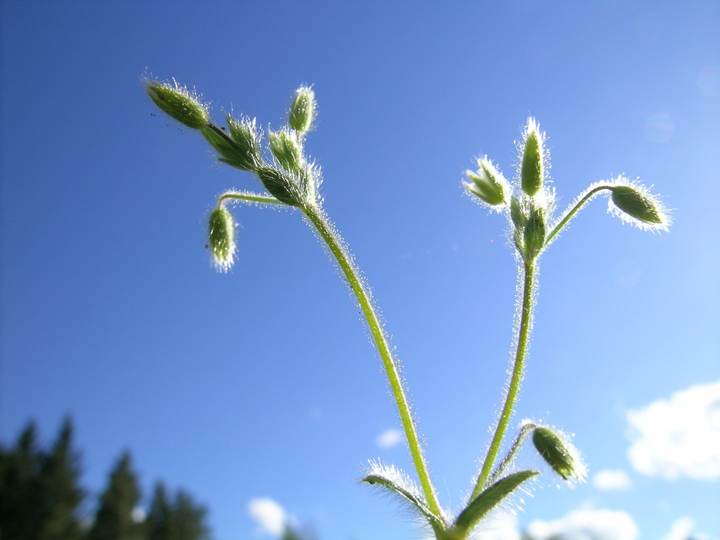
During 2006 – 2024 we have sent a lot of seeds to NordGen but four years ago we also started in-situ conservation. In Östergötland we just have one locality with Cerastium brachypetalum, Gray Chickweed. It´s a spring blooming annual plant species. 2021 we sawed seeds from our genebank and reinforced the population.
We have cultivated Salix hastata ssp vegeta several years in the genebank and 2023 we struck cuttings and placed them in a suitable wetland with only a few original specimen. About 50 % of our cuttings have survived after one year.
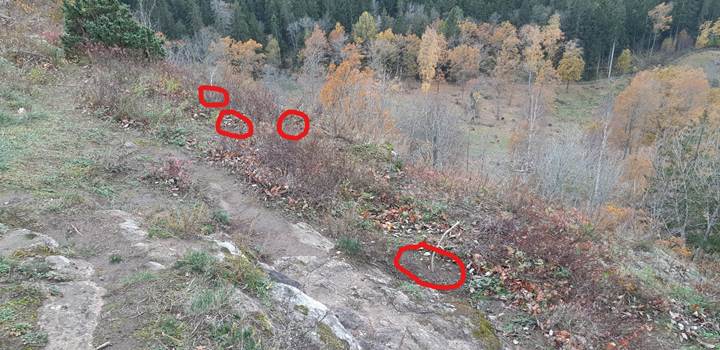
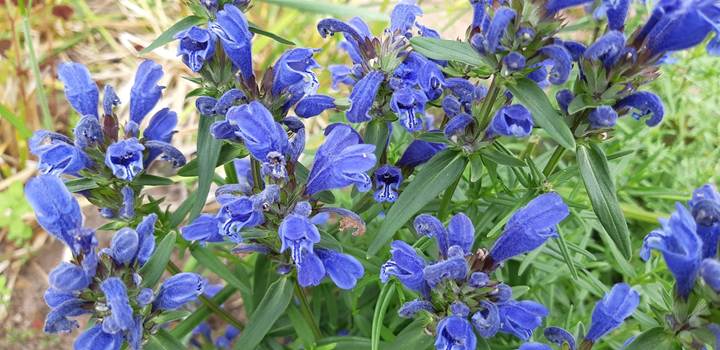
Dracocephalum ruyschiana, Dragonhead, is a rare plant in Sweden. It is classified as Endagered. You can find it in two places in Östergötland but the total population is small. 2024 we replant the dragonhead at four new places not far from place of origin.
This year we have chosen to replant Oxytropis pilosa, Hairy Oxytrope, at places where they were growing about 50 years ago. It was a tricky project because the slopes of western Omberg are very steep so next year we will continue the replanting from the seaside with a boat.
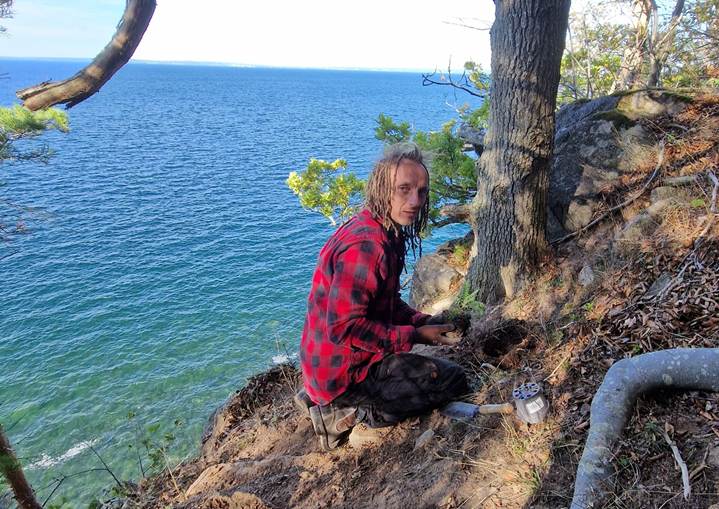
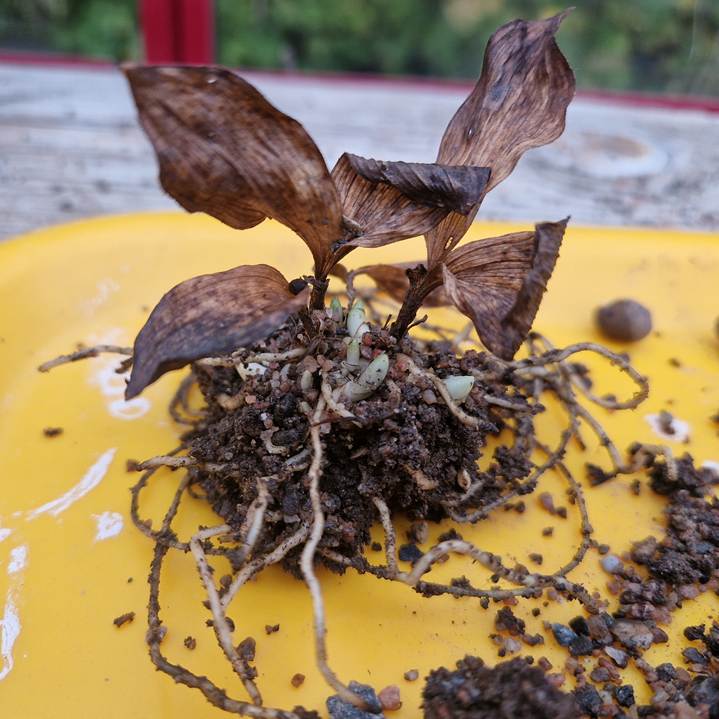
20 years ago Cypripedium calceolus, Lady`s-slipper orchid was found in 12 different places around Östergötland. Today there are only four different localities left and we decided to increase the population in our region. 2022 we collected seeds from Lady`s-slipper orchid at four different localities around Östergötland and a company called Orchis Natur helped us to germinate and cultivate them. 2024 we get the small plants back and in October 2025 we have replanted them. 88 mini plants are waiting for reintroduction hopefully already 2027.
Our plans for 2026 is to expand our garden area and incorporate some recently built wetlands in order to grow aquatic plants. We also like to continue with in-situ conservation.