The Pretreatment and Acid hydrolysis of Water Hyacinth (Eichhornia crassipes), followed by fermentation to produce bioethanol”
Raymond C Jagessar1*, A. Shivprasad2
Received Date: August 04, 2026; Accepted Date: August 14, 2026; Published Date: August 25, 2026
*Corresponding author: Raymond Jagessar, Department of Chemistry, Faculty of Natural Sciences, University of Guyana, Turkeyen Campus, Greater Georgetown; Email:
Citation: Jagessar RC, Shivprasad A (2026); The Pretreatment and Acid hydrolysis of Water Hyacinth (Eichhornia crassipes), followed by fermentation to produce bioethanol; Enviro Sci Poll Res and Mang: ESPRM-189
DOI: 10.37722/ESPRAM.2026302
Abstract
There is an urgent and continual need to increase the production of bioethanol, in light of global warming and climate change. To this end, various feedstocks have been sought over the years. Here, water hyacinth (Eichhornia crassipes), a plant that grows profusely in the water ways of Guyana is used as a feedstock. The pre-treatment and acid hydrolysis of water hyacinth (Eichhornia crassipes), followed by fermentation, yielded bioethanol at an average value of (0.39 ± 0.012, v/v). The water hyacinth was pre-treated using steam generated from a pressure cooker. The resulting residue was dried in an oven, followed by acid hydrolysis using 5% H2SO4. The resulting hydrolysate after careful acidification to 4.5 was fermented at room temperature, using Saccharomyces cerivisae for seventy-two (72) hours. After workup, a Brix content of 5.2 was noted, indicating, there is a need to use effective fermentation strategy.
Information Board
ISSN: 2641-6816
Frequency: Continuous
Format: Video, PDF and HTML
Versions: Online (Open Access)
Language: English
Impact Factor: 4.21
Publish your article not just in PDF and HTML, but also in documentary format. Simply submit your manuscript as usual — we’ll take care of the rest.
Keywords: global warming, catastrophic effects, bioethanol, fossil fuels, fruit and fruit peels
Introduction
Energy consumption linked to the transportation sector has had significant contributions to world problems such as global warming, climate change, energy shortages, and health conditions related to air pollution [1-4]. Moreover, due to the increased consumption of conventional fossil fuels and their unpredictable change in prices there is an urgent need to develop an alternative renewable source of energy like bioethanol. Fossil oil is associated with global warming, climate change, and several other energy and security problems. Its use was projected to peak about 2007 and the supply is then expected to be extremely limited in 40-50 years[5]. The cost of raw materials accounts for up to 50% of the total production cost of bioethanol and significantly impacts the economy of alcohol[2]. Bioethanol has similar properties to gasoline, in terms of high-octane content, high flame speed, stoichiometric air-fuel ratio, and low heating value [6]. Its use decreases the consumption of crude oil and reduces the emissions of air pollutants (CO2, NO2, and SO4) released in the atmosphere as a result of fossil fuel combustion[7].
The production of bioethanol from food crops like corn and sugarcane could lead to food versus fuel controversies. As a result, the efforts of researchers are currently concentrated on using cheap and abundant waste material to produce bioethanol[8]. The conversion of food products into ethanol by fermentation is a well-known technology employed by countries that are urgently seeking to produce a liquid fuel replacement for fossil oil in the future.
Bioethanol (C2H6O) is a colorless, flammable, volatile liquid with a molar mass of 46.07 g/mole, a density of 0.789 g/cm3, a melting point of −114 °C, and a boiling point of 78.37 °C [1]. It is widely used as a solvent, a fuel, and as a raw material for the production of other useful chemicals that have wide applications in the industry. Bioethanol is a feasible substitute for a fossil fuel because of its superior environmental benefits over the fossil fuel it displaces (gasoline) and it is economically competitive with gasoline. Bioethanol has similar properties to gasoline in terms of high-octane content, high flame speed, stoichiometric air-fuel ratio, and low heating value [6]. It is also producible in sufficient quantities that can make a meaningful impact on energy demands, and also provides a net energy gain over the energy sources used to produce the fuel[6]. Bioethanol has a higher-octane rating, is safer to use and improves air quality by its clean and proper burning quality. National policies are being implemented for blending 20-30% bioethanol in gasoline in different countries by 2030. However, the availability of bioethanol remains a major challenge. In fact, oil is still consumed at much larger scales of in the world. The U.S. Energy Information Administration (EIA) estimates that the world consumed 92.2 million barrels per day in 2020[3]. The unsustainable use of fossil fuels has led to their depletion, global warming and climate change. Therefore, there is a need to substitute these conventional fuels with cleaner and renewable fuels like bioethanol.
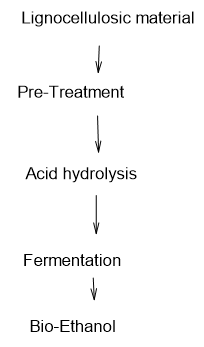
The production of bioethanol from crops such as wheat, rice starch, sugar canes etc. at such a large scale would be another challenge due to the lack of feedstocks in such large quantities. This would lead to food versus fuel controversies. Thus, there is a need to explore the use of other lignocellulosic biomass such as plants that clog the water system. Other lignocellulosic feedstock includes fruit wastes or vegetable wastes which are consumed in abundance. Lignocellulosic material is the most abundant renewable biomass with a worldwide annual production of about 181.5 billion tones[9]. Lignocellulosic biomass has proven to be the most sustainable option for the production of bioethanol transportation fuel with respect to its great environmental, economic, and infrastructure advantages [10-12]. The conversion of Lignocellulosic material to bioethanol is shown in Fig. 1.0.
The production of fermentable sugars is usually approached in three steps namely pretreatment and hydrolysis [1]. Pretreatment is the first step of the process by which the cellulose and hemicellulose polymers are made accessible for further conversion. In this step, the hydrolysis of hemicellulose under mild conditions occurs, as well as the separation of the lignin fraction. However, the cellulose fraction is more resistant and therefore requires more rigorous treatment [13-17]. The second step involves the enzymatic or acidic hydrolysis of cellulose, using cellulase enzyme cocktails or an acidic medium respectively [19-21]. Following the production of fermentable sugars from the hydrolysis of the cellulose and hemicellulose fraction of lignocellulosic biomass, the fermentation process is used to produce bioethanol. In this process, Saccharomyces cerevisiae, more commonly known as “baker’s yeast consumes the simple sugars and produces bioethanol, along with carbon dioxide (CO2) [1]. A good lignocellulosic feedstock to employ in the production of bioethanol, is one that is of abundance in the environment. One such is water hyacinth, which grows profusely in the water system in Guyana.
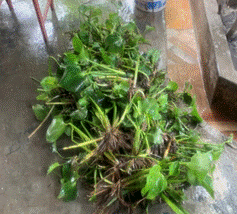
Water hyacinth is a perennial aquatic plant with broad, thick, glossy, ovate leaves that can rise up to 1 meter above the water surface. Its leaves, 10–20 cm across, are supported by spongy, bulbous stalks that keep the plant afloat, while feathery, dark purple or black roots hang beneath the water. The plant produces lavender to pink flowers with six petals, arranged in spikes of 8–15 flowers. It reproduces rapidly through runners (stolons) and can also produce thousands of seeds annually, which remain viable for over 28 years[18]. The morphology of the plant is shown in Fig. 2.0.
The aims and objectives of this research were:
- To produce bioethanol from the water hyacinth
- To determine the quantity of bioethanol produced from the water hyacinth (Eichhornia crassipes) per gram
- To investigate the effectiveness of acid hydrolysis for the fermentable sugar release from the water hyacinth as well as the overall production of bioethanol
A total of twenty-two (22) research articles were reviewed using the Google Search Engine and the following were investigated: country of research, feedstock for bioethanol, pre-treatment methods, method of hydrolysis, method of fermentation, statistical analyses and bioethanol yield[22-39]. With respect to the feedstock, ten articles mentioned the use of water hyacinth, one corn stover, one green coconut husk, another dried coconut husk and one mentioned the use of grass. The pre-treatment methods also mentioned microbial approach. The hydrolysis methods involve the use of dilute acids such as H2SO4, dilute base, such as NaOH and a few studies mentioned enzymatic hydrolysis and microbial treatments. Acid hydrolysis proved to the most effective in all cases as it produced highest reducing sugar yield and also the highest ethanol yields were achieved with the substrates that was pretreated with the acid hydrolysis process. The fermentation methods employed the use of saccharomyces cerevisiae, aspergillus niger and asperigillus oryzae of which Saccharomyces cerivisae was mentioned the most.
It was also noticeable that the fermentation duration varied across the different studies. For instance, Sunwoo et al. (2019) employed a 48-hour fermentation time, whereas Weng et al. (2017) optimized fermentation over 81.87 hours. The novelty of this research is that water hyacinth was never used as a feedstock in Guyana nor in the Caribbean, to produce bio-ethanol via pre-treatment, acid hydrolysis and fermentation (BVPAHF). This research is of significance as water hyacinth is a notorious canal clogger in Guyana and rob aquatic lives of oxygen etc. Removal and subsequent use as a bioethanol feedstock, will contribute to environmental cleansing, leading to a healthier ecosystem. In addition, bioethanol is a potential renewable energy in the Caribbean and can replace or diminish the use of fossil fuel. To date, it has been used in increasing demand in Brazil and in the USA and thus of great scope in Guyana and the Caribbean. In addition, this research will provide additional baseline information on BVPAHF.
Methodology
Project Location
The study location for this project was conducted at the department of chemistry, Faculty of Natural Sciences Laboratory, Turkeyen Campus of the University of Guyana on the East Coast Demerara of Guyana.
Research Design
This research utilized the experimental research approach. Statistical analysis was utilized to prove or disprove the hypothesis to ensure that the results from the research was accurately represented. Convenience sampling was utilized when choosing samples of the water hyacinth. Fermentation was done in triplicate.
Reagents and Material List:
Collection and preparation of sample: scissors, knife, bags to store the sample, wooden cutting board, 1-2 kg of water hyacinth, Buckets,cutting board
Pre-treatment (water): 6.5L pressure pot, distilled water, stopwatch, 1000mL measuring cylinder, Electrical balance (Scout Pro), Funnel, wash bottle, chopped sample, aluminium pan (3), blender, filter paper (100pcs 24cm diameter) #40, glass storage containers
Acid hydrolysis: Volumetric flask-1000mL, glass funnel (1), Latex gloves, heating mantel (Bio base), round bottom flask, mercury thermometer, stopwatch, anti-bumping granules (10-15 pcs), Round bottom flask holder, Stirring rod, 300-500 grams of substrate (both residue and filtrate, 5% Sulphuric acid (2L), Milwaukee pH probe, 10% Sodium Hydroxide (2L), 1000mL Conical flask (3), Masking tape, Marker
Sugar Analysis: Test tubes, 250ml Conical flask, Glass Funnel, 1 ml Pipette, 2ml Pipette, Brix refractometer Specs: SKU:MA871, UPC:810666006335, MPN:MA871, Range:0 to 85% BrixResolution:0.1% | 0.1°C (0.1°F), Accuracy: ±0.2%, Brix | ±0.3°C | ±0.5°F, HPLC (Agilent Technologies) – (1), Syringe (6), Beaker 100mL (1), Hot plate, Benedict’s solution
Fermentation and Distillation: Yeast (saccharomyces cerevisiae): (50 grams), distilled water, hot plate, mercury Thermometer, Fermentation container, Electronic balance, Beaker 250ml, 50 mL Measuring cylinder, Fermentation broth, Condenser, 1000mL round bottom flask, Mercury Thermometer, Outlets, heating mantel (Bio base), conical Flask 1000mL, alcohol refractometer, anti- bumping granules, fume Hood
Sugar and Ethanol Analysis: HPLC-High-performance Liquid Chromatography, GC- Gas Chromatography, Specs for GC equipment used in this experiment: The instrument used in the analysis is an Agilent Gas Chromatograph (8890 Model). The gas source used with this instrument is nitrogen. The column used in the analysis has the following specifications: Length: 30m, Inner Diameter (ID): 0.25mm, Temperature Range from -200C to +2600C, Phase – DB-624 Ultra Inert and was made by Agilent Technologies.
Statistical Analysis
After the fermentation, the ethanol yields were calculated and further inferential statistical analysis were performed which included one way ANOVA to determine whether there are any significant differences between the treatments as well as descriptive analysis such as mean and mode. Post ANOVA, A Tukey’s T-Test was also performed to better interpret the variance among the samples.
Experimental Method
Sample collection and Substrate Preparation
The samples were collected from the ponds at the Turkeyen Campus of the University of Guyana, East Coast Demerara, Guyana, South America. A scissors was used to chip the substrate into smaller pieces which includes the leaves and stem with the roots being removed and discarded. 1kg of the substrate was then weighed for water pretreatment.
Water pre-treatment
A pressure pot was used to cook/pressurise the substrate on high heat for approximately 1 hour with the use of a water to fibre ratio of 10:1. Heat was applied from a gas stove. After the requisite time, the pressure from the pressure pot was released into the atmosphere and the substrate was filtered to get rid of the excess water. It was further washed. The filtered substrate was air/sun dried for a few hours. It was then dried in an oven at the University at a temperature of 50°C.
Preparation of the H2SO4
A total of three acid hydrolysis treatments were conducted. Each treatment had a substrate mass of 100g. Utilizing a 6:1 liquid to fiber ratio, there was a requirement for 1800mL 5% sulphuric acid. 2000 mL of 5% w/w sulphuric acid mixture was prepared contains 5% v/v sulphuric acid and 95% v/v water. The sulphuric acid was diluted from a concentration of 97.5 % v/v to 5% v/v in the fume hood. This mixture was then utilized for the acid hydrolysis stage.
Acid Hydrolysis
5% H2SO4 was prepared and was mixed with the substrate produced from the pre-treatment processes (in the fume hood) in a fibre: ratio of 6:1 i.e 100g of substrate was mixed with 600mL of the acid in this step. The mixture was refluxed at a temperature around 100-120°C for 5 hours and then allowed to cool. The mixture was then filtered and its pH tested using a pH meter and was then adjusted to 4.5 with NaOH solution prior to the fermentation proceed. A Benedict’s test was performed on the filtrate to verify the presence of sugars. 2mL of the filtrate was mixed with 1mL of benedict’s solution and heated on a water bath, the colour change was then observed and recorded. Along with this, a Brix soluble solids test was also performed on the filtrate using a refractometer. The pH of the mixture obtained from acid hydrolysis was also adjusted to 4.5 and then subjected to fermentation. The fermentation process was done in triplicates.
Testing 0BRIX
The Brix soluble solids for the samples were tested before and after fermentation. A small amount of the mixture (before and after fermentation) was placed on the slide through the use of a refractometer and the results received were recorded. The temperature of the measurement was also shown when the analysis was made.
Fermentation
The filtrate at a pH of 4.5 was placed in three different plastic containers. 15g grams of yeast (S.cerevisiae ) was then activated by adding to 50mL of warm water and heated to 40 0C and incubated for 30 minutes. Three sets were prepared. The yeast was then added to each of the three containers. The containers were then sealed and subjected to fermentation for a 72 hours period.
Distillation
After fermentation, each of the samples were filtered separately and filtrates were retained. The Brix soluble solid readings were then taken and recorded for each of the samples. After this, 200mL of the filtrate was then subjected to distillation via a simple distillation set up. The temperature at which the distillate stated to enter the container was recorded utilizing a thermometer which was included in the setup. 100mL of the distillate was collected. This process was repeated for all three samples.
Analysis from HPLC (High-Performance Liquid Chromatography) and GC (Gas Chromatography)
The distillate was then analyzed with the GC equipment. The samples were pulled up with a 20mL syringe and then a 0.45 μm filter was attached and it was filtered into a vial. The vial was then labelled with respect to the sample that was filtered into it. Three trials were conducted for each sample. This process was repeated for all the samples (A, B, C). The vials were then placed into the GC and the alcohol content was determined relative to a reference standard of 4.8% abv. The results were then recorded.
Results
Table 01: The Brix Soluble Solids (BSS) obtained from the samples after hydrolysis and fermentation
| Sample | After Acid hydrolysis | Temperature(°C) Reading was taken at | After Fermentation | Temperature(°C) Reading was taken at |
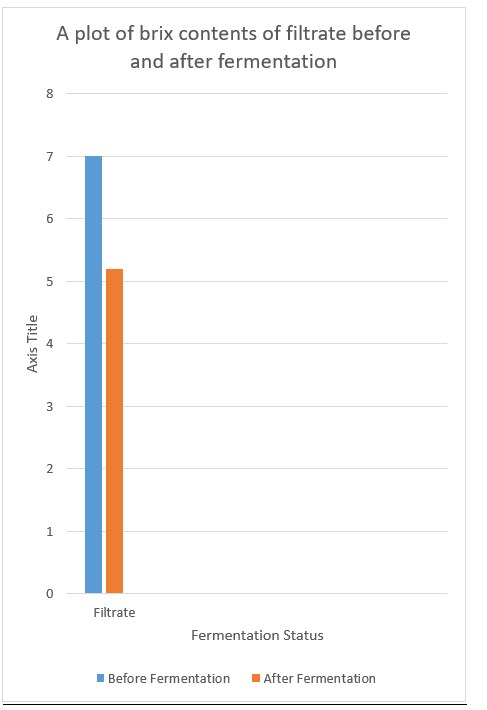
| Filtrate (Sample B) | 7.0 | 30.3 | 5.2 | 26.16 |
Table 2.0: Alcohol Content (% v/v) obtained from the main fraction of the distillate using Gas Chromatography
| Sample | Alcohol Content (% v/v) from GC | ||||
| Trial 1 | Trial 2 | Trial 3 | Avg | SD | |
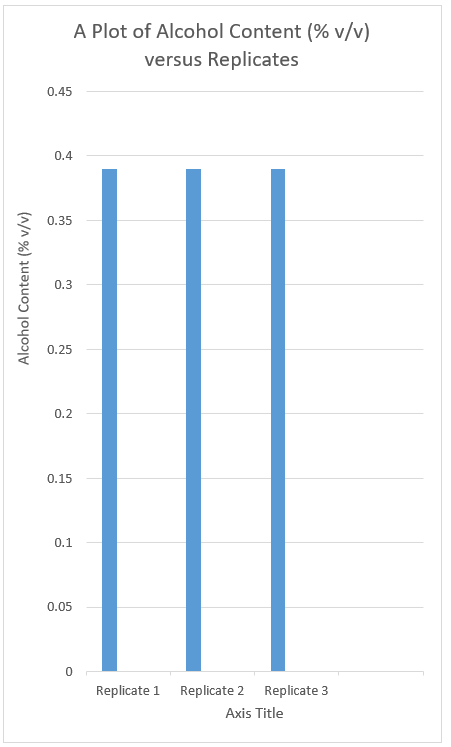
| Filtrate | 0.39 | 0.39 | 0.39 | 0.39 | 0.39 ± 0.012 |
Calculations
Converting v/v % to g/L for the ethanol concentration for the various samples
Alcohol (g/L) = x density of ethanol (g/mL) x 1000
density of ethanol = 0.789 g/ml
(Filtrate)
Alcohol (g/L) = x 0.789 g/mL x 1000
= 3.077 g/L
Discussion
No analysis was done on the composition of the water hyacinth. However, future work on other substrates will be done. An article published by another author revealed that the peels of Eichhornia crassipes were evaluated for its proximate and anti-nutritional composition. The results show that the moisture, ash, crude protein, crude lipids, crude fibre, available carbohydrates and energy values were: 89.20 ± 0.23% weight net, 18.20 ± 0.21%, 8.2 ± 0.18%, 2.20 ± 0.03 %, 21.56 ± 0.10%, 49.98 ± 0.48 % and 252.52 ± 0.50 kcal/100g dry weight respectively[39]. The pre-treatment of water hyacinth was affected using steam, which was generated using a pressure cooker, ensuring that the liquid to fibre ratio remained at 10:1. pre-treatment via steam was necessary to aid in the di-lignification process. It also separates the mixed polymers of lignin, hemicellulose and cellulose. Removal of lignin and hemicellulose will aid in the availability of bound free cellulose i.e will increase the availability of cellulose and thus, improve the efficiency of the conversion process to reducing sugars and fermentation[39]. This method of pre-teatment is safe, economical and efficient. Pre-treatment was followed by acid-hydrolysis using 5% H2SO4 and H2SO4 to fibre ratio of 6:1. The pre-treated substrate was refluxed with H2SO4 for about six (6hrs). H2SO4 was used to convert the cellulosic content of pre-treated water hyacinth to b-glucose, which was fermented using Saccharomyces cervisae to yield bio-ethanol. Increasing the acid concentration to 10% can improve the efficiency of the process. However, too high concentration can lead to degradation of the cellulose. Thus, a compromise must be sought. Thus, 5% acid concentration was used. For the acid hydrolysis stage, a temperature of 120°C was used. Higher temperature could probably improve the efficiency of the process. The reducing sugar content of the acid hydrolysate was noted using the Benedict’s test. The colour was yellow, indicating the presence of 1% reducing sugar. The Benedict’s test gives a semi-quantitative or rough estimate of the amount of reducing sugars present. Green indicates no sugar, whereas colour of yellow, orange and brown indicates 1%, 1.5% and 2% sugar respectively. Brown indicates the highest % of reducing sugars. It is established with this test for reducing sugar. Acid hydrolysis was preferred over alkaline hydrolysis because of the higher percentage yield reported for acid hydrolysis[40].
Table 1.0 shows the Brix soluble solids content obtained from the sample after acid hydrolysis and fermentation. It shows that after acid hydrolysis, the filtrate had a Brix content of 7.0, whereas the fermented sample has a Brix content of 5.2. Comparing the two, it indicated that fermentation didn’t proceed to completion and a modified fermentation strategy is necessary to affect a final Brix content of zero. Both acid hydrolysis and fermentation was conducted at 27°C. During fermentation, the pH of the fermented matrix at the initial stage was 4.5. Saccharomyceae cervisiae was used as the fermentation microorganism. The fermentation process was allowed to progress for seventy-two (72hrs) at room temperature. The yeast strain was activated and inoculated into the three medium to ferment. In general, ethanol production via fermentation is low yielding, as the increasing % of ethanol production has an inhibitory effect on the microorganism, Saccharomyces cerivisae. Thus, this is a major limitation in the fermentation process.
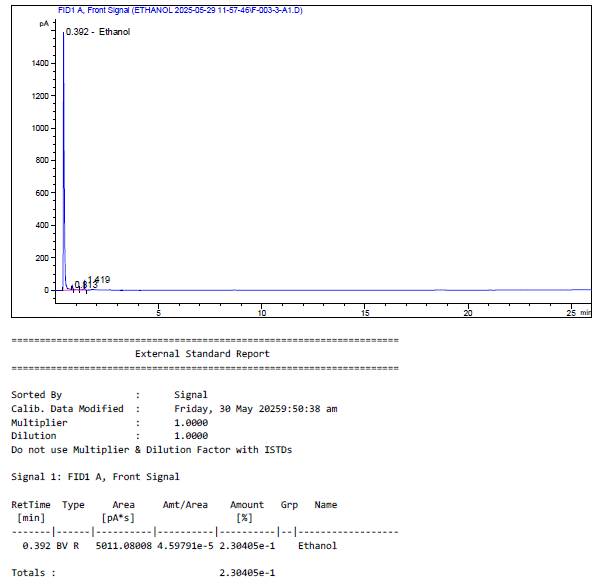
The ethanolic content of the main fraction of the fermented distillate, was analysed using Gas Chromatography (GC) and the results are presented in Table 2.0. From the GC chromatogram shown in Figure. 5.0, an ethanolic content of 0.392, v/v) was obtained. This value was also noted for the other two trials, resulting in an average value of 0.392, v/v. This value converted to g/L, gives a value of 3.077g/L. Thus, 1000g of the lignocellulosic water hyacinth is projected to produce 30.71g/L of ethanol.
Conclusion
The pre-treatment via steam and acid hydrolysis of water hyacinth (Eichhornia crassipes) using 5% H2SO4, followed by fermentation using Saccharomyces cerivisae for seventy-two (72) hours, yielded bioethanol at an average value of (0.39 ± 0.012, v/v) or 3.077g/L. There was a decrease in the Brix content from 7.0 to 5.2, suggesting that fermentation took place and there is a need to use effective fermentation strategy, to reduce Brix content to zero. Thus, the water hyacinth, an invasive species, can be harvested and subjected to pre-treatment, acid hydrolysis and fermentation to yield valuable bioethanol. Thus, its use in this dimension offers dual advantages to environmental cleansing.
Acknowledgements: Prof. R. Jagessar, thank the department of chemistry for the provision of chemicals and bench space. Demerara Distillers Limited, DDL is acknowledged for the assistance in conducting the GC analyses. Also, student, A. Shivprasad for his research effort.
References
- 1.Danmaliki, G. I., Usman, B. J., Muhammad, A. M., & Shamsuddeen, A. A. (2016). Bioethanol Production from Banana Peels. 10(6), 56–62. https://doi.org/10.9790/2402-1006025662
- Broda, M., Yelle, D. J., & Serwańska, K. (2022). Bioethanol Production from Lignocellulosic Biomass—Challenges and Solutions. Molecules, 27(24), 8717. https://doi.org/10.3390/molecules27248717
- U.S. Energy Information Administration. (2023, June 30). Biomass explained. US Energy Information Administration; EIA. https://www.eia.gov/energyexplained/biomass/
- Foster, S, Elzinga, D. (2015, December). The Role of Fossil Fuels in a Sustainable Energy System. United Nations. https://www.un.org/en/chronicle/article/role-fossil-fuels-sustainable-energy-system
- Itelima, J., Onwuliri, F., Onwuliri, E. Onyimba, I., Oforji, S. (2014). Bio-Ethanol Production from Banana, Plantain and Pineapple Peels by Simultaneous Saccharification and Fermentation Process. International Journal of Environmental Science and Development, 4, 213-216 https://www.researchgate.net/publication/269839258.
- Calam, A., Içingür, Y., Solmaz, H., & Yamk, H. (2015). A comparison of engine performance and the emission of fusel oil and gasoline mixtures at different ignition timings. International Journal of Green Energy, 12(8), 767–772. https://doi.org/10.1080/15435075.2013.849256.
- Tibaquir, J.E., Huertas, J. I. (2018). on the Mechanical, Energy and Environmental Performance of In-Use Vehicles. Energies, 11, 1–17. https://doi.org/10.3390/en11010221.
- Jahid, M., Gupta, A., & Sharma, D. K. (2018). Production of Bioethanol from Fruit Wastes (Banana, Papaya, Pineapple and Mango Peels) Under Milder Conditions. Journal of Bioprocessing & Biotechniques, 08(03). https://doi.org/10.4172/2155-9821.1000327
- Paul, S, Dutta, A. (2018). Challenges and opportunities of lignocellulosic biomass for anaerobic digestion. Resources, Conservation and Recycling, 130, Pages 164-174
- Limayem, A., & Ricke, S. C. (2012). Lignocellulosic biomass for bioethanol production: Current perspectives, potential issues and future prospects. Progress in Energy and Combustion Science. https://doi.org/10.1016/j.pecs.2012.03.002
- McKendry, P. (2002). Energy production from biomass (part 1): overview of biomass. Bioresource Technol, 83(1), 37–46. https://doi.org/10.1016/S0960-8524(01)00118-3
- Pereira, N., Couto, M., & Anna, L. S. (2008). Biomass of lignocellulosic composition for fuel ethanol production and the context of biorefinery. Brazilian National Library (Vol. 2). Retrieved from:http://www.ladebio.org.br/download/series-em-biotecnologia-vol iilignocellulosicbiomass.pdf%0Ahttp://scholar.google.com/scholar?hl=en&btnG=Search&q=intitle:Biomass+of+Lignocellulosic+Compostion+for+Fuel+Ethanol+Production+and+the+Context+of +Biorefinery#
- Bali, G., Meng, X., Deneff, J. I., Sun, Q., & Ragauskas, A. J. (2015). The effect of alkaline pretreatment methods on cellulose structure and accessibility. ChemSusChem, 8(2), 275– 279. https://doi.org/10.1002/cssc.201402752
- Brodeur, G., Yau, E., Badal, K., Collier, J., Ramachandran, K. B., & Ramakrishnan, S. (2011). Chemical and Physicochemical Pretreatment of Lignocellulosic Biomass : A Review. SAGE-Hindawi Access to Research-Enzyme Research, 1–17. https://doi.org/10.4061/2011/787532
- Kumar, A. K., & Sharma, S. (2017). Recent updates on different methods of pretreatment of lignocellulosic feedstocks : a review. Bioresources and Bioprocessing, 4(7), 1–9. https://doi.org/10.1186/s40643-017-0137-9
- Taherzadeh, M. J., & Karimi, K. (2008). Pretreatment of lignocellulosic wastes to improve ethanol and biogas production: A review. International Journal of Molecular Sciences (Vol. 9). https://doi.org/10.3390/ijms9091621
- Xu, Z., & Huang, F. (2014). Pretreatment methods for bioethanol production. Applied Biochemistry and Biotechnology. https://doi.org/10.1007/s12010-014-1015-y
- Royal Botanical Garden. (n.d.). Water hyacinth | Kew. Www.kew.org. https://www.kew.org/plants/water-hyacinth
- Sun, Y., & Cheng, J. (2002). Hydrolysis of lignocellulosic materials for ethanol production: A review. Bioresource Technology. https://doi.org/10.1016/S0960-8524(01)00212-7
- Zhang, Q., Wei, Y., Han, H., & Weng, C. (2018). Enhancing bioethanol production from water hyacinth by new combined pretreatment methods. Bioresource Technology, 251, 358–363. https://doi.org/10.1016/j.biortech.2017.12.085.
- Shakila Begam, M., Boorani, A., Akilandeswari, P., & Pradeep, B. V. (2024, February 19). Bioethanol Production from Water Hyacinth (Eichhornia crassipes) using Different Microbial Inoculants. Journal of Pure and Applied Microbiology. https://microbiologyjournal.org/bioethanol-production-from-water-hyacinth-eichhornia-crassipes-using-different-microbial-inoculants/
- Hirphaye, B. Y., Mezgebe, F. H., Tura, A. M., & Fanta, G. M. (2022). Bio-ethanol production potential of Water Hyacinth (Eichhornia crassipes) as alternative energy feedstocks. https://doi.org/10.21203/rs.3.rs-2356408/v1
- Zhang, Q., Weng, C., Huang, H., Achal, V., & Wang, D. (2017). Optimization of Bioethanol Production Using Whole Plant of Water Hyacinth as Substrate in Simultaneous Saccharification and Fermentation Process. Frontiers in Microbiology, 6. https://doi.org/10.3389/fmicb.2015.01411
- Manivannan, A., & Narendhirakannan, R. T. (2018). Bioethanol Production From Aquatic Weed Water Hyacinth (Eichhornia crassipes) by Yeast Fermentation. Waste and Biomass Valorization, 6(2), 209–216. https://doi.org/10.1007/s12649-015-9347-6
- Rezania, S., Din, M. F. M., Taib, S. M., Mohamad, S. E., Dahalan, F. A., Kamyab, H., Darajeh, N., & Ebrahimi, S. S. (2017). Ethanol Production from Water Hyacinth (Eichhornia crassipes) Using Various Types of Enhancers Based on the Consumable Sugars. Waste and Biomass Valorization, 9(6), 939–946. https://doi.org/10.1007/s12649-017-9883-3.
- Yerizam, M, Jannah, A.M, Aprianti, N, Yandriani, Y, Rendana, M, Ernas, A, Q & Juice Lowise Tamba. (2023). Bioethanol production from coconut husk using DES-NADES pretreatment and enzymatic hydrolysis method. Comptes Rendus Chimie, 26(S1), 1–10. https://doi.org/10.5802/crchim.226
- Sunwoo, I., Kwon, J. E., Nguyen, T. H., Jeong, G.-T., & Kim, S.-K. (2019). Ethanol production from water hyacinth (Eichhornia crassipes) hydrolysate by hyper-thermal acid hydrolysis, enzymatic saccharification and yeasts adapted to high concentration of xylose. Bioprocess and Biosystems Engineering, 42(8), 1367–1374. https://doi.org/10.1007/s00449-019-02136-3
- Madian, H. R., Sidkey, N. M., Mostafa, Hamouda, H. I., & Elazzazy, A. M. (2018). Bioethanol Production from Water Hyacinth Hydrolysate by Candida tropicalis Y-26. Arabian Journal for Science and Engineering (2011. Online), 44(1), 33–41. https://doi.org/10.1007/s13369-018-3247-6
- Gobinath, R. M., Pothiraj, C., Arumugam, R., Periyakaruppiah, P., Ali, D., Alarifi, S., Veeramanikandan, V., Pradeep, B. V., Nguyen, V.-H., & Balaji, P. (2024). Biocatalytic Conversion of Lignocellulosic Water Hyacinth Biomass by Phanerochaete chrysosporium for Sustainable Ethanol Production. Topics in Catalysis, 67(17-18), 1066–1076. https://doi.org/10.1007/s11244-024-01952-6
- Idrees, M., Adnan, A., Bokhari, S. A., & Qureshi, F. A. (2014). Production of fermentable sugars by combined chemo-enzymatic hydrolysis of cellulosic material for bioethanol production. Brazilian Journal of Chemical Engineering, 31(2), 355–363. https://doi.org/10.1590/0104-6632.20140312s00002415
- Bohn, L. R., Dresch, A. P., Cavali, M., Vargas, A. C. G., Führ, J. F., Tironi, S. P., Fogolari, O., Mibielli, G. M., Alves Jr., S. L., & Bender, J. P. (2021). Alkaline pretreatment and enzymatic hydrolysis of corn stover for bioethanol production. Research, Society and Development, 10(11), e149101118914. https://doi.org/10.33448/rsd-v10i11.18914
- Cabral, M. M. S., Abud, A. K. de S., Silva, C. E. de F., & Almeida, R. M. R. G. (2016). Bioethanol production from coconut husk fiber. Ciência Rural, 46(10), 1872–1877. https://doi.org/10.1590/0103-8478cr20151331
- Rodrigues, R. S., Almeida, M. N. de, Maitan-Alfenas, G. P., Ventorim, R. Z., Sartori, S. R., Visser, E. M., Guimarães, V. M., & Rezende, S. T. de. (2021). Brachiaria brizantha Grass as a Feedstock for Ethanol Production. Brazilian Archives of Biology and Technology, 64. https://doi.org/10.1590/1678-4324-2021200397
- Yerizam, M, Jannah, A, M, Aprianti, N, Yandriani, Y, Rendana, M, Ernas, A.Q & Juice Lowise Tamba, J. L. (2023). Bioethanol production from coconut husk using DES-NADES pretreatment and enzymatic hydrolysis method. Comptes Rendus Chimie, 26(S1), 1–10. https://doi.org/10.5802/crchim.226
- Garraway, R., & Jagessar, R. C. (2023). The production of bioethanol from mango (Mangifera indica) peel and plantain (Musa paradisiaca) peel via water pretreatment, dilute acid hydrolysis and fermentation supported by Saccharomyces cerevisiae. 2023(4), 2325–4076. http://www.usa-journals.com/wp-content/uploads/2023/04/Jagessar_Vol114.pdf
- Jagessar, R. C., & Lynch, R. (2017). use. American Journal of Research Communication, 5(9), 1–24. http://www.usa-journals.com/wp-content/uploads/2017/08/Jagessar_Vol59.pdf
- Jagessar, R. C., & Douglas, R. (2020). The Fermentation of Sugar Rich Fruits: jamun (Syzigium Cumini), soursop (Annona Muricata), and papaya (Carica Papaya), with and without additives, in order to produce optimum ethanol yield for commercial purposes. The Fermentation of Sugar Rich Fruits: Jamun (Syzigium Cumini), Soursop (Annona Muricata), and Papaya (Carica Papaya), with and without Additives, in Order to Produce Optimum Ethanol Yield for Commercial Purposes, 8(3), 1. http://www.usa-journals.com/wp-content/uploads/2020/03/Jagessar_Vol83.pdf
- Abdulsattar, M., Abdulsattar, J. O., Greenway, G. M., Welham, K. J., & Zein, S. H. S. (2020). Optimization of pH as a strategy to improve enzymatic saccharification of wheat straw for enhancing bioethanol production. Journal of Analytical Science and Technology, 11(1). https://doi.org/10.1186/s40543-020-00217-7
- Suleiman, M., Khadija, A.Y., Nasiru, Y., Garba, A.A., Alhassan, M., Bello, H.J. (2020). Proximate Minerals and Anti-Nutritional Composition of Water Hyacinth (Eichhornia crassipes) Grass. Earthline Journal of Chemical Sciences, 3 (1), 51-59.
- Danmaliki, G. I., Usman, B. J., Muhammad, A. M., & Shamsuddeen, A. A. (2016). Bioethanol Production from Banana Peels. 10(6), 56–62. https://doi.org/10.9790/2402-1006025662 ResearchGate. (2025). Biomass Conversion and Biorefinery. ResearchGate. https://www.researchgate.net/journal/Biomass-Conversion-and-Biorefinery-2190-823?_tp=eyJjb250ZXh0Ijp7ImZpcnN0UGFnZSI6Il9kaXJlY3QiLCJwYWdlIjoiX2RpcmVjdCJ9fQ